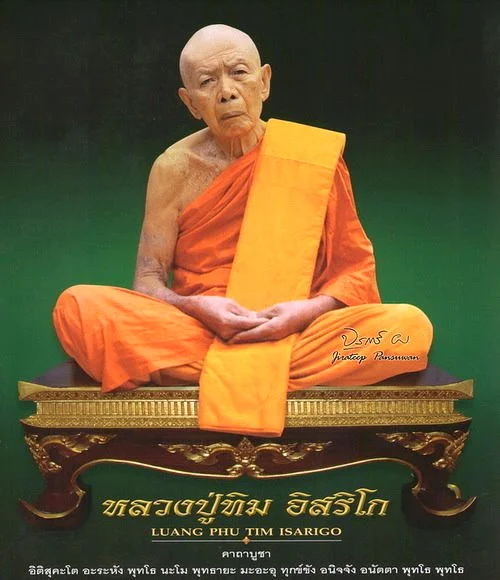
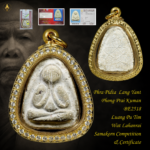
Phra Khun Paen Pim Lek Phong Prai Kuman Nur Krayasart Block Rek BE2516 Luang Pu Tim Wat Lahanrai Samakon
| Type | Phra Khun Paen Pim Lek hong Prai Kuman Block Rae |
| Monk | Luang Pu Tim (Lp Tim) Wat Lahanrai Biography |
| Temple | Wat Lahanrai |
| B.E. Year | 2516 |
| Material | Nur Krayasart |
| Condition | Very Good |
| Certificate | Samakom |
| Competition | Won 1ST placing |
| SKU | TAC-PhraKhunPaenPimLekPhongPraiKumanBlockRae-LpTim-001 |
Authentic Phra Khun Paen Pim Lek hong Prai Kuman Block Rae by Luang Pu Tim (Lp Tim) Wat Lahanrai Biography. BE 2516, Nur Krayasart, Samakom certified.
What is the Phra Khun Paen Pim Lek hong Prai Kuman Block Rae by Luang Pu Tim (Lp Tim) Wat Lahanrai Biography?
The Phra Khun Paen Pim Lek hong Prai Kuman Block Rae Luang Pu Tim (Lp Tim) Wat Lahanrai Biography is an authentic Thai amulet pressed in the small mould (pim lek) at Wat Lahanrai, Rayong Province, in BE 2516. Made from nur Krayasart — a dense sacred-powder material incorporating Prai Kumarn Maha Phuti phong — and certified by Samakom, this piece sits firmly within Luang Pu Tim’s most-referenced consecration series.
Who made this piece and why that still matters to collectors
Luang Pu Tim (Lp Tim) Wat Lahanrai Biography, formally known as Phra Khru Phawana Phirat, was born on 16 June BE 2422 in Rayong Province. He was ordained at Wat Lahanrai on 7 June BE 2449 and served as its abbot for decades, receiving his ecclesiastical title on 5 December BE 2507. He passed away on 18 October BE 2518.
That date — BE 2518 — is the reason BE 2516 pieces carry the weight they do. The batch sits just two years before his passing, placing it among the final series he personally oversaw. For collectors tracking Luang Pu Tim’s output chronologically, that proximity is significant and is reflected in how the market treats certified examples.
His sacred knowledge traces back through his grandfather, Luang Pu Sang Khao of Wat Keng Chin, making the lineage multi-generational. Luang Pu Tim refined that inherited knowledge further through pilgrimage and study under other respected masters across Thailand. The muan sarn (sacred powder blend) used in his Phra Khun Phaen Prai Kumarn series reflects that accumulated depth — it is not a single ingredient but a considered composition built over decades of practice.
The pim, the nuea, and what you are actually looking at
The front face of this pim lek shows the Buddha seated in meditation inside a glass shrine. A Kuman Thong figure appears below the Buddha, flanked by two Nang Kwak figures associated in Thai devotional tradition with prosperity and social harmony. The reverse carries Luang Pu Tim’s Yant Ha — the Five-Spirit Yantra, also called Yant Phra Chao Ha Phra Ong — alongside the inscription Na Mo Phutthaya.
Nur Krayasart as a nuea (material/substance) is dense and earthy. It holds yant (sacred inscription) impressions cleanly, which is one reason collectors specifically seek it out for authentication cross-referencing — the mould lines and surface detail read clearly even on pieces of this age. The pim lek format keeps the overall form compact, making it practical for daily wear without compromising the surface iconography.
The Prai Kumarn Maha Phuti phong (sacred powder blend) is central to the identity of this entire category. Collectors refer to it simply as Prai Kumarn Powder, and its presence distinguishes this series from Luang Pu Tim’s other amulet types. Understanding the broader Thai Buddhist amulet tradition helps frame why the material composition carries as much weight as the iconography for serious collectors.
Certification, authentication points, and what collectors look for
This piece comes with Samakom certification — one of the more respected authentication bodies in the Thai amulet collecting community. Samakom documentation covers origin, mould classification, and material authenticity. For a piece of this age, that paperwork is not a formality; it is the primary basis for collector confidence.
When comparing against reference pieces, collectors typically check:
- Pim consistency: Mould lines, proportions, and depth of the Kuman Thong and Nang Kwak figures against known niyom (collector-standard reference) examples
- Nuea surface: The texture and density characteristic of nur Krayasart from this batch — neither too smooth nor crumbling
- Yant Ha clarity: The Five-Spirit Yantra on the reverse should read with defined strokes, not smeared
- Samakom certificate: Serial number, mould classification, and issuing body details verified against Samakom records
Given that Luang Pu Tim’s certified Pim Lek pieces in intact condition have become progressively harder to source, Samakom-accompanied examples command a clear premium over uncertified ones regardless of visual condition.
At TAC, we regard Luang Pu Tim's Phra Khun Paen Pim Lek Phong Prai Kuman series as among the most significant amulet productions of the twentieth century, and the BE 2516 block — created just two years before his passing in BE 2518 — represents one of the final consecrated batches from this master, lending it particular weight for serious collectors. The small mould (Pim Lek) is consistently the most competitive format within this series at auction and in collector circles, and the use of Nur Krayasart incorporating Prai Kumarn Maha Phuti Powder places this piece firmly within the tradition of sacred powder craftsmanship for which Luang Pu Tim remains the definitive standard. Certification by the Samakon authentication body is the benchmark collectors and institutions rely upon for this series, and we at TAC would not offer a piece of this standing without it in place.
Attributes reflect Thai Buddhist devotional tradition and are not measurable claims.