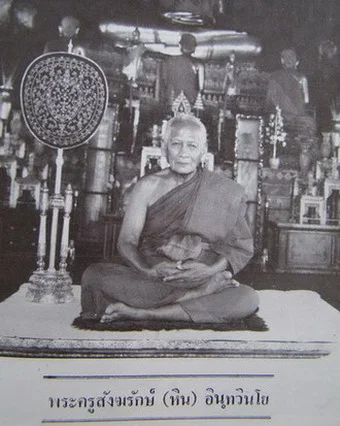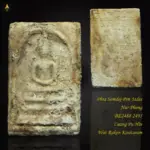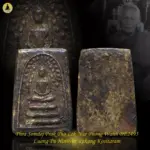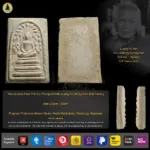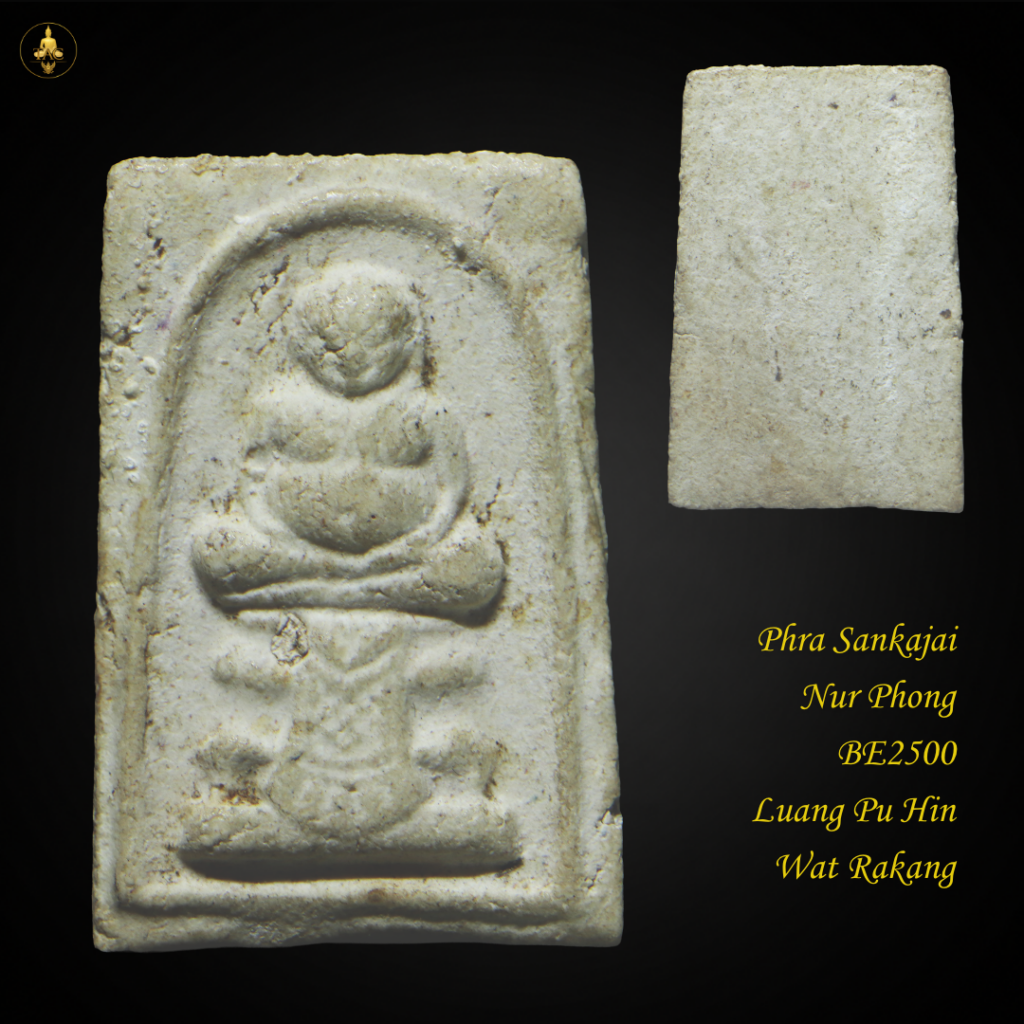
Phra Sankajai Nur Phong BE2500 Luang Pu Hin Wat Rakang
| Type | Phra Sankajai |
| Monk | Luang Pu Hin Wat Rakang Kositaram |
| Temple | Wat Rakang |
| B.E. Year | 2500 |
| Material | Nur Phong |
| Condition | Good |
| SKU | TAC-PhraSankajai-LpHin-001 |
Authentic Phra Sankajai by Luang Pu Hin Wat Rakang Kositaram, pressed in nuea phong at Wat Rakang BE 2500. No certificate. Available from TAC, Singapore.
What is the Phra Sankajai by Luang Pu Hin Wat Rakang Kositaram?
The Phra Sankajai Luang Pu Hin Wat Rakang Kositaram is a nuea phong (sacred powder) amulet pressed at Wat Rakang in BE 2500 — the 2,500th anniversary year of the Buddha’s enlightenment. Made from a muan sarn (sacred powder blend) and consecrated under Luang Pu Hin Wat Rakang Kositaram, it is one of the more historically grounded pieces from that commemorative year.
BE 2500 and why that year still matters to collectors
BE 2500 — 1957 CE — was not an ordinary production year. Across Thailand, it marked the 2,500th anniversary of the Buddha’s enlightenment, and temples responded with consecration ceremonies of unusual scale and seriousness. Amulets from this year carry that historical weight whether or not a collector places spiritual value on them.
Wat Rakang, on the west bank of the Chao Phraya River in Bangkok, was already one of the most documented amulet-producing temples in the country by that point. Its participation in BE 2500 ceremonies added another layer to a lineage that serious collectors in Singapore, Malaysia, and Greater China have tracked for decades. The broader Thai Buddhist amulet tradition treats pieces from this anniversary year as a distinct reference class.
Luang Pu Hin Wat Rakang Kositaram was a monk with a deep grounding in Buddhist meditation and Wicha (sacred knowledge). His standing in both the monastic community and among lay devotees meant that his involvement in consecration — pluk sek (the ritual empowerment ceremony) — carried weight with collectors even then. That reputation has only grown as surviving pieces from BE 2500 have become harder to source in honest condition.
The nuea phong: what it is and what to look for
This piece is pressed from nuea phong — the powder-based material used across many of Thailand’s most documented amulets. The muan sarn typically combines finely ground sacred herbs, temple ash, pollen, and consecrated earth. Phong amulets are valued partly because the powder matrix absorbs and holds the energetic residue of the consecration over decades.
The specific phong composition used at Wat Rakang for this run follows traditional formulations. Each material in the blend is chosen for ritual purpose, then pressed under supervision into the pim (mould) that defines the Phra Sankajai iconography — the seated, well-rounded figure associated with contentment and abundance.
After more than sixty-five years, genuine pieces from this batch show a surface patina that develops naturally in aged phong. The powder density feels compact and slightly grainy under the thumb, different from modern pressings. Mould definition on authentic examples is crisp in the core detail but softened at the edges by age — not sharp the way a recent copy would be. These are the physical reference points collectors use when no certificate is present.
- Surface patina: naturally matte and even, not artificially darkened
- Powder density: compact, not chalky or loose at the edges
- Pim detail: Phra Sankajai iconography readable but age-softened at the periphery
- Weight and feel: consistent with the known phong mix, not heavier from added filler
This piece carries no certificate (gammakan documentation is absent). That is common for pieces of this age and does not by itself indicate a problem — but it does mean authentication rests entirely on physical examination against documented reference pieces from the same temple and year. Consult collectors or dealers who have handled confirmed examples before committing.
What collectors associate with Phra Sankajai
Phra Sankajai is one of the most recognisable figures in Thai devotional practice — the laughing, full-figured disciple of the Buddha whose image traditionally represents inner contentment and material sufficiency. Collectors across Thailand, Singapore, Malaysia, and China associate the iconography with wealth attraction, business steadiness, and metta (loving-kindness) toward others.
Pieces consecrated by a respected monk at a major temple carry an added dimension for those who wear amulets for devotional reasons. The specific pairing of Luang Pu Hin’s practice with Wat Rakang’s ritual environment in a commemorative year like BE 2500 is what separates this from a generic Phra Sankajai pressing. That combination is what drives collector interest, quite apart from any spiritual consideration.
We at TAC sourced this Phra Sankajai Luang Pu Hin Wat Rakang Kositaram as a representative example of BE 2500 nuea phong production from Wat Rakang — a year and temple combination that collectors in this region consistently seek out. For a collector who wants a historically grounded Phra Sankajai from a documented temple in a landmark year, this is the kind of piece worth examining closely.
Attributes reflect Thai Buddhist devotional tradition and are not measurable claims.