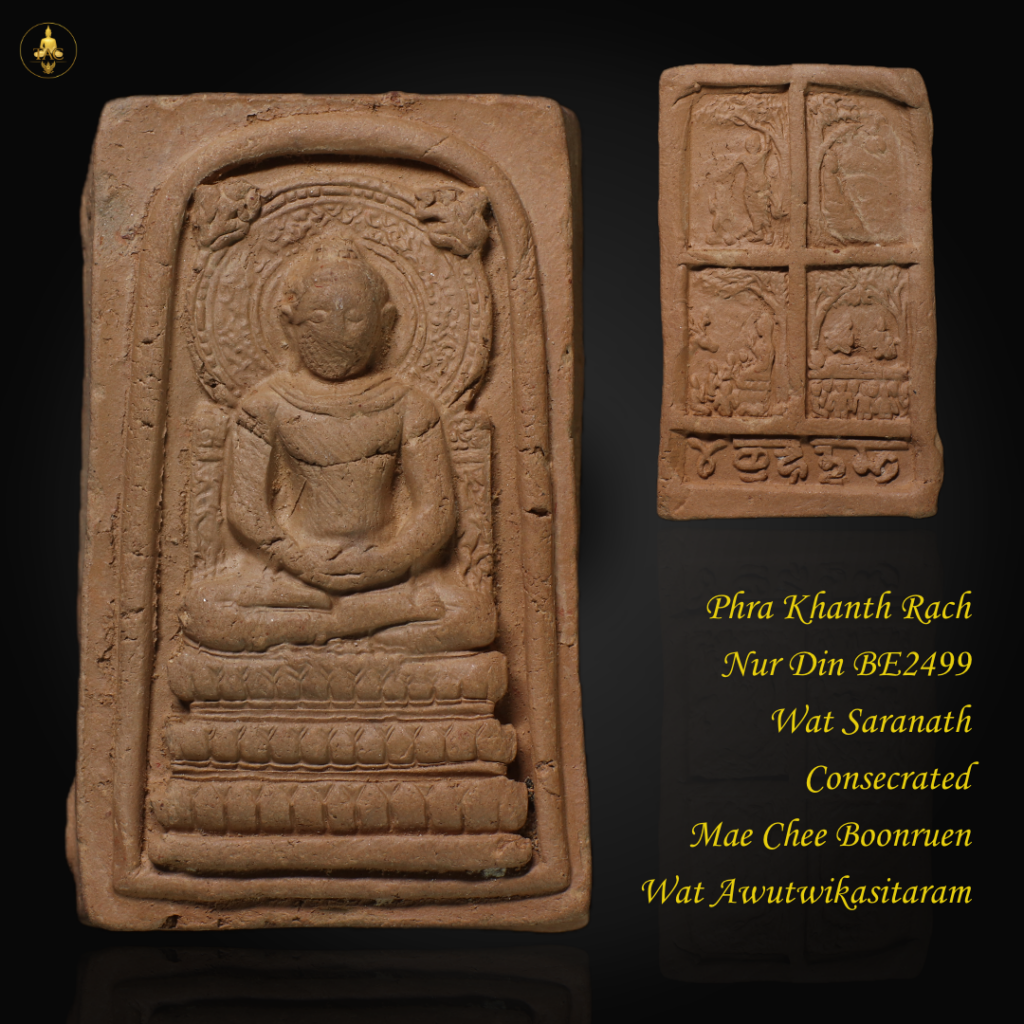
Phra Khanth Rach Nur Din BE2499 Wat Saranath, Consecrated Mae Chee Boonruen Wat Awutwikasitaram
| Type | Phra Khanth Rach |
| Monk | Maechee Boonruen Tongboonterm Wat Awutwikasitaram, Bangkok |
| Temple | Wat Awutwikasitaram |
| B.E. Year | 2499 |
| Material | Nur Din |
| Condition | Very Good |
| SKU | TAC-PhraKhanthRach-MaeCheeBoonruenWatAwutwikasitaram-001 |
Authentic Phra Khanth Rach by Maechee Boonruen Tongboonterm Wat Awutwikasitaram, Bangkok. Nur Din, BE 2499. No certificate.
What is the Phra Khanth Rach by Maechee Boonruen Tongboonterm Wat Awutwikasitaram, Bangkok?
The Phra Khanth Rach Maechee Boonruen Tongboonterm Wat Awutwikasitaram, Bangkok is a nuea din (sacred earth clay) amulet produced in BE 2499 under the guidance of Maechee Boonruen Tongboonterm at Wat Awutwikasitaram. Pressed from Nur Din and consecrated at the temple, it carries no certificate and is authenticated by physical inspection against known reference specimens from this batch.
Maechee Boonruen Tongboonterm and why her involvement matters
Maechee Boonruen Tongboonterm Wat Awutwikasitaram, Bangkok was a Buddhist nun whose depth of practice earned her genuine standing in the monastic community — not a ceremonial title, but a reputation built over years of disciplined cultivation. That distinction is important when assessing any amulet she consecrated. The spiritual weight behind the phutthaphisek (consecration ceremony) depends heavily on who is leading it.
Her involvement in the BE 2499 batch of the Phra Khanth Rach elevated this run above standard temple-issue pieces. Collectors who follow her lineage treat her consecrations with the same seriousness they would give to revered senior monks of the same era. Finding a genuine piece from this period is harder now than it was a decade ago.
Wat Awutwikasitaram and the BE 2499 production
Wat Awutwikasitaram in Bangkok is the home temple of this piece — both the site of production and the source of the ritual framework that governed the consecration. Mid-century Thai temples operating under strict ceremonial protocols produced amulets in a way that is difficult to replicate today. The Thai Buddhist amulet tradition has deep roots in Theravada practice, and BE 2499 falls squarely within the golden era that most serious collectors focus on.
The temple’s oversight of this batch meant the phutthaphisek followed established ritual correctness — Pali chanting, proper assembly of practitioners, and the full ceremonial sequence expected of a legitimate temple-sanctioned edition. That process is what separates a piece like this from later, less controlled productions.
The Nur Din nuea and what to look for when authenticating
Nur Din — the nuea (material/substance) used here — is a sacred earth clay pressed into the pim (mould) to capture the Phra Khanth Rach iconographic form. The material is valued for its density, its ability to hold fine mould detail, and the way it ages over decades. A genuine BE 2499 piece will show surface oxidation, micro-cracking consistent with over sixty-five years of natural ageing, and clay density that differs clearly from modern reproductions.
This piece carries no certificate, which is common for amulets of this era. Authentication rests entirely on physical examination. Collectors should check:
- Surface ageing — genuine micro-cracking and oxidation patterns throughout the clay body, not just at the edges
- Pim detail — the mould impression should be crisp and consistent with documented BE 2499 reference specimens from Wat Awutwikasitaram
- Clay density — Nur Din from this period has a distinct weight and texture that differs from later reformulations
- Provenance — prior ownership history or documentation, even informal, strengthens the case considerably
Cross-referencing against niyom (collector-standard reference pieces) held by established Thai amulet clubs in Thailand, Singapore, or Malaysia is the most reliable route to a confident identification. No certificate means provenance and physical evidence carry all the weight.
We at TAC sourced this Phra Khanth Rach Maechee Boonruen Tongboonterm Wat Awutwikasitaram, Bangkok from the BE 2499 batch — a no-certificate piece that stands on its physical merits alone, which is exactly how most vintage Nur Din amulets of this era are authenticated. For collectors who follow Maechee Boonruen Tongboonterm's lineage, a genuine example from this period is genuinely hard to find, and we treat this one accordingly.
Attributes reflect Thai Buddhist devotional tradition and are not measurable claims.