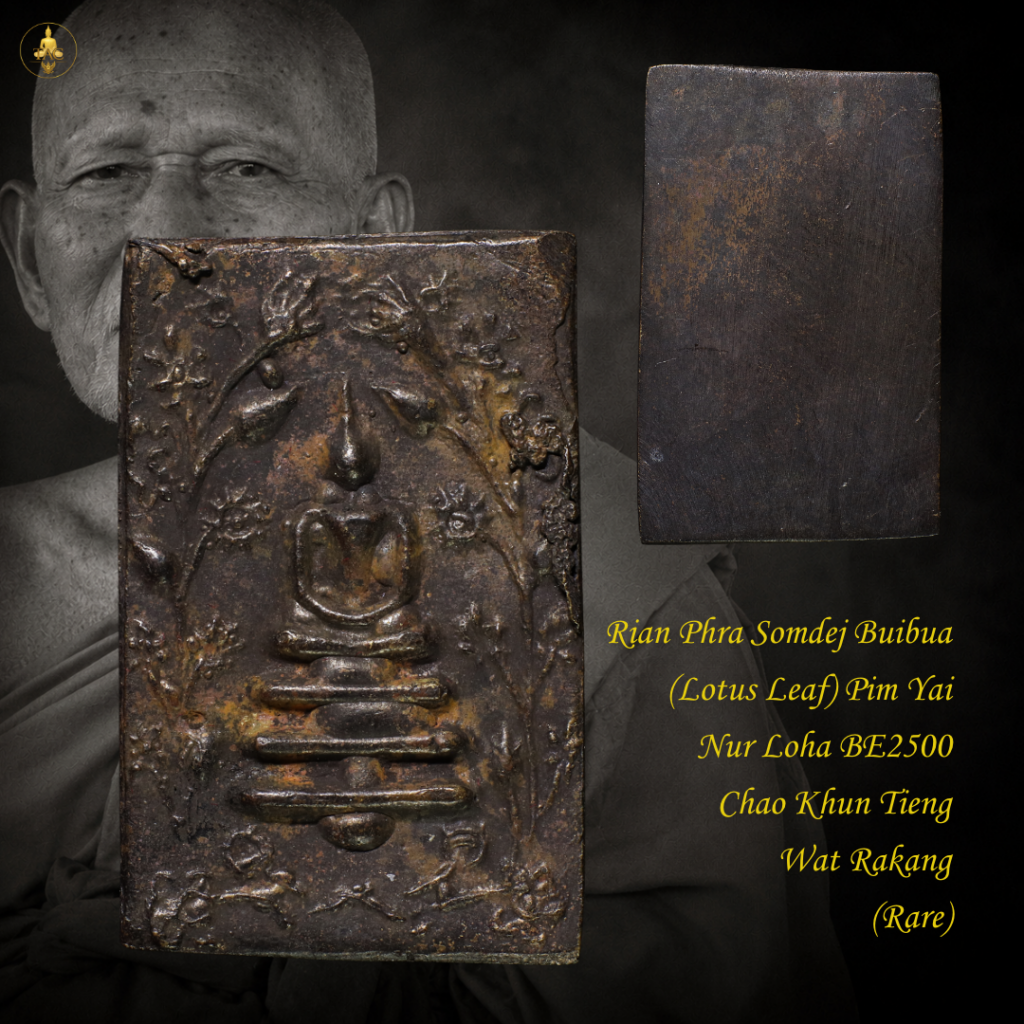
Rian Phra Somdej Buibua (Lotus Leaf) Pim Yai Nur Loha BE2500 Chao Khun Tieng Wat Rakang (Rare)
| Type | Rian Phra Somdej Buibua (Lotus Leaf) Pim Yai |
| Monk | Chao Khun Tieng (CK Tieng) (Phra Thammathirat Ratchamuni) Wat Rakang Kositaram |
| Temple | Wat Rakang |
| B.E. Year | 2500 |
| Material | Nur Loha |
| Size | 34 x 25 mm |
| Condition | Very Good |
| SKU | TAC-RianPhraSomdejBuibua(LotusLeaf)PimYai-ChaoKhunTieng-001 |
Rian Phra Somdej Buibua (Lotus Leaf) Pim Yai Chao Khun Tieng, Wat Rakang BE 2500. Nur Loha cast bronze, commissioned by Royal Thai Navy Dockyard. Rare large pim. Singapore dealer TAC.
What is the Rian Phra Somdej Buibua (Lotus Leaf) Pim Yai by Chao Khun Tieng, and why is it rare?
The Rian Phra Somdej Buibua (Lotus Leaf) Pim Yai Chao Khun Tieng is a four-sided cast bronze amulet produced at Wat Rakang, Bangkok, in BE 2500. Made from nur loha (bronze alloy) with metal reportedly sourced from the chimney of the Sri Ayutthaya ship, it was commissioned by the Royal Thai Navy Dockyard. Only a small number were produced, and the piece is catalogued in reference books at prices in the mid-thousands.
The monk behind this piece — and why his name carries weight
Chao Khun Tieng held senior ecclesiastical rank at Wat Rakang, one of Bangkok’s most historically significant temples on the Thonburi bank of the Chao Phraya. The temple itself is closely associated with the broader Thai Buddhist amulet tradition — Wat Rakang’s name carries immediate recognition among collectors across the region precisely because of its long lineage of serious monk-masters.
BE 2500 is a particularly meaningful year in Thai Buddhist history — it marks the 2,500th anniversary of the Buddhist Era, a milestone year that prompted major ceremonial activity across the country. Amulets produced in that year carry the weight of that occasion, and pieces linked to it are tracked carefully by collectors in Singapore, Malaysia, Taiwan and beyond.
The nuea and what makes this casting unusual
The nuea here is nur loha — a cast bronze alloy — which puts this firmly in the category of metal-cast rian rather than the pressed powder pong type most people associate with Phra Somdej. The four-sided form is deliberate. It frames the Phra Somdej image within a lotus-leaf (buibua) border, a design choice that gives the pim yai (large mould) its visual weight and collector name.
What sets this run apart is the stated origin of the metal: sourced from the chimney of the Sri Ayutthaya naval vessel, as commissioned by the Royal Thai Navy Dockyard. This is the kind of provenance detail that either appears in the documentation or it doesn’t — there is no middle ground, and it is precisely what reference books cite when pricing this piece in the mid-thousands range. The surface now carries the dry, aged patina you expect from a genuine piece of this era — not the wet sheen of a recent casting.
What to look for when authenticating this pim
With a piece this age and this price range, the authentication points matter. For this pim yai, experienced collectors focus on:
- The four-sided frame — proportion and depth of the cast should be consistent with known reference examples from BE 2500 Wat Rakang production
- Surface texture — genuinely aged nur loha shows a dry, settled oxidation rather than a uniform colour
- The lotus-leaf border detail — sharpness of the buibua relief is a key pim marker
- Provenance documentation linking the piece to the Royal Thai Navy Dockyard commission
No certificate is listed with this piece at TAC. A serious buyer should factor that into pricing and satisfy themselves through comparison against documented reference examples or consult a sien with direct experience of this run.
How collectors and devotees carry this piece
Cast bronze Phra Somdej amulets from Wat Rakang are traditionally associated with metta — the quality of loving-kindness and goodwill that is said to open doors in both social and professional life. Devotees who carry Chao Khun Tieng’s pieces from this era generally regard them as supporting authority, smooth dealings and protection during travel — appropriate given the naval commissioning context. These are collector-tradition associations, not guarantees. What is not in question is the historical standing of the piece itself.
This is a rare four-sided cast bronze Phra Somdej from Chao Khun Tieng at Wat Rakang, produced in BE 2500 — the 2,500th anniversary year — and commissioned by the Royal Thai Navy Dockyard using metal reportedly from the Sri Ayutthaya ship's chimney. The provenance story is specific enough to verify against reference books, which price this run in the mid-thousands. No certificate accompanies this piece, so we're pricing and presenting it on the strength of the physical evidence; a buyer who knows this pim will recognise it.
Attributes reflect Thai Buddhist devotional tradition and are not measurable claims.