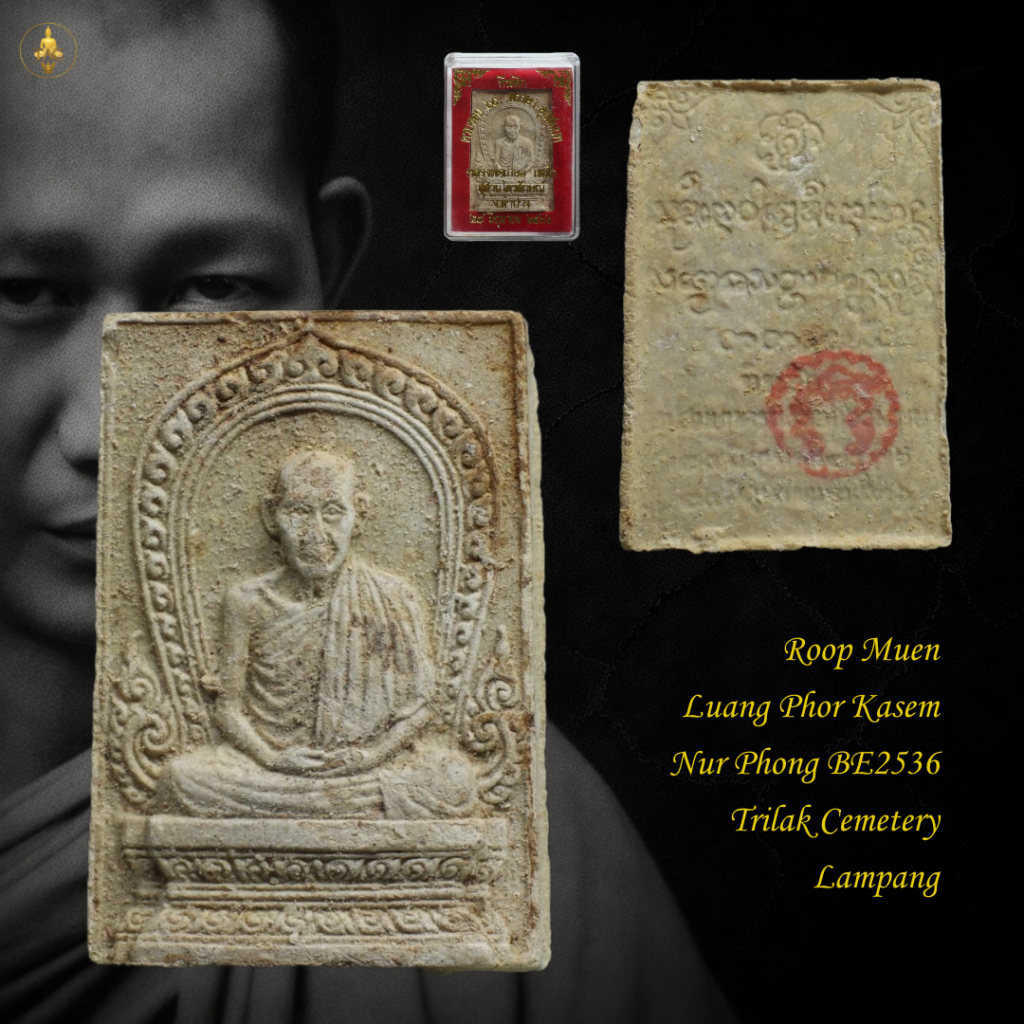
Roop Muen Luang Phor Kasem Nur Phong BE2536 Trilak Cemetery Lampang
| Type | Roop Muen Luang Phor Kasem |
| Monk | Luang Phor Kasem Khemako (Lp Kasem) Trilak Cemetery, Lampang |
| Temple | Trilak Cemetery Lampang |
| B.E. Year | 2536 |
| Material | Nur Phong |
| Condition | Good |
| SKU | TAC-RoopMuenLuangPhorKasem-LpKasem-001 |

Adds this amulet and the offer at the bundle price — ready at checkout. Or mention it when you enquire on WhatsApp.
Roop Muen Luang Phor Kasem by Luang Phor Kasem, Trilak Cemetery Lampang, BE 2536. Nur Phong material. Singapore dealer TAC.
What exactly is the Roop Muen Luang Phor Kasem from Trilak Cemetery Lampang, BE 2536?
The Roop Muen Luang Phor Kasem Luang Phor Kasem is a portrait amulet pressed from nur phong (sacred powder blend) and consecrated at Trilak Cemetery, Lampang, in BE 2536. It carries the image of one of northern Thailand’s most deeply respected forest monks. This is a straight BE 2536 piece — no later runs, no restrikes.
The monk behind the piece
Luang Phor Kasem spent decades practising in the forest cemeteries of Lampang province. He was not a monk who built grand halls or issued large commercial runs. His practice was solitary and disciplined — vipassana meditation among the cremation grounds, the kind of training that Northern Thai tradition traces back to forest masters who went before him.
That background matters for the collector. Amulets from monks of this profile tend to come in limited quantities. The pluk sek (consecration ceremony) was done under his direct oversight at Trilak Cemetery — his own ground, his own practice site. That is a different weight from a ceremony held away from the monk’s home temple.
Collectors across Southeast Asia associate his name with sincere baramee (personal spiritual authority built through practice, not rank). The devotee following spans Thailand, Malaysia and Singapore, and demand from Chinese-speaking collectors in Taiwan and Hong Kong has grown steadily in recent years.
Trilak Cemetery — why the location is part of the piece
Trilak Cemetery Lampang is not an ordinary temple compound. It is a working cremation ground in Lampang province, northern Thailand. Forest monks who train there work in direct confrontation with impermanence — the core of their practice. The muan sarn (the sacred material blend) pressed into nur phong amulets from this site carries that association.
For collectors familiar with the Thai Buddhist amulet tradition, cemetery-based amulets carry a specific layer of meaning. The phong in a piece like this would typically incorporate materials gathered and blessed at the site — no outside factory involvement. What you hold in your hand was made where the monk lived and practised.
Reading the nuea — what to look for in the pim
The material here is nur phong — pressed sacred powder. On a genuine piece from this run, you want to check the compression and the surface texture first. Phong pieces from forest monk traditions in this era were hand-pressed in small batches, so the density and the face detail on the pim (mould impression) are your first reference points.
Look at the portrait definition — the features of Luang Phor Kasem should read clearly even under age. The reverse face and any yant (sacred inscription) lines should sit clean against the phong, not smeared or softened by over-pressing. Patina that has settled evenly into the recesses is what you want to see. Fake patina tends to sit on the surface rather than into it.
- Portrait definition on the obverse — face and robe lines still readable
- Even compression across the body of the piece — no stress cracks from careless storage
- Reverse yant or inscription lines clean and consistent with the pim
- Phong surface patina settled naturally into recesses, not painted over
No certificate is listed with this piece. For phong amulets of this era and provenance, the collector’s eye on the pim is the primary tool. If you need a second opinion, bring it to a sien (experienced specialist) who knows northern Thai phong work from this period.
What is this Roop Muen Luang Phor Kasem traditionally carried for?
Devotees and collectors associate this piece primarily with metta, baramee and klaew klaad.
- Metta (loving-kindness) — traditionally carried to soften dealings with people, ease friction in relationships and draw goodwill from those around you
- Baramee — the composure and quiet authority that comes from carrying an image of a monk whose personal practice is known; collectors say it supports a steady, trustworthy presence
- Klaew Klaad — the quality of escaping harm or danger; associated with monks who trained in cemetery grounds, where confronting fear was part of daily practice
- Spiritual Growth — for practitioners, an image of a meditating forest monk is a constant reference point; traditionally kept close during sitting practice or carried by those who want to deepen their own cultivation
How collectors wear this today
This piece suits daily wear well. The metta quality makes it a natural fit for anyone whose work runs on relationships — sales, management, client-facing roles, negotiations. The baramee aspect appeals to those who carry responsibility and want a steady, grounded presence at work or in the community. For meditation practitioners, keeping a portrait amulet of a forest monk close during practice is a long-standing tradition in both Thai and Chinese Buddhist circles. Worn on a cord or kept in a wallet, the nur phong material is durable enough for consistent everyday use — just keep it away from prolonged contact with water or strong solvents.
This is a BE 2536 Roop Muen Luang Phor Kasem in nur phong from Trilak Cemetery, Lampang — a forest monk's own ground, not a commercial issue. At TAC we find that pieces from northern Thai forest monks of this profile hold steady collector interest precisely because supply is limited and the production context is straightforward.
Attributes reflect Thai Buddhist devotional tradition and are not measurable claims.