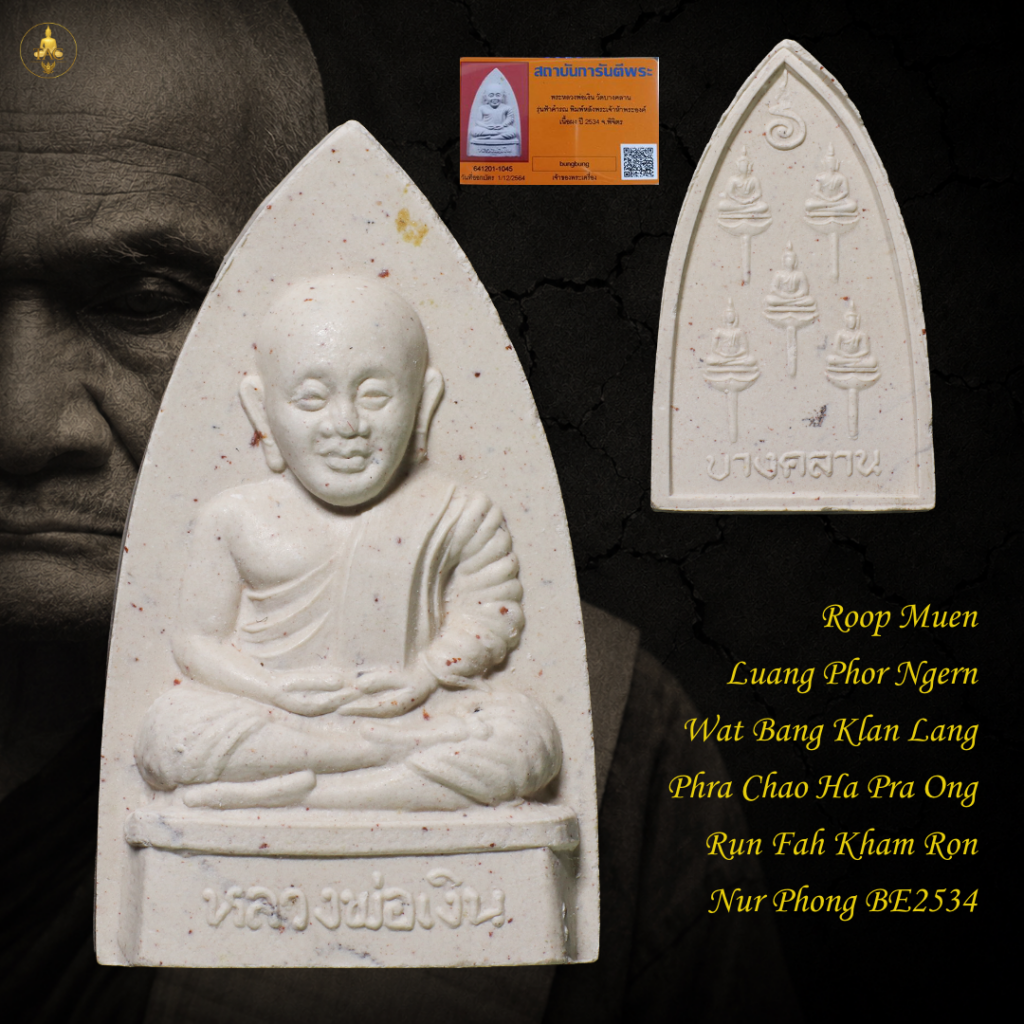
Roop Muen Luang Phor Ngern Lang Phra Chao Ha Pra Ong Run Fah Kham Ron Nur Phong BE2534 Wat Bang Klan
| Type | Roop Muen Luang Phor Ngern Lang Phra Chao Ha Pra Ong Fah Kham Ron |
| Monk | Luang Phor Ngern (Lp Ngern) Wat Bang Klan |
| Temple | Wat Bang Klan |
| B.E. Year | 2534 |
| Material | Nur Phong |
| Pim / Mold | Roop Muen |
| Size | 36 x 21 mm |
| Condition | Excellent |
| Certificate | G-Phra |
| SKU | TAC-RoopMuenLuangPhorNgernLangPhraChaoHaPraOngFahKhamRon-LpNgern-001 |

Adds this amulet and the offer at the bundle price — ready at checkout. Or mention it when you enquire on WhatsApp.
Authentic Roop Muen Luang Phor Ngern Lang Phra Chao Ha Pra Ong Fah Kham Ron Luang Phor Ngern, Wat Bang Klan BE 2534. Nur Phong. Fah Khamron series. G-Pra certified.
What is the Roop Muen Luang Phor Ngern Lang Phra Chao Ha Pra Ong Fah Kham Ron from Wat Bang Klan?
The Roop Muen Luang Phor Ngern Lang Phra Chao Ha Pra Ong Fah Kham Ron Luang Phor Ngern is a nur phong (powdered clay) amulet produced in BE 2534 (1991) at Wat Bang Klan, Pho Thale District, Phichit Province. It carries the image of Luang Phor Ngern on the front and the Five Buddhas mantra — Na Mo Phut Tha Ya — on the reverse. Certified G-Pra.
Luang Phor Ngern and why collectors keep coming back to Wat Bang Klan
Wat Bang Klan in Phichit Province is the home temple of Luang Phor Ngern, one of the most widely collected monks in central Thailand. His amulets have circulated for generations, and the demand has never really dropped off. What drives that is partly his reputation for metta and maha saneh, and partly the sheer consistency of the pim (mould standard) across different runs.
For collectors who cannot stretch to the older, pre-war pieces, the BE 2534 Fah Khamron series is a well-regarded alternative. The name “Fah Khamron” — literally Thunderclap — was given to this run to mark it as a significant ceremony. It was not a small release. The event drew proper attention, and the muan sarn (the blend of sacred powders and old materials) used in pressing these pieces was assembled with care. That matters when you are comparing later runs against each other. You can read more about the broader Thai Buddhist amulet tradition for context on how ceremony grade affects collector standing.
The nuea, the pim and what to check on this piece
The material here is nur phong — pressed powdered clay, possibly blended with dried herbs or older powders from the temple. At roughly 2.1–2.14 cm wide and 3.58–3.6 cm tall, it sits at a standard wearable size. The front face shows the seated image of Luang Phor Ngern. Flip it over and you have the Five Buddhas inscription — Na Mo Phut Tha Ya — which is the defining feature of this particular pim and the detail that separates it from other Luang Phor Ngern runs.
When you look at authentication, focus on these points:
- Face clarity — the facial features on genuine pieces from this run hold their definition. Blurring around the eyes or chin is a flag.
- Reverse inscription — the Five Buddhas yant should be even and legible. Check the spacing between characters.
- Nuea texture — nur phong from this period has a particular density and surface feel. It should not look chalky or machine-smooth.
- G-Pra certificate — this piece carries a G-Pra certification, which is the independent grading used widely by collectors across Singapore, Malaysia and Thailand as a baseline confidence marker.
TAC is a Singapore-based dealer and we handle G-Pra certified pieces specifically because our buyers across the region want that documentation in hand before anything else.
What is this Roop Muen Luang Phor Ngern Lang Phra Chao Ha Pra Ong Fah Kham Ron traditionally carried for?
Devotees and collectors associate this piece with four principal qualities:
- Metta — loving-kindness and warmth toward others; traditionally carried by those who need people to receive them well, whether in daily life or at work.
- Maha Saneh — charm and likeability; collectors associate this with smoother dealings and an easier rapport with strangers and clients alike.
- Kaa Khaay — trade and commerce; the Five Buddhas mantra on the reverse is particularly associated with this quality, and many business owners carry this run for that reason.
- Baramee — a composure and accumulated standing that earns quiet trust; devotees regard Luang Phor Ngern’s image as a focus for this, especially when facing situations that require calm authority.
How collectors wear this today
The size makes it easy for daily wear — it sits comfortably in a standard frame and does not run large. Those in sales, negotiation or any role where first impressions carry weight tend to reach for this one for the metta and maha saneh qualities. Business owners who keep an amulet at their counter or in their wallet often pick the Five Buddhas reverse specifically because of the kaa khaay association. For those in leadership or facing high-pressure decisions, the baramee aspect is what draws them. Practitioners who sit for meditation occasionally keep this piece on the altar rather than around the neck, treating the Five Buddhas mantra as an object of contemplation. No guarantees in any of this — these are traditions and associations that collectors and devotees have carried forward across generations.
This is a G-Pra certified Luang Phor Ngern nur phong piece from the BE 2534 Fah Khamron series — a named major ceremony run from Wat Bang Klan with old materials in the muan sarn and the Five Buddhas mantra on the reverse. For collectors who want an authenticated Luang Phor Ngern without chasing pre-war prices, this run is one of the cleaner options at this level.
Attributes reflect Thai Buddhist devotional tradition and are not measurable claims.