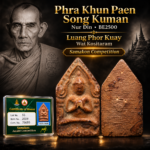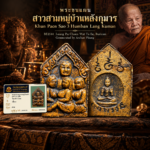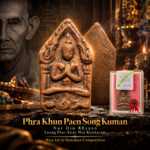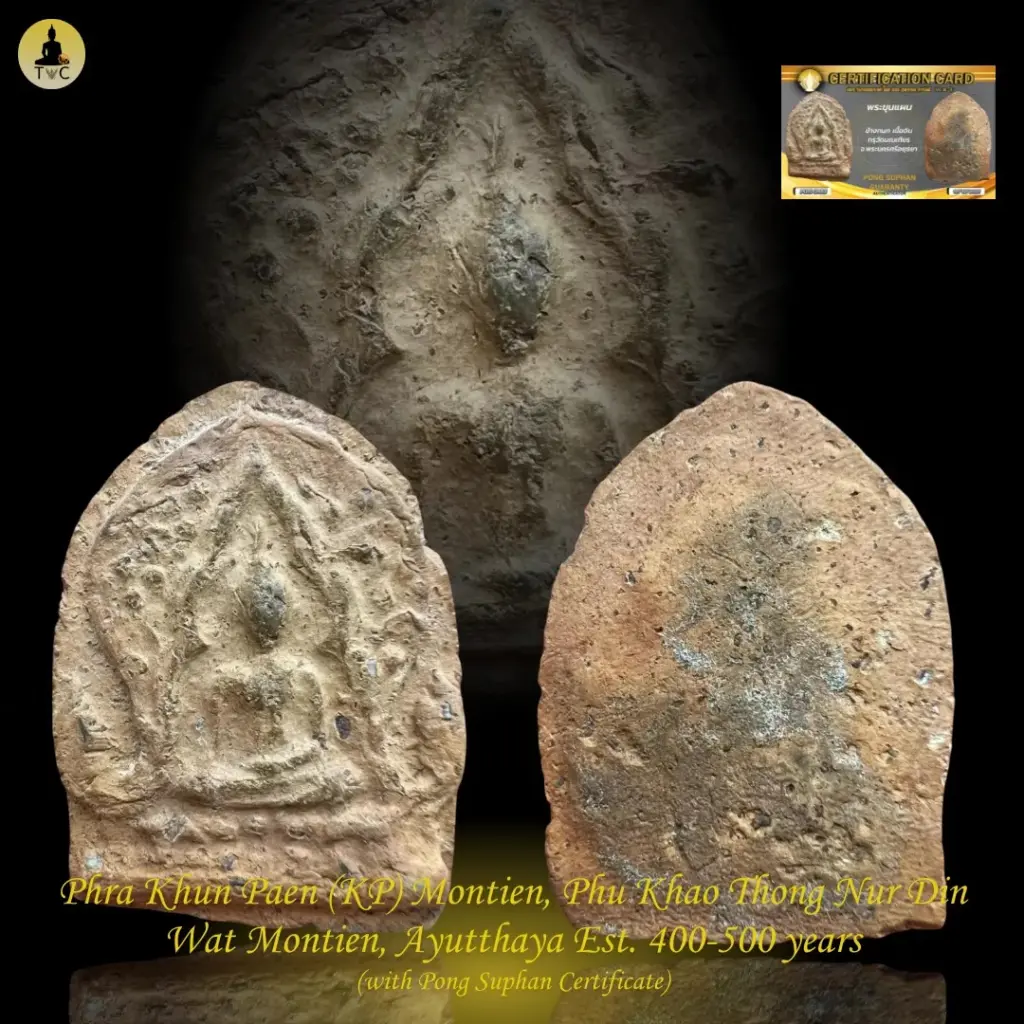
Phra Khun Paen Montien, Phu Khao Thong Nur Din Wat Montien, Ayutthaya Est. 400-500 years
| Type | Phra Khun Paen |
| Temple | Wat Montien |
| Material | Din |
| SKU | TAC-0165 |
Phra Khun Paen Montien, Wat Montien Ayutthaya, est. 400–500 years. Nuea din terracotta, Pong Suphan Certificate. SGD 999.
What is the Phra Khun Paen Montien from Wat Montien, Ayutthaya?
The Phra Khun Paen Montien is an Ayutthaya-attributed nuea din (sacred clay / terracotta) amulet from Wat Montien, associated with the Phu Khao Thong (Golden Mount) landmark in Ayutthaya. Stated age is estimated at 400–500 years. The piece carries a Pong Suphan Certificate and is priced at SGD 999.
The “Montien” Design — What the Framing Tells You
Among early-period terracotta tablets, the word Montien — meaning royal pavilion or throne hall — describes a specific design language rather than a separate amulet category. The Buddha appears enthroned within an elevated architectural frame, giving the piece a composed, regal quality even at small scale. This is distinct from the plain-niche format common across most kru (temple-crypt recovered) tablets.
The pim (mould profile collectors authenticate against) follows a pointed arch silhouette reminiscent of a Bai Sema leaf. The Buddha sits in Mara Wichai posture — earth-touching — on a lotus base, with pavilion-like lines framing the figure on both sides. Collectors read the relief depth, the rhythm of the arch, and the lotus geometry as the primary visual anchors when assessing a piece against reference examples.
The nuea (material/substance) is nuea din: sacred terracotta traditionally described as temple earth blended with incense ash and mineral-rich clay, pressed and fired in earthen kilns. Over centuries, the surface develops a stable oxidation layer and a settled patina that functions as a natural timestamp. On the back face, soil-contact traces from long storage are among the cues collectors look for when assessing age consistency. The Thai Buddhist amulet tradition has documented this clay-body reading as a standard part of authentication practice for Ayutthaya-period tablets.
Provenance, Certification, and What to Record
This piece carries a Pong Suphan Certificate — the documentation reference that anchors its provenance trail. For any older terracotta, sharp surface detail combined with clean paperwork is what keeps a piece study-ready for years and protects resale value down the line.
When filing your collector records, keep two timelines separate: the era attribution (“est. 400–500 years, Ayutthaya, as stated”) and the modern provenance trail (certificate reference, image set, ownership chain). Conflating the two is where documentation becomes messy. A clean record on both counts is what moves a piece from “interesting find” to confident long-term hold.
- Pim profile: pointed arch / Bai Sema-like silhouette, pavilion framing, Mara Wichai posture
- Nuea: nuea din (terracotta / sacred clay); check clay colour consistency and edge weathering
- Surface reading: stable oxidation, settled patina, soil-contact traces on reverse — consistent with long-stored Ayutthaya-period tablets
- Certificate: Pong Suphan Certificate (as provided)
- Price: SGD 999
The “Montien” framing is less common across the broader kru tablet field, which is part of what drives collector interest here. Pieces that combine a distinct design vocabulary, a stated Ayutthaya attribution, and active certification are easier to document and easier to present at future assessment sessions.
We acquired this Phra Khun Paen Montien as a documented nuea din piece from Wat Montien, Ayutthaya, carrying a Pong Suphan Certificate — which is the provenance anchor any serious collector will want in place for a stated Ayutthaya-period tablet. The "Montien" pavilion framing is genuinely less common across the kru tablet field, and that design specificity, combined with the certification, is what makes this a credible long-term hold at SGD 999.
Attributes reflect Thai Buddhist devotional tradition and are not measurable claims.