Rian Phra Somdej Pim Samlian BE2500 Chao Khun Tieng (CK Tieng) Wat Rakang Kositaram (Rare)
| Type | Phra Somdej |
| Monk | Chao Khun Tieng (CK Tieng) (Phra Thammathirat Ratchamuni) Wat Rakang Kositaram |
| Temple | Wat Rakang |
| B.E. Year | 2500 |
| SKU | TAC-0171 |
Authentic Phra Somdej by Chao Khun Tieng (CK Tieng) (Phra Thammathirat Ratchamuni) Wat Rakang Kositaram, BE 2500 Pim Samlian. Sacred powder and blessed metal.
What is the Phra Somdej Chao Khun Tieng (CK Tieng) (Phra Thammathirat Ratchamuni) Wat Rakang Kositaram BE 2500 Pim Samlian?
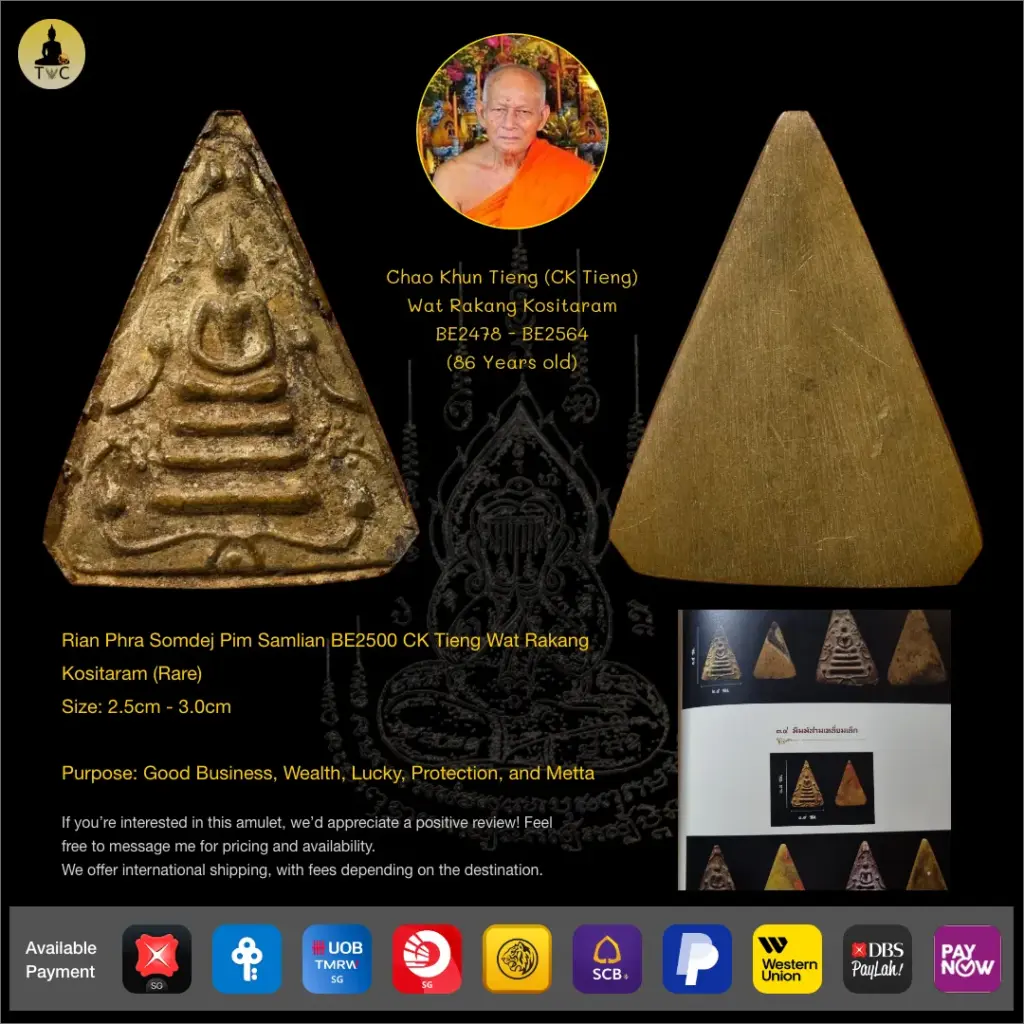
The Phra Somdej Chao Khun Tieng (CK Tieng) (Phra Thammathirat Ratchamuni) Wat Rakang Kositaram BE 2500 Pim Samlian is a coin-form Somdej amulet created at Wat Rakang in Bangkok to mark the 2,500th year of the Buddhist Era. Pressed from sacred powder blends including Phong Wiset, Phong Itthije, and Phong Trinisinghe, combined with blessed metals, it was consecrated under the direct supervision of CK Tieng himself.
The monk behind this piece and why that lineage matters
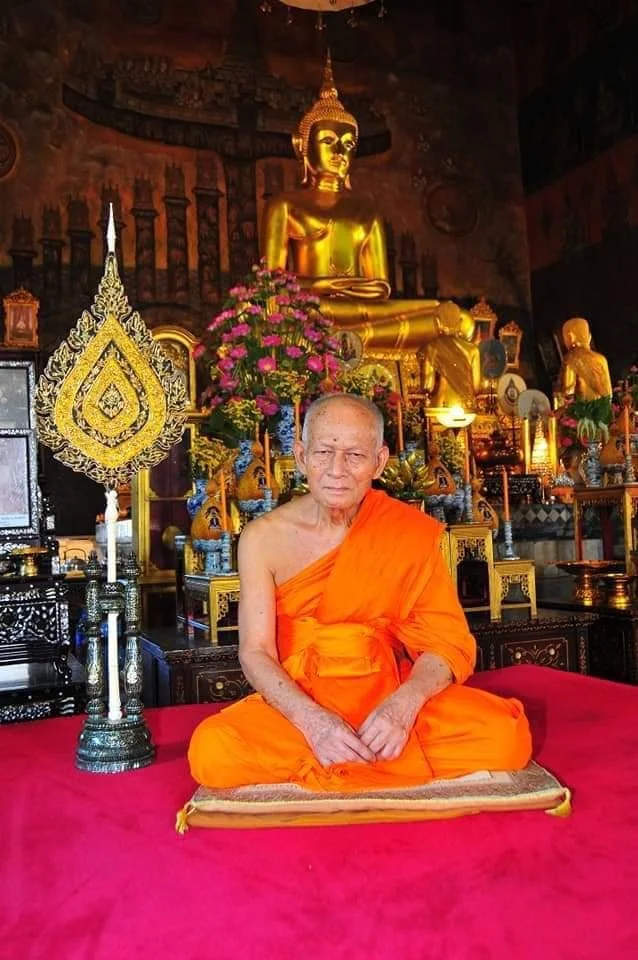
Chao Khun Tieng (CK Tieng) (Phra Thammathirat Ratchamuni) Wat Rakang Kositaram served as abbot of Wat Rakang at the time of this edition’s creation. He was a direct spiritual descendant in the line of Somdej Phra Buddhachan Toh — the 19th-century master whose Phra Somdej amulets set the standard that every subsequent Wat Rakang piece is judged against.
That lineage is not a marketing claim. It shapes the muan sarn (sacred powder blend) recipes, the chanting protocols, and the pim (mould) design that CK Tieng carried forward. Collectors treat this provenance as part of the authentication case, not a footnote.
BE 2500 — 1957 CE — was a nationally significant year for Thai Buddhism, marking a 2,500-year milestone since the time of the Buddha. Creating this edition at that moment, for that occasion, was deliberate. It also served a practical purpose: proceeds supported restoration work at Wat Rakang itself.
Nuea, pim, and how this edition was made
The nuea (material/substance) here is a combination of muan sarn powder blends — Phong Wiset, Phong Itthije, and Phong Trinisinghe — mixed with sacred metals that had been blessed during chanting sessions. This multi-component composition follows the same ceremonial approach associated with the broader Thai Buddhist amulet tradition.
The pim is Samlian — the classical Somdej Buddha seated on a three-tiered base. That tiered throne is consistent across the major Wat Rakang Somdej pim families, and experienced collectors use the proportions of the base, the shoulder width of the Buddha image, and the reverse-face details to anchor authentication. The rian (coin or medallion) form distinguishes this from the rectangular Somdej tablets more commonly associated with the temple.
Before casting, CK Tieng led senior monks through extended chanting and blessing ceremonies, following the ritual structure traced back to Somdej Phra Buddhachan Toh. The consecration process — pluk sek (the empowerment ceremony) — was conducted entirely at Wat Rakang.
What collectors examine and how this piece is certified
Authenticating a BE 2500 piece from Wat Rakang starts with the pim. On the Samlian, collectors focus on the three-tier base geometry, the casting detail at the Buddha’s robe hem, and the surface patina consistent with over six decades of age. Sacred metal inclusions visible at the edge or reverse are additional reference points.
- Pim Samlian proportions — base tiers, seated figure height relative to overall diameter
- Surface condition of the muan sarn: texture, colour depth, and age-appropriate oxidation
- Sacred metal distribution within the pressed body
- Reverse-face details and any yant (sacred inscription) markings
No certificate is documented for this piece at present. Collectors considering this for a niyom (collector-standard reference) collection should factor that into due diligence and seek verification from experienced authentication circles.
This BE2500 Pim Samlian rian is one of the more historically grounded pieces we carry from Wat Rakang — created specifically to mark 2,500 years of the Buddhist Era, under the personal supervision of Chao Khun Tieng, a direct spiritual heir to the Somdej Toh lineage. For collectors focused on Wat Rakang provenance and historically significant editions, the combination of the milestone year and Chao Khun Tieng's lineage makes this a serious candidate for a reference-grade holding.
Attributes reflect Thai Buddhist devotional tradition and are not measurable claims.