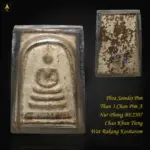
Phra Ruang (Open World) Nur Phong Dam BE2500–2507 Chao Khun Tieng Wat Rakang (Rare)
| Type | Phra Ruang |
| Monk | Chao Khun Tieng (CK Tieng) (Phra Thammathirat Ratchamuni) Wat Rakang Kositaram |
| Temple | Wat Rakang |
| B.E. Year | 2500 |
| Material | Phong Dam |
| Condition | Good |
| SKU | TAC-0172 |
Authentic Phra Ruang by Chao Khun Tieng (CK Tieng) Wat Rakang Kositaram, BE 2500, pressed in phong dam. No certificate. Available from TAC, Singapore.
What is the Phra Ruang by Chao Khun Tieng (CK Tieng) (Phra Thammathirat Ratchamuni) Wat Rakang Kositaram?
The Phra Ruang Chao Khun Tieng (CK Tieng) (Phra Thammathirat Ratchamuni) Wat Rakang Kositaram is a sacred powder amulet in the Phra Ruang format, produced at Wat Rakang in BE 2500 and pressed from phong dam — a darker sacred powder blend known for its dense body and distinctive surface character. No certificate accompanies this piece.
Phong Dam as a material — what collectors are actually looking at
Phong dam (dark sacred powder) sits at the opposite end of the spectrum from the pale, chalk-toned powders most collectors associate with Somdej. The body is denser, the tone deeper, and the surface behaves differently under age. Good examples develop a quiet, settled look — fine pores, natural micro-speckling, tone that pools into the recesses without any artificial darkening.
The authentication checklist for any phong dam piece is straightforward. Surface tone should look naturally aged, not uniform like fresh paint. Texture should show the fine, compact character of old pressed powder. Edge wear — corners, rim, back — should tell a consistent story with the face.
- Surface tone: naturally aged settling, not overly even
- Texture: fine pores and compact press behaviour consistent with old powder
- Edge logic: wear pattern on corners and back should match the face
For pim (mould) authentication, collectors focus on the standing figure’s silhouette and proportion, the frame space around the figure, and the back layout with pressure marks that belong to the same mould family. Clear front-and-back photo references are the starting point for any side-by-side comparison with other Wat Rakang Phra Ruang examples.
Chao Khun Tieng and the Wat Rakang connection
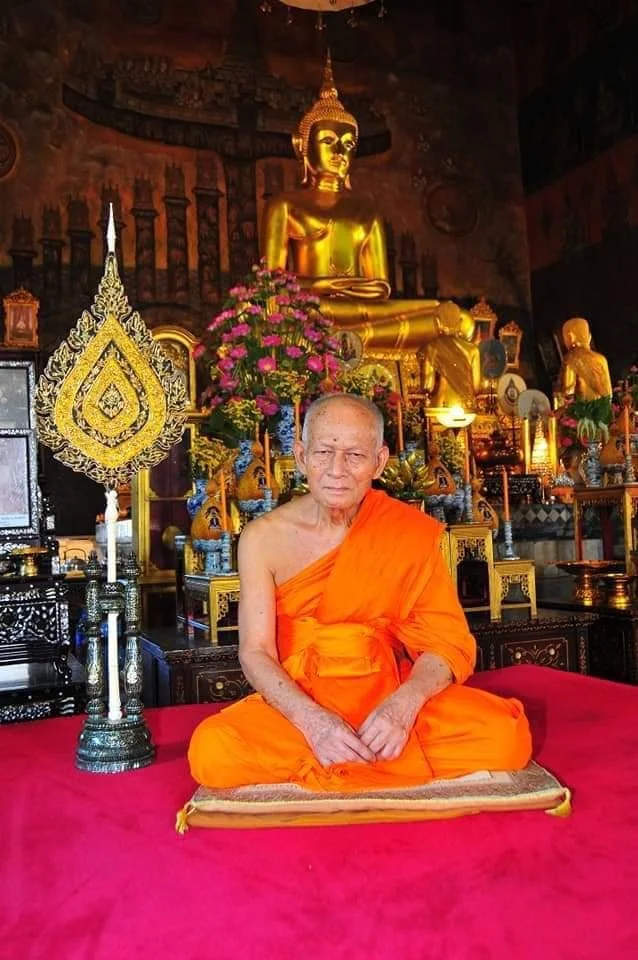
The piece carries the name of Chao Khun Tieng (CK Tieng) (Phra Thammathirat Ratchamuni) Wat Rakang Kositaram, a senior monk of Wat Rakang whose association with amulets of this era gives the piece its primary collector context. Wat Rakang is a name that carries real weight in Thai powder amulet culture — it is the temple most closely identified with Somdej tradition, and any Phra Ruang format piece tied to that lineage draws attention from serious collectors.
The Thai Buddhist amulet tradition places considerable importance on the monk’s lineage, the temple environment, and the era of production. For this BE 2500 piece, all three factors point in the same direction. That combination — Wat Rakang association, older era, stated monk — is what gives the Phra Ruang Chao Khun Tieng (CK Tieng) (Phra Thammathirat Ratchamuni) Wat Rakang Kositaram its standing in a collector lineup.
The “Open World” label circulating in the market is a collector nickname, useful for search and reference. It is not an official batch designation. The real identity rests on material behaviour, pim consistency, and the stated Wat Rakang association — not the nickname.
No certificate — what that means for a collector
This piece carries no certificate. That is a straightforward fact, not a disqualifier. Many significant older pieces predate the certification systems collectors rely on today. The implication is that authentication falls entirely on photo comparison, material reading, and — where possible — consultation with collectors who have handled the same mould family.
Collectors approaching an uncertified phong dam piece should treat correct identification as a structured checklist: stated era, stated temple line, visible pim characteristics, and surface behaviour consistent with naturally aged dark powder. When those cues line up across front and back, the piece earns its place in a collection on its own merits.
We at TAC are listing this phong dam Phra Ruang with a stated Wat Rakang association and CK Tieng attribution, dated to BE 2500 — an era where formal certification was not yet standard practice, so the authentication work sits with the collector. For a collector building a powder-piece reference set, the combination of a credible temple pairing, a specific monk attribution, and a legible phong dam body makes this a structurally honest entry worth examining carefully.
Attributes reflect Thai Buddhist devotional tradition and are not measurable claims.