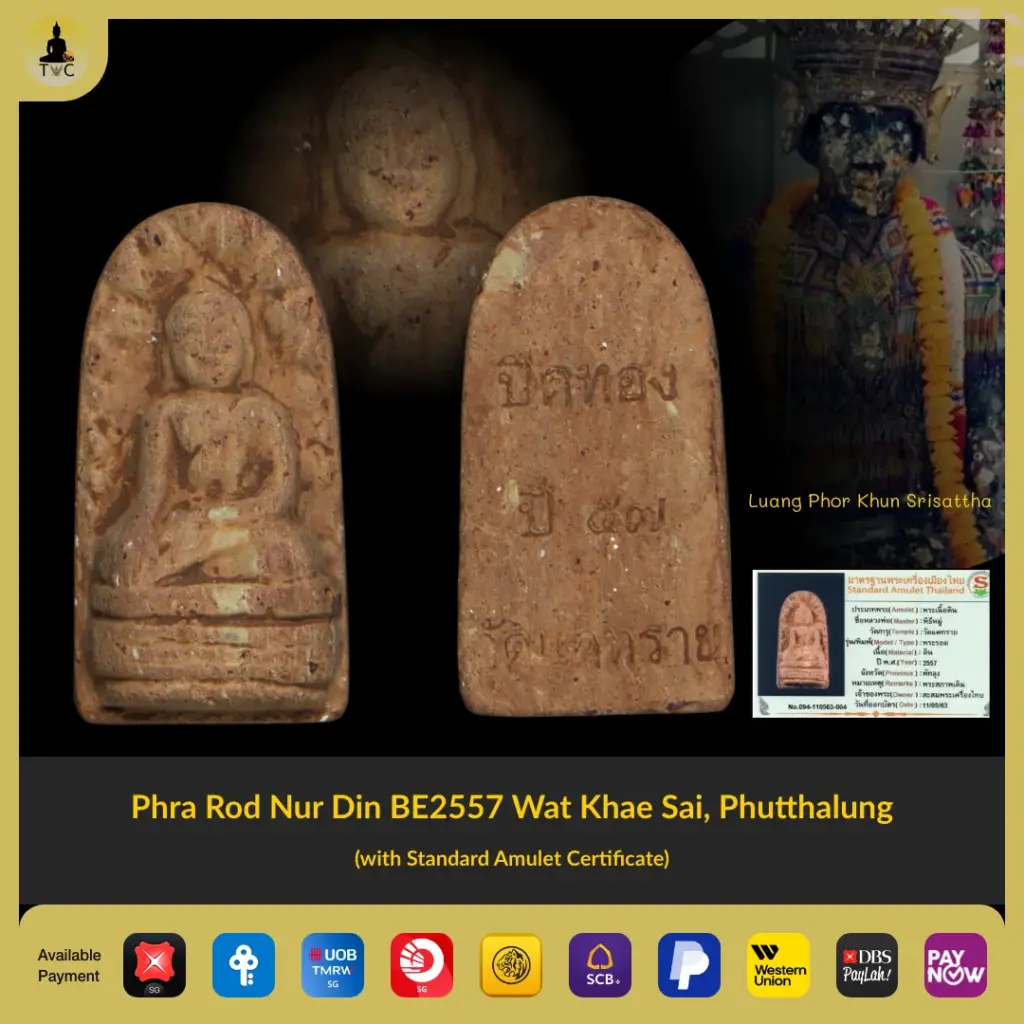
Phra Rod Nur Din BE2557 Wat Khae Sai, Phutthalung (Mass Chanting)
| Monk | Luang Phor Khun Srisattha |
| Temple | Wat Khae Sai |
| B.E. Year | 2557 |
| Material | Din |
| SKU | TAC-0178 |
Authentic Phra Rod Nur Din BE2557 Wat Khae Sai, Phutthalung (Mass Chanting) by Luang Phor Khun Srisattha. Sacred clay, mass chanting consecration, BE2557.
What is the Phra Rod Nur Din BE2557 Wat Khae Sai, Phutthalung (Mass Chanting) by Luang Phor Khun Srisattha?
The Phra Rod Nur Din BE2557 Wat Khae Sai, Phutthalung (Mass Chanting) by Luang Phor Khun Srisattha is a sacred clay amulet pressed at Wat Khae Sai in Phutthalung, consecrated in BE 2557 (2014). Made from nur din (sacred clay), it continues the Phra Rod lineage — one of Thailand’s Benjapakee five grand amulet types — blessed through a mass chanting ceremony led by Luang Phor Khun Srisattha and senior monks.
Luang Phor Khun Srisattha and the Phra Rod Lineage at Wat Khae Sai
The Phra Rod tradition carries serious weight among collectors. It belongs to the Benjapakee group — the five amulet types considered the pillars of the broader Thai Buddhist amulet tradition — and its roots run through both Lamphun in the north and the southern provinces. Luang Phor Khun Srisattha anchors this piece to that lineage through his direct involvement in the consecration.
Wat Khae Sai is the institutional home of this edition. The BE2557 batch was created with two clear purposes: to preserve the Phra Rod sacred lineage in southern Thailand, and to raise support for temple restoration and religious development at Wat Khae Sai. Both points matter to a collector because they confirm this was a structured, intentional release — not a casual run.
The pluk sek (consecration ceremony) was conducted as a mass chanting event, with Luang Phor Khun Srisattha presiding alongside senior monks. That format — sustained group chanting over the amulets — is what the “Mass Chanting” designation in the name refers to, and it is the consecration method collectors look for when assessing this edition.
Nuea, Pim, and What the Clay Actually Contains
The nuea (material/substance) here is din — pressed sacred clay. The original composition blends relic powders, incense ash, and holy soil into the base clay, which is standard practice for quality nur din editions. The result is a muan sarn (sacred powder blend) that gives the clay both its density and its collector appeal.
The front face follows the Phra Rod pim (mould collectors authenticate against): a seated Buddha in meditation posture with a composed, protective aspect. The reverse shows the natural clay surface, which may carry temple blessing marks depending on the individual piece. Side profiles show the natural clay tones that come with an uncoated din amulet — no lacquer finish on this one.
What to check on authentication:
- Clarity and sharpness of the front Buddha impression against the known Phra Rod pim
- Clay texture and density consistent with a sacred nur din blend
- Natural surface patina appropriate to a 2014 pressing
- Any temple blessing marks visible on the reverse
- Accompanying standard amulet certificate issued at time of release
What Collectors Look For — and What This Certificate Tells You
Pieces from this batch were issued with a standard amulet certificate at release. That certificate documents the edition, the temple, and the officiating monk, giving a clear reference point for buyers and future resale. It does not substitute for knowing the pim, but it does anchor provenance in a way that undocumented pieces cannot.
Condition is the other variable. Nur din presses are susceptible to surface chips and edge wear. A well-preserved example from BE2557 — clean face, no major chips, certificate intact — sits at the more desirable end of the range. Pieces showing heavy wear still have collector merit given the Benjapakee lineage, but condition affects value directly.
We acquired this Phra Rod Nur Din BE2557 Wat Khae Sai, Phutthalung (Mass Chanting) as part of our sourcing of documented southern Thai editions. The piece appeals to collectors tracking the Benjapakee lineage in southern Thailand, particularly those who follow Luang Phor Khun Srisattha's editions.
Attributes reflect Thai Buddhist devotional tradition and are not measurable claims.