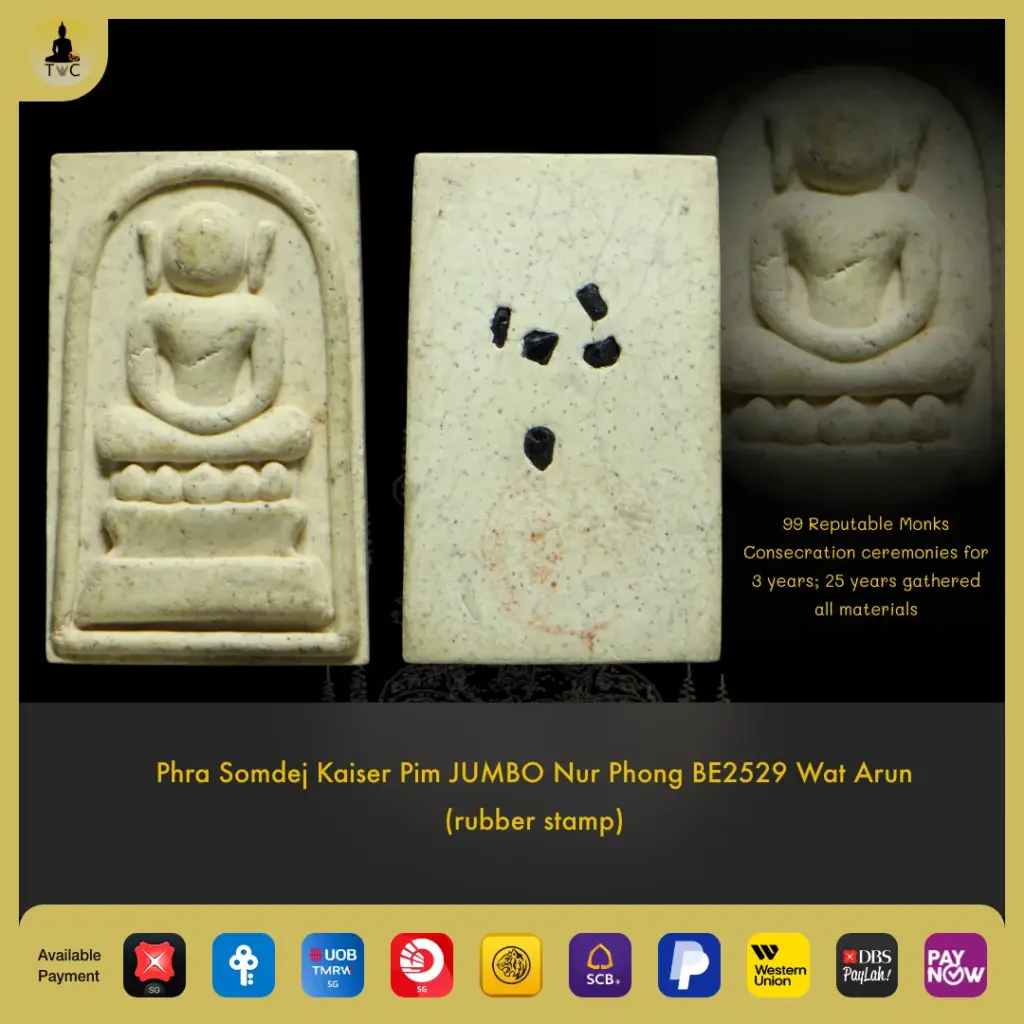
Phra Somdej Kaiser Pim JUMBO BE2529 Wat Arun (rubber stamp)
| Temple | Wat Arun |
| B.E. Year | 2529 |
| SKU | TAC-0181 |
Authentic Phra Somdej Kaiser Pim JUMBO BE2529 Wat Arun (rubber stamp), Wat Arun Ratchawararam. Nuea phong sacred powder, rubber stamp reverse. Collector-grade.
What is the Phra Somdej Kaiser Pim JUMBO BE2529 Wat Arun (rubber stamp)?
The Phra Somdej Kaiser Pim JUMBO BE2529 Wat Arun (rubber stamp) is a large-format sacred powder amulet produced at Wat Arun Ratchawararam, Bangkok, in BE2529 (1986 CE). Pressed from nuea phong — a blend of temple sacred powders, scripture ash, and herb and soil admixtures — it carries a rubber stamp on the reverse as a temple issuance mark, and was consecrated through a multi-monk phutthaphisek ceremony.
Wat Arun’s Kaiser series and why this pim was made
In BE2529, Wat Arun Ratchawararam — the royal temple facing the Chao Phraya River that most visitors know from Bangkok’s skyline — produced the Kaiser Somdej series to support temple activities and continue the Somdej tradition in the Rattanakosin Buddhist heartland. The name “Kaiser” describes the distinctive rounded chest arc on the obverse: a slight, helmet-like curve at the shoulder and chest that sets this profile apart from classical Somdej geometry. It is the pim (mould) collectors use as the first authentication reference.
The Pim JUMBO designation means the press is oversize compared to standard Somdej formats. The larger footprint gives the piece clear tier lines, generous margins, and a display presence that suits both wearing and cabinet display. Pieces from this batch were a deliberate choice — late-BE2520s Bangkok temples were resuming large-scale consecrations after a quieter mid-century period, and Wat Arun was among those that drew broad Bangkok Sangha participation for the phutthaphisek. That context is part of what the Thai Buddhist amulet tradition records as the late 20th-century revival era.
Nuea, construction, and what the rubber stamp tells you
The nuea (material/substance) here is nuea phong — sacred powder matrix. The blend for this batch follows the period Bangkok temple formula: pong phra khun (temple sacred powders), pong bailan (scripture ash from palm-leaf manuscripts), and admixtures of wahn (auspicious herbs) and din wat (temple soil). The mixture was pressed under the Pim JUMBO mould and then sun-cured before empowerment. You can see the result in the surface: a soft, slightly warm tone with natural micro-voids consistent with hand-mixed powder compression from this era.
The rubber stamp on the reverse is more than a curiosity. It served as Wat Arun’s issuance control mark — a way of tracking distribution within the batch and confirming temple origin at the point of release. For collectors, an intact and legible stamp is one of the first things to check. It does not replace careful examination of the powder matrix, but its presence, placement, and ink character are part of the authentication picture for this run.
Key things collectors look for on this piece:
- The Kaiser chest curve — smooth, rounded arc with consistent press depth across the shoulder
- Clean, even tiered base with stable edges and no collapse at the margins
- Uniform powder tone across the obverse, with natural micro-pores rather than machine-smooth surface
- Intact rubber stamp on the reverse, with ink character and placement matching known Wat Arun BE2529 batch references
- Even slab thickness and no post-press repairs or fill
The overall grade collectors assign to well-preserved examples from this batch is collector-grade contemporary Somdej. Early, well-pressed Pim JUMBO pieces with uniform curing are treated as anchor pieces for Wat Arun modern Somdej sets. No external certification body is noted for this piece.
What collectors associate this piece with
Within the Thai Buddhist amulet tradition, Somdej amulets from royal and riverside Bangkok temples carry associations with Klaew Klaad (averting dangers and obstacles), Metta Mahaniyom (generating goodwill and social support), and Maha Lap (auspicious fortune). The Kaiser profile in particular is traditionally carried for calm confidence in dealings and everyday personal protection. These are the associations reported by collectors and devotees — they reflect belief and tradition, not guaranteed outcomes.
We at TAC sourced this Phra Somdej Kaiser Pim JUMBO BE2529 Wat Arun (rubber stamp) as part of our focus on collector-grade contemporary Bangkok Somdej — pieces that represent the late 20th-century revival era at major royal temples. What makes this piece worthwhile for a collector is the combination of the Pim JUMBO format — generous, clear lines that hold up to close examination — and the rubber stamp reverse, which ties it firmly to Wat Arun's BE2529 distribution records.
Attributes reflect Thai Buddhist devotional tradition and are not measurable claims.