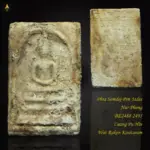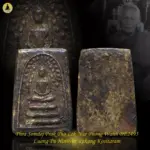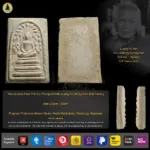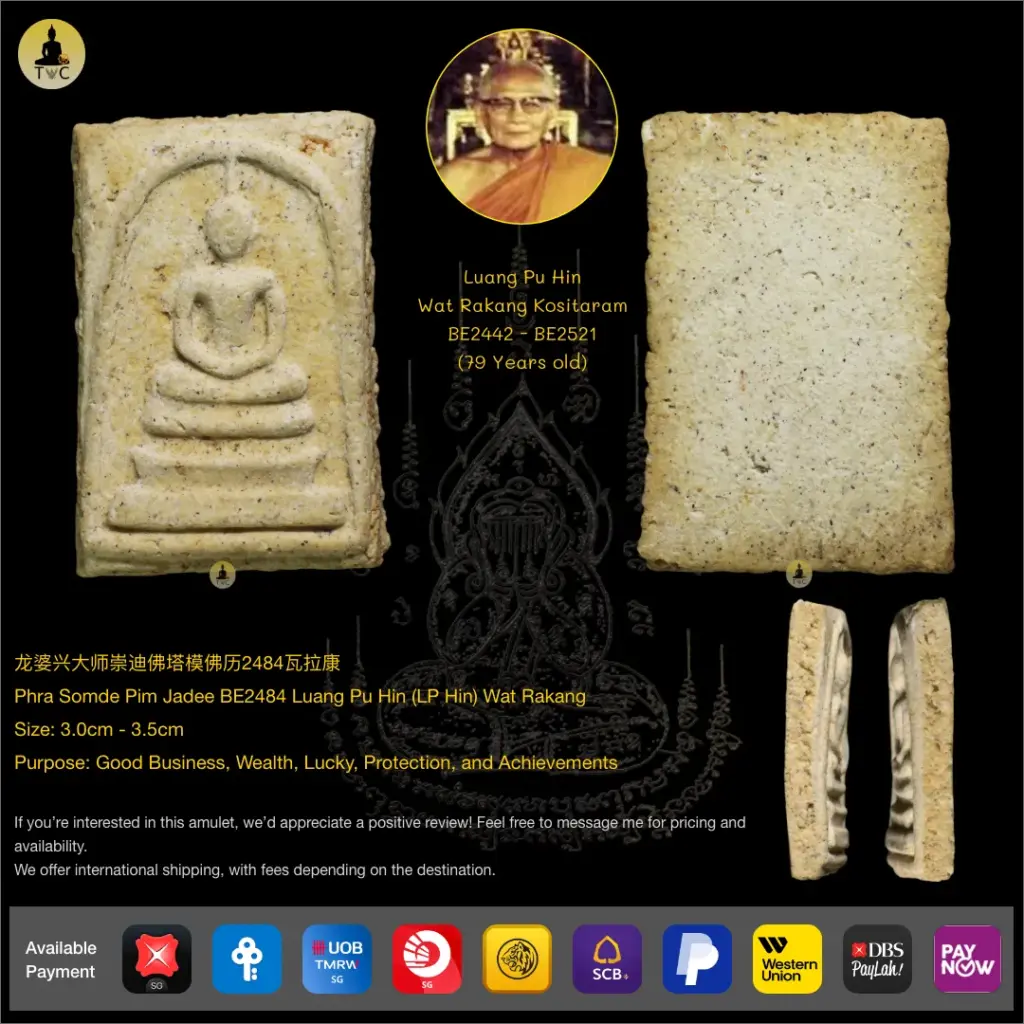
Phra Somde Pim Jadee BE2484 Luang Pu Hin (LP Hin) Wat Rakang
| Type | Phra Somdej |
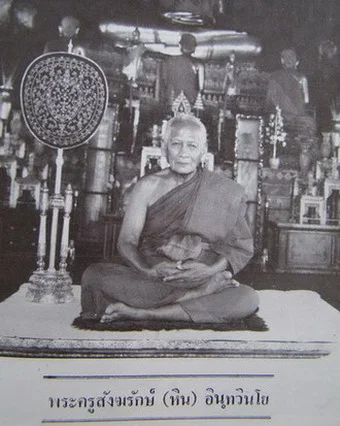
| Monk | Luang Pu Hin Wat Rakang Kositaram |
| Temple | Wat Rakang |
| B.E. Year | 2484 |
| SKU | TAC-0194 |
Authentic Phra Somdej Luang Pu Hin Wat Rakang Kositaram, Pim Jadee BE 2484 from Wat Rakang. 3.5–4.0 cm. Rare early-wartime piece. Singapore dealer TAC.
What is the Phra Somdej Luang Pu Hin Wat Rakang Kositaram BE 2484?
The Phra Somdej Luang Pu Hin Wat Rakang Kositaram BE 2484 is a classic Pim Jadee (stupa-shaped mould) Somdej pressed at Wat Rakang in 2484 of the Buddhist Era. Measuring 3.5–4.0 cm, it was created under Luang Pu Hin Wat Rakang Kositaram and is traditionally associated with metta (loving-kindness), protection, and prosperity.
Luang Pu Hin and his place in the Wat Rakang lineage
Luang Pu Hin Wat Rakang Kositaram held his position at one of Bangkok’s most historically significant temples during a period when the Somdej tradition established by Somdej Phra Phutthachan Toh was still a living institutional practice rather than a distant legend. That continuity matters to collectors. A monk working at Wat Rakang in BE 2484 was operating within direct lineage of the temple’s own methods — the phong (sacred powder blend), the pim geometry, the consecration protocols.
LP Hin is not a household name in the way that the very top-tier Wat Rakang monks are, but that is precisely why pieces from his era attract serious attention. The amulets are old, temple-made, and have not been priced to the stratosphere. For collectors focused on authentic pre-war and early-wartime Somdej material, this is a practical entry point into genuine Wat Rakang production.
Pim Jadee — the mould, the nuea, and what BE 2484 means for condition
Pim Jadee — jadee meaning stupa or chedi in form — is one of the recognised Somdej pim (moulds collectors authenticate against) associated with Wat Rakang production. The stupa silhouette is distinct from the more common arched throne-back pim, and collectors reference it specifically when discussing authentication. The nuea (material/substance) of a piece like this would be the temple’s muan sarn, the sacred powder blend composed of phong from Wat Rakang’s own stock and bound into the pressed form.
BE 2484 places this piece squarely in the World War II period — 1941 in the Gregorian calendar. Amulets from this era were produced under material constraints, which affects nuea composition and finish. Surface wear consistent with eight decades of age, minor compression marks from the press, and the natural drying of the muan sarn are all things a collector expects to see. Pristine surfaces on a piece this old are a flag, not a selling point.
Understanding what authenticates a piece from this period is part of the broader Thai Buddhist amulet tradition — one where age, provenance, and material integrity each carry weight alongside the monk’s lineage.
What collectors look for in this piece
Pieces from LP Hin’s tenure at Wat Rakang in the early 2480s BE are not common on the open market. When evaluating one, collectors focus on several concrete points:
- Pim geometry: The Jadee outline should be clean and consistent with period Wat Rakang mould production — base width, stupa tiers, and the overall proportions are compared against reference pieces.
- Nuea surface: The muan sarn should show age-appropriate drying, micro-cracking, and the natural colour of the powder blend — not artificial ageing or re-lacquering.
- Size: This piece runs 3.5–4.0 cm, consistent with the documented range for this pim.
- Provenance: Any supporting documentation or prior certification history adds to confidence, especially for a piece this age where the monk is a specialist-market name rather than a mainstream one.
No certificate is currently documented for this piece. Collectors acquiring amulets from this era without prior certification typically submit to established Thai amulet appraisal houses before setting a firm value.
This Phra Somdej Pim Jadee from BE 2484 is a genuine pre-war Wat Rakang piece produced under Luang Pu Hin — a name that specialists know but that hasn't been priced out of reach the way the more prominent Wat Rakang names have. For a collector building a serious Somdej reference set, early-wartime Wat Rakang material at this age is increasingly difficult to source.
Attributes reflect Thai Buddhist devotional tradition and are not measurable claims.