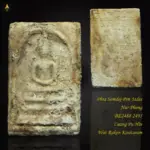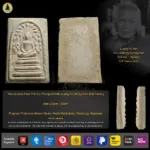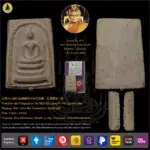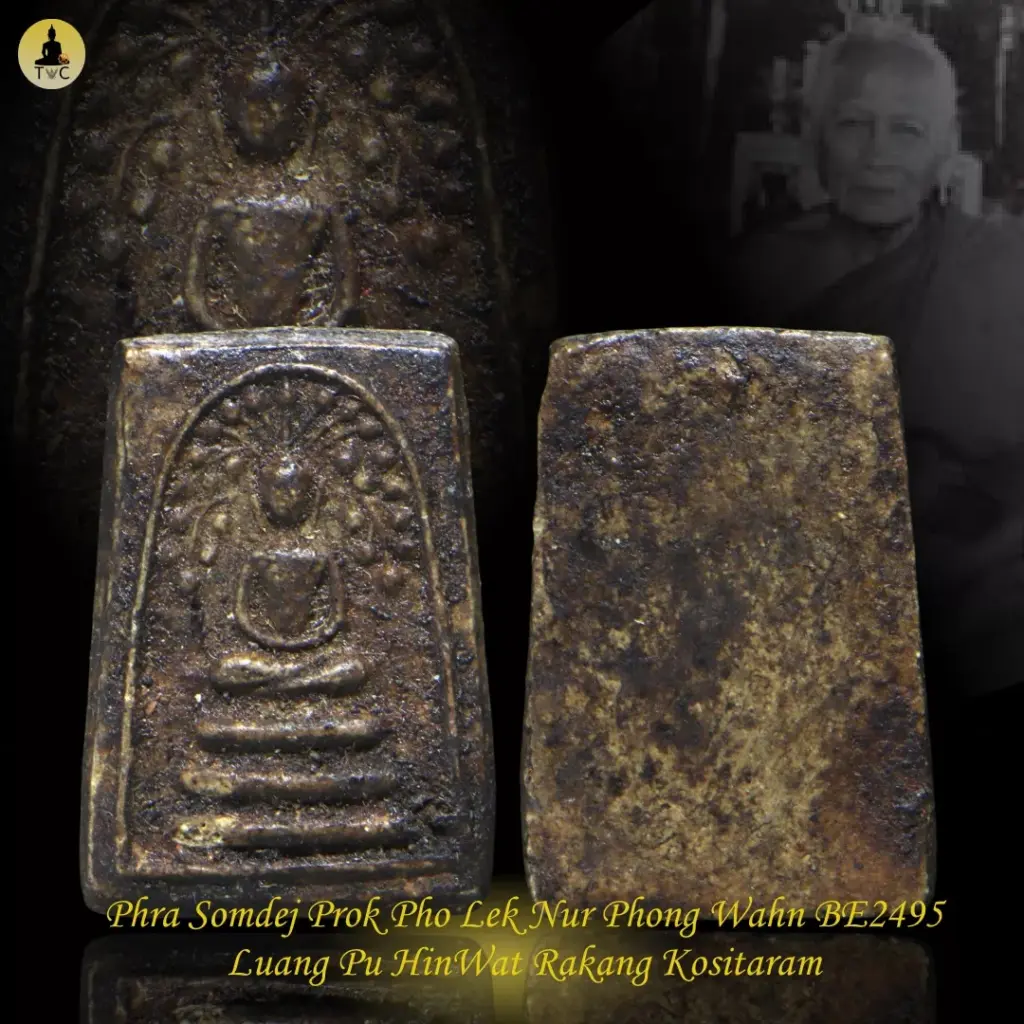
Phra Somdej Prok Pho Lek Nur Phong Wahn BE2495 Luang Pu Hin Wat Rakang Kositaram
| Monk | Luang Pu Hin Wat Rakang Kositaram |
| Temple | Wat Rakang |
| B.E. Year | 2495 |
| Material | Phong Wahn |
| SKU | TAC-0226 |
Authentic Phra Somdej Prok Pho Lek Nur Phong Wahn BE2495 Luang Pu Hin Wat Rakang Kositaram by Luang Pu Hin Wat Rakang Kositaram. Phong Wahn, BE 2495.
What is the Phra Somdej Prok Pho Lek Nur Phong Wahn BE2495 Luang Pu Hin Wat Rakang Kositaram?
The Phra Somdej Prok Pho Lek Nur Phong Wahn BE2495 Luang Pu Hin Wat Rakang Kositaram is a compact Somdej-family amulet pressed in phong wahn (herbal sacred powder), dated BE 2495, attributed to Luang Pu Hin Wat Rakang Kositaram, and framed within the Somdej tradition of Wat Rakang. It features the Prok Pho motif — the Buddha seated beneath a Bodhi canopy — in a small “Lek” format.
The Prok Pho Lek format and what makes it worth looking at closely
Prok Pho (ปรกโพธิ์) is a motif collectors read at a glance: the Buddha sheltered under the arching canopy of the Bodhi tree, still and composed. In the Somdej family, that image carries a quieter register than ornate multi-tiered designs. The appeal is in restraint — a calm seated silhouette, a balanced frame, and canopy lines that rhythm across the face of the piece without competing with each other.
The Lek designation signals a smaller format, and that matters to collectors because proportion becomes harder to hold at reduced scale. Every element — the canopy, the seated figure, the tiered base — has to read clearly in a compact press. When a piece achieves that, it demonstrates the maker’s control. This one is worn-close by nature: the size and the imagery together make it suited for daily carry rather than display.
Phong Wahn as a material and how collectors evaluate it
Phong wahn (เนื้อผงว่าน) is a pressed-powder body built around wahn (ว่าน) — traditional Thai herb groupings worked into the muan sarn (sacred powder blend). Within the broader Thai Buddhist amulet tradition, phong wahn pieces are valued for the specific character of the powder body: how it compacts, how the surface settles with age, and whether the overall feel is consistent with hand-mixed, hand-pressed construction rather than a modern uniform finish.
The listing does not specify an ingredient list or a documented mixing methodology, so what follows reflects collector-standard cues for the material category generally:
- Natural, slightly varied surface tone across the face — not flat or plastic-smooth
- Settled aging in recesses and along borders, consistent with genuine powder compression over decades
- Body feel that matches pressed-powder construction — a density and slight texture distinct from synthetic or resin-based pieces
These are starting points for evaluation, not a checklist that confirms authenticity on its own. Cross-referencing against established collector references and known examples remains essential.
Luang Pu Hin, Wat Rakang, and how this piece sits within that lineage
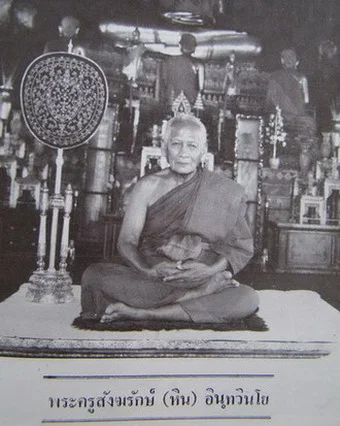
Luang Pu Hin Wat Rakang Kositaram is named as the consecrating monk for this piece. The listing does not supply biographical detail, co-consecrators, or ceremony specifics, so the monk attribution is best treated as listing-provided until independently cross-verified against catalog records or established collector documentation.
Wat Rakang sits at the centre of Somdej collecting culture. The temple’s name carries weight in its own right, and many later Somdej-family pieces are positioned through Rakang-lineage framing. For this entry, the stated BE 2495 date and the Wat Rakang Kositaram attribution are the primary anchors. No roon (run/batch) name is specified in the listing, and no temple document reference is cited, so batch-level claims are left open pending further verification.
What the piece does offer through those anchors is a clear collector identity: a BE 2495 Somdej Prok Pho Lek in phong wahn, connected by attribution to one of the most reference-heavy temples in the Somdej tradition. For a collector building a Wat Rakang-themed holding, that framing is meaningful even before deeper documentation is established.
What a collector should check and how certification stands
Because no certificate is specified for this piece, authentication rests on physical evidence and collector-standard comparison. The main points to assess:
- Pim (mould) alignment — the canopy motif and seated figure should hold clean proportion consistent with known Prok Pho Lek references of the period
- Surface and aging character in phong wahn — natural variation in powder tone, settled patina in recesses, no signs of artificial enhancement
- Body profile — thickness and pressed-powder density consistent with mid-century construction
- Provenance and comparison — supporting documentation or side-by-side evaluation against trusted examples strengthens the attribution
Without a certificate, a collector weighs these physical cues together. The absence of documentation does not disqualify a piece, but it does shift the burden of verification to direct inspection and informed comparison.
We at TAC are listing this Phra Somdej Prok Pho Lek Nur Phong Wahn BE2495 Luang Pu Hin Wat Rakang Kositaram as a compact devotional piece within the Somdej Wat Rakang tradition — the Prok Pho motif and phong wahn body are the primary draw for collectors building a Rakang-lineage holding. No certificate accompanies this piece, and no roon name is specified, so the listing price reflects that openly.
Attributes reflect Thai Buddhist devotional tradition and are not measurable claims.