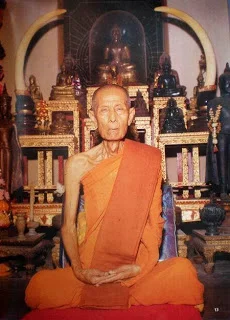
Phra Kong Kwan Nur Phong Kesorn BE2521 Luang Pu Toh Wat Pradoochimplee
| Monk | Luang Pu Toh (Lp Toh) Wat Pradoochimplee |
| Temple | Wat Pradoochimplee |
| B.E. Year | 2521 |
| Material | Phong Kesorn |
| SKU | TAC-0244 |
Authentic Phra Kong Kwan Nur Phong Kesorn BE2521 Luang Pu Toh Wat Pradoochimplee by Luang Pu Toh (Lp Toh) Wat Pradoochimplee. Phong Kesorn, 1 silver takrut.
What is the Phra Kong Kwan Nur Phong Kesorn BE2521 Luang Pu Toh Wat Pradoochimplee by Luang Pu Toh (Lp Toh) Wat Pradoochimplee?
The Phra Kong Kwan Nur Phong Kesorn BE2521 Luang Pu Toh Wat Pradoochimplee is a commemorative phong (sacred powder) amulet pressed in jasmine pollen powder — nuea Phong Kesorn — and distributed by Wat Pradoochimplee on 5 December BE2521 to mark the conferral of the royal title “Phra Ratchasangwaraphimon” upon Luang Pu Toh (Lp Toh) Wat Pradoochimplee. Total production across all materials was approximately 9,000 pieces.
The occasion that made this batch — and why collectors pay attention to it
On 5 December BE2521 (1978 CE), Luang Pu Toh Inthasuwanno received the formal royal honorific “Phra Ratchasangwaraphimon / Phra Sangwaraphimon.” Wat Pradoochimplee prepared a special run of Khong Khwan — literally “gift” amulets — to be distributed freely to disciples and devotees attending the celebration. That context matters to collectors. Amulets released at royal investiture events carry a documented purpose and a fixed production date, which makes provenance easier to trace.
Total production was approximately 9,000 pieces across two materials: nuea Phong Kesorn (jasmine pollen powder) and nuea Phong Bailan (burnt palm-leaf scripture powder). The Bailan variant was made in significantly smaller numbers and is notably scarce. Across both materials, some pieces were embedded with one to three silver takrut (rolled metal scroll inserts) — those variants are rarer still. This example is nuea Phong Kesorn with one silver takrut.
The Khong Khwan concept reflects a core principle in Thai Buddhist practice: merit-sharing through freely given gifts at auspicious occasions, carrying what disciples call katanyu — gratitude and communal goodwill. Understanding the Thai Buddhist amulet tradition helps place this piece correctly — it was never a commercial edition. It was a devotional distribution, which is precisely why condition-original examples are hard to find today.
Material, pim, and what went into making it
The nuea here is Phong Kesorn — jasmine pollen powder — pressed into the commemorative Khong Khwan pim (mould). The obverse carries a refined Buddha portrait within a commemorative frame. The reverse features Yant Nak Setthi (a sacred inscription associated with wealth and influence) alongside the text “Phra Sangwaraphimon, Luang Pu Toh, 2521.” Pieces with a sharp obverse portrait and fully legible reverse yant and inscription are the ones collectors want.
Dimensions run approximately 2.4 cm in height and 1.8–2.3 cm in width, with some variation due to mould shrinkage. Consecration — phutthaphisek — was performed as part of the royal title celebration at the temple on the distribution date. The pluk sek was tied directly to the occasion, not a separate ritual event.
Luang Pu Toh’s standing and what collectors look for when authenticating
Luang Pu Toh (Lp Toh) Wat Pradoochimplee was revered across Thai monastic and lay circles for disciplined meditative practice and what close disciples described as refined wicha (esoteric discipline). His amulets, particularly those from documented occasions like the BE2521 royal investiture, are consistently collector-grade within the Wat Pradoochimplee lineage.
When assessing this piece, experienced collectors check several points:
- Sharpness of the obverse Buddha portrait within the Khong Khwan commemorative frame
- Legibility of the Yant Nak Setthi and the full inscription on the reverse
- Presence and condition of the silver takrut insert (one, two, or three) where applicable
- Surface texture consistent with aged nuea Phong Kesorn — jasmine pollen powder ages distinctively
- Overall condition: original, unworn examples are significantly scarcer given these were freely distributed pieces
Certified examples appear in Samakom Thai Amulet Association records and have been welcomed in competition showcases. If a certificate accompanies a piece, cross-referencing against Samakom archives is standard practice.
Phra Phong Khong Khwan from BE2521 holds a precise historical anchor that collectors find especially meaningful: it was produced specifically to mark the day Luang Pu Toh Inthasuwanno received his royal ecclesiastical title on 5 December 2521, making it a commemorative issue rather than a general temple run — context that is fully documented and traceable. With a total production of only 9,000 pieces across both materials, and the Nur Phong Kesorn examples further distinguished by the presence of silver takrut inserts (this piece carries one), the edition sits well within the range that serious collectors of Luang Pu Toh's legacy actively seek out. We at TAC present this with a standard certificate, and as always, we encourage collectors to weigh the historical significance of the occasion it commemorates alongside the material details of the piece itself.
Attributes reflect Thai Buddhist devotional tradition and are not measurable claims.