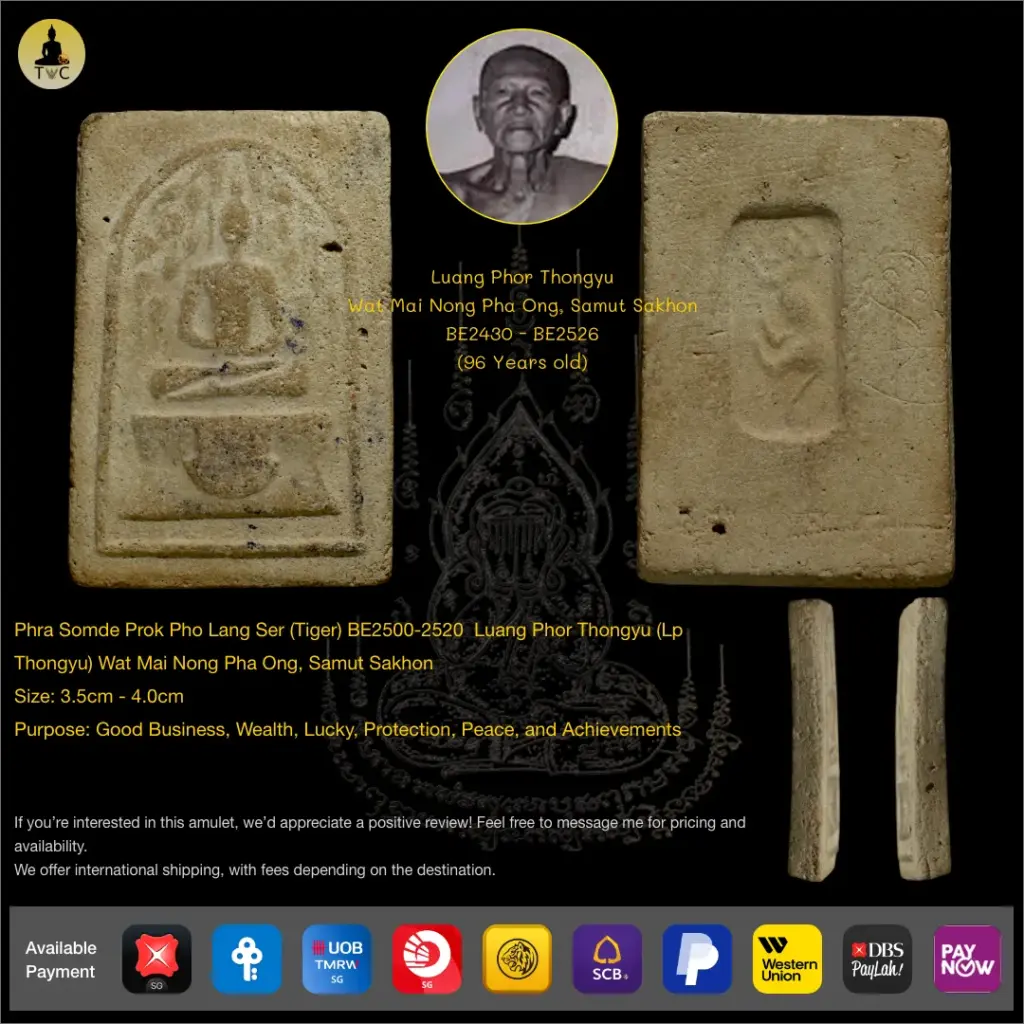
Phra Somdej Prok Pho Lang Ser (Tiger) BE2500-2520 Luang Phor Thongyu (Lp Thongyu) Wat Mai Nong Pha Ong, Samut Sakhon
| Type | Phra Somdej |
| Monk | Luang Phor Thongyu (Lp Thongyu) Wat Mai Nong Pha Ong, Samut Sakhon |
| Temple | Wat Mai Nong Pha On |
| B.E. Year | 2500 |
| SKU | TAC-0249 |
Authentic Phra Somdej Prok Pho Lang Ser (Tiger) by Luang Phor Thongyu (Lp Thongyu) Wat Mai Nong Pha Ong, Samut Sakhon, Wat Mai Nong Pha On BE2500–2520.
What is the Phra Somdej Prok Pho Lang Ser (Tiger) by Luang Phor Thongyu (Lp Thongyu) Wat Mai Nong Pha Ong, Samut Sakhon?
The Phra Somdej Prok Pho Lang Ser (Tiger) is a sacred amulet produced by Luang Phor Thongyu (Lp Thongyu) Wat Mai Nong Pha Ong, Samut Sakhon at Wat Mai Nong Pha On between BE 2500 and BE 2520. The nuea (material/substance) consists of sacred powders blended with holy herbs and relic material. The front depicts the Buddha seated under the Bodhi tree; the reverse carries a tiger image.
The monk behind this piece — and why BE 2500 matters
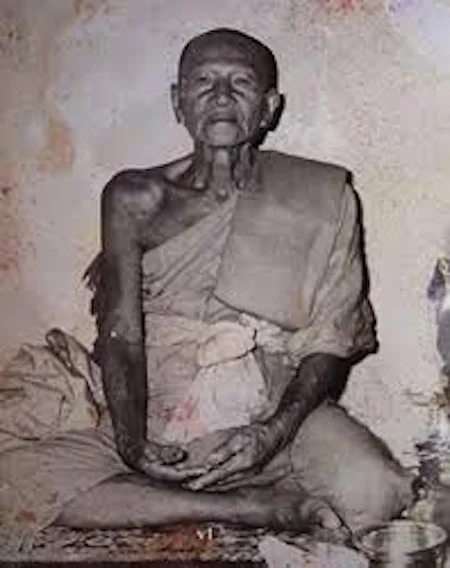
Luang Phor Thongyu was a highly respected monk of Wat Mai Nong Pha On, Samut Sakhon, known for deep meditative practice and expertise in wicha (sacred science). Collectors across Thailand and the region recognise his name as one of the significant provincial masters of his era. That standing directly shapes how this piece is valued today.
BE 2500 — 1957 CE — marks the 2,500th anniversary of the Buddha’s passing, a year considered auspicious across the entire Thai Buddhist amulet tradition. Pieces consecrated in that year carry a historical weight that later editions simply cannot replicate. The consecration ceremonies for this run stretched from BE 2500 through BE 2520, with Luang Phor Thongyu conducting multiple rounds of phutthaphisek (consecration ceremony) and reportedly inviting other well-known monks from across Thailand to participate, layering additional blessings into the batch over those two decades.
The pim, the nuea, and what makes this amulet distinct
The pim (mould collectors authenticate against) presents Phra Somdej in the “Prok Pho” posture — the Buddha in meditation beneath the Bodhi tree, the moment of enlightenment. On the reverse, the Lang Ser design carries a tiger, a symbol in Thai Buddhist culture associated with strength, protection, and commanding presence. That combination of front and reverse imagery is the defining feature collectors look for when examining this piece.
The muan sarn (sacred powder blend) was composed from phong (sacred powders) mixed with holy herbs, relic material, and items gathered from places of religious significance. This approach to nuea was standard for serious amulet production of the period, but Luang Phor Thongyu’s own meditative reputation is understood to have been the key variable in the consecration quality.
Collectors checking authenticity typically focus on:
- The clarity and sharpness of the Prok Pho pim on the front face
- The tiger relief detail on the Lang Ser reverse
- Surface ageing and powder texture consistent with genuine muan sarn from this period
- Provenance documentation or prior ownership history where available
No formal certificate is documented for this piece. Buyers should rely on physical authentication against known reference examples and, where possible, consultation with experienced collectors familiar with Luang Phor Thongyu’s output.
What collectors traditionally associate with this amulet
Within Thai Buddhist practice, the Phra Somdej form is broadly associated with merit, protection, and good fortune. The Prok Pho posture specifically recalls the moment of the Buddha’s enlightenment, which devotees connect to clarity and inner strength. The tiger reverse adds a layer that practitioners traditionally link to physical protection, warding off danger, and projecting authority.
Long-term collectors associate this particular piece with Luang Phor Thongyu’s reputation for metta (loving-kindness) empowerment — a quality said to support the wearer’s relationships, personal standing, and resilience. These are beliefs rooted in Thai Buddhist tradition, not guarantees, but they are a genuine part of why demand for authenticated pieces from this monk persists among serious collectors in the region.
We at TAC handle this piece as a historically significant item from Luang Phor Thongyu's output at Wat Mai Nong Pha On — the BE 2500 consecration date alone makes it notable to any serious collector of mid-century Thai amulets. The tiger reverse combined with the Prok Pho front is a combination that consistently draws interest from collectors in Thailand, Malaysia, and the broader Chinese-speaking market.
Attributes reflect Thai Buddhist devotional tradition and are not measurable claims.