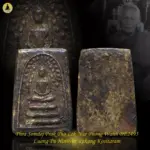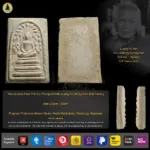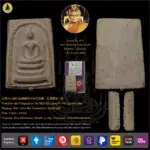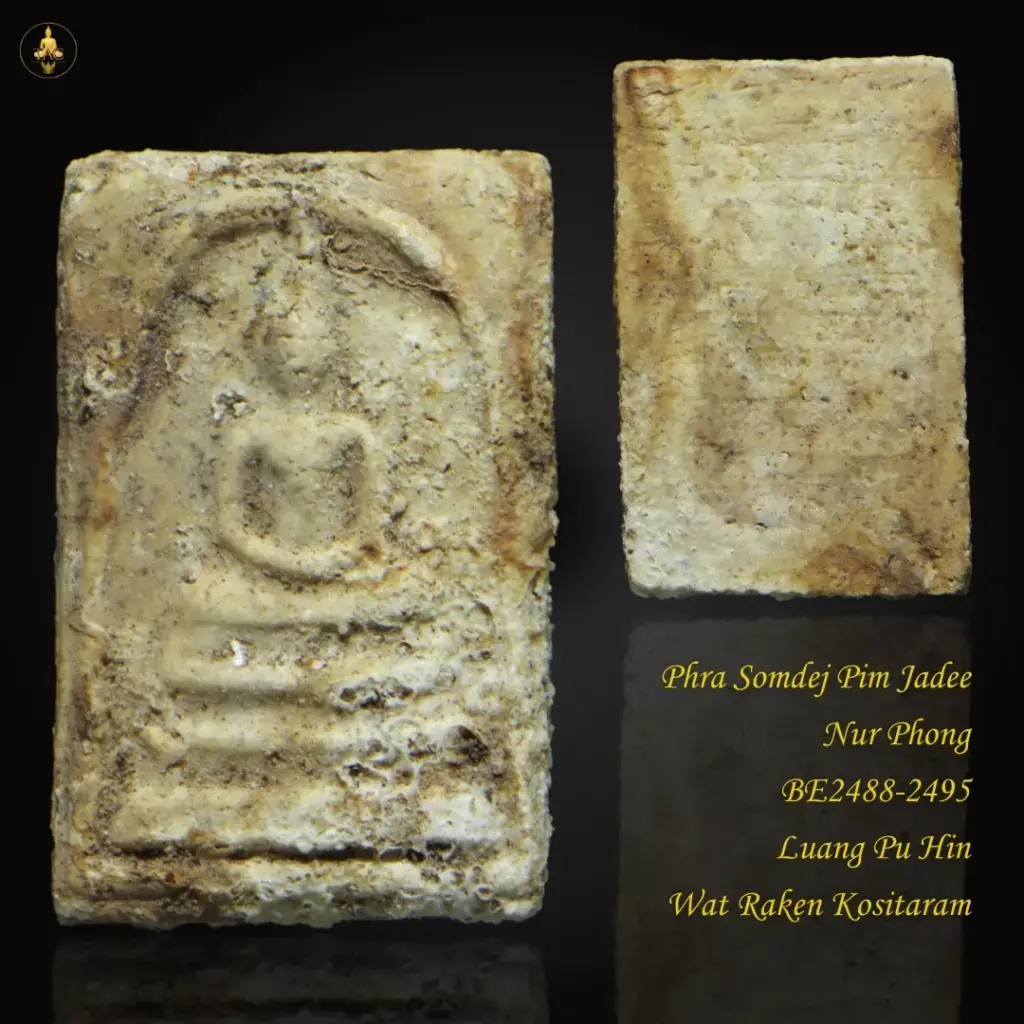
Phra Somdej Pim Jadee Nur Phong BE2488-2495 Luang Pu Hin Wat Raken Kositaram
| Type | Phra Somdej |
| Monk | Luang Pu Hin Wat Rakang Kositaram |
| Temple | Wat Rakang |
| B.E. Year | 2488 |
| Material | Phong |
| SKU | TAC-0280 |
Phra Somdej Luang Pu Hin Wat Rakang Kositaram, Pim Jadee, phong, BE 2488–2495, holy-water soaked. Wat Rakang lineage piece. Available at TAC Singapore.
What is the Phra Somdej Luang Pu Hin Wat Rakang Kositaram BE 2488?
The Phra Somdej Luang Pu Hin Wat Rakang Kositaram is a phong (sacred powder) amulet pressed in the Pim Jadee (chedi-shaped mould) format, attributed to Luang Pu Hin Wat Rakang Kositaram of Wat Rakang Kositaram, dated BE 2488–2495. The listing notes it was soaked in holy water, indicating sustained devotional handling rather than display-only preservation.
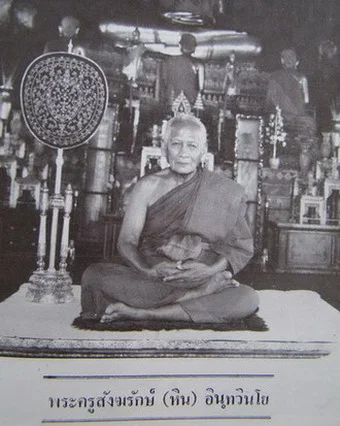
Luang Pu Hin and the Wat Rakang Somdej lineage
Wat Rakang Kositaram sits at the centre of Thailand’s Somdej amulet tradition. For collectors across Singapore, Malaysia, and the broader Sinosphere, the temple name alone anchors a piece within one of the most studied lineages in the Thai Buddhist amulet tradition. Luang Pu Hin’s association with the temple connects this piece directly to that continuity.
The postwar period — BE 2488 falling in 1945 CE — carries its own devotional weight. These were not kru finds pulled from a buried crypt; they were amulets made for active use, circulated among devotees during a period of reconstruction and religious renewal. That context shapes how serious collectors read the body of the piece today.
Reading the phong body and Pim Jadee mould
The nuea (material/substance) here is phong — a muan sarn (sacred powder blend) composition typical of the Wat Rakang Somdej tradition. The listing notes the piece was soaked in holy water. On a powder-body amulet, that kind of ritual contact can soften surface tone, deepen colour in recessed areas, and alter the texture slightly. Collectors read these changes as devotional history when they are consistent across the whole body rather than localised or artificially uniform.
The pim (mould collectors authenticate against) is the Jadee format — structured, geometric, named for the chedi silhouette that frames the seated Buddha. Authentication attention goes to the throne arrangement, the framing line, and the proportional balance of the Buddha image within the mould. A strong Pim Jadee impression reads as calm and deliberate, not crowded. Wear on the high points of the mould detail and the rear powder texture should feel naturally aligned with a piece handled over decades of devotional use.
- Study powder density and surface texture across front and back for coherent age.
- Check mould impression depth — Pim Jadee geometry should be clear, not washed out.
- Holy-water darkening or softening, when even and consistent with edge wear, supports rather than undermines authenticity.
- No formal certificate is noted for this piece; collector evaluation rests on material character, temple lineage, and comparative reference.
What sets the value of this piece
Without a formal certificate on record, value here is driven by a combination of factors: temple association with Wat Rakang, attribution to Luang Pu Hin Wat Rakang Kositaram, the integrity of the powder body, and the coherence of the Pim Jadee mould. These are the same factors collectors use to evaluate any later-period Wat Rakang Somdej when paperwork is absent.
The holy-water soaking note adds a devotional layer that resonates with wearers more than speculators. For the collector market in Singapore and Malaysia, a BE 2488–2495 Wat Rakang phong piece with legible mould and honest wear sits in the accessible-to-mid tier — appreciated for lineage continuity and everyday wearability rather than trophy rarity. Condition, mould clarity, and provenance trail will all move the number in either direction.
We at TAC are offering this Phra Somdej Pim Jadee in phong, attributed to Luang Pu Hin of Wat Rakang Kositaram and dated BE 2488–2495 — a postwar-era devotional piece within one of the most recognised Somdej lineages in Thai amulet collecting. The listing notes holy-water soaking, which . For collectors who value temple lineage and honest wearability over paperwork-heavy trophy pieces, this is a straightforward Wat Rakang phong Somdej worth considering at its price point.
Attributes reflect Thai Buddhist devotional tradition and are not measurable claims.