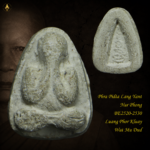
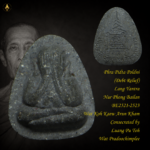
Phra Pidta Pim Tapha Roon 1 (1st Model) Nur Phong Wahn BE2510 Phor Than Khiao Wat Rong Bon – Legendary Pidta
| Type | Phra Pidta |
| Temple | Wat Rong Bon |
| B.E. Year | 2510 |
| Material | Phong Wahn |
| SKU | TAC-0317 |
Authentic Phra Pidta Phor Than Khiao, Wat Rong Bon BE 2510. Pim Tapha Run 1 in Phong Wahn, Thaprachan certified. Available from TAC Singapore.
What is the Phra Pidta by Phor Than Khiao from Wat Rong Bon, BE 2510?
The Phra Pidta Phor Than Khiao is a Pim Tapha Run 1 (พิมพ์ท่าพระ รุ่น ๑) powder amulet pressed in nuea Phong Wahn (เนื้อผงว่าน — herb-based sacred powder blend) and consecrated at Wat Rong Bon, Nakhon Si Thammarat in BE 2510 (1967 CE). It carries a Thaprachan certificate and is regarded as a benchmark Southern Pidta by collectors across the region.
Phor Than Khiao and the Southern Pidta Lineage
Phor Than Khiao of Wat Rong Bon occupies a specific place in Southern Thai amulet circles. Southern collectors consistently cite his Pidta for what they describe as a “closed-gate” quality — quiet in form, compact in proportion, and steady in character. That reputation did not come from marketing; it accumulated over decades of collector handling and comparison.
Run raek (รุ่นแรก — first batch) releases carry particular weight in the Pidta collector world. The first accepted batch defines a monk’s signature pressing language: hand placement, facial geometry, the proportion of the sealed figure, and the powder temperament that later issues rarely match exactly. For Pim Tapha Run 1, that definition held, which is why serious collectors treat it as the reference point for this line.
Southern Thailand has long carried a practical, travel-focused protective-amulet culture, deeply rooted in individual temple communities rather than large centralised campaigns. The Thai Buddhist amulet tradition has always reflected local temple identity, and Wat Rong Bon’s output under Phor Than Khiao is a clear example of that — regional, specific, and difficult to replicate outside its own context.
Reading the Pim and the Phong Wahn Material
Nuea Phong Wahn ages in ways that collectors find informative and difficult to fake convincingly. Over time, the tone deepens, the micro-pores settle, and the surface develops a calm matte character. This is not cosmetic — it is the material behaving honestly across decades. BE 2510 pieces sit in a range old enough to show genuine powder ageing, but still within a period when devotees wore them in daily life, so condition and surface integrity vary meaningfully between examples.
When examining a serious Phong Wahn Pidta from this period, experienced collectors typically look at several things together rather than any single marker:
- Pressing language: the tightness and definition in the hand and facial zones — a key read for Pim Tapha Run 1 specifically.
- Edge logic: natural rounding from age and handling, not sharp sanding or artificial smoothing.
- Powder grain: integrated micro-porosity that looks grown into the surface, not applied or coated.
- Back surface behaviour: the base plane often gives the most honest material read for old Phong Wahn.
The phutthaphisek (พุทธาภิเษก — consecration ceremony) for powder amulets of this period involved extended chanting, meditation, and protective invocations. Southern practitioners often describe the result of this process as a sealed-field quality: contained, grounded, and consistent over time.
Certification and Collector Value
This piece comes with a Thaprachan certificate — formal third-party documentation that supports model, era, and material attribution. In a category where convincing fakes exist, that paperwork layer matters. Authenticity for a vintage powder Pidta is best understood as a structure: correct pim, convincing material behaviour, regional lineage credibility, and documentation working together. No single element alone is sufficient.
Preserved examples of old Phong Wahn narrow over time. The powder can chip, absorb humidity, or be damaged by improper cleaning. Pieces with honest ageing — not cosmetically refreshed, not repaired with glue, not re-pressed — become less common as the decades pass. That survivability issue, combined with the run raek premium and Thaprachan documentation, shapes where this example sits for a collector making a considered decision.
For care: avoid water and chemical cleaning entirely. Use a fitted casing if worn. Store dry with controlled humidity — silica gel in enclosed storage helps. If dust accumulates, a soft brush applied lightly is the limit. Old Phong Wahn surfaces sustain damage quickly and do not recover.
We at TAC are offering this Phra Pidta Phor Than Khiao — Pim Tapha Run 1 in Phong Wahn, BE 2510 — with Thaprachan certification, which is a meaningful documentation advantage for a Southern line where collector demand is genuine and fakes are not uncommon. What makes Run 1 worth holding is the pressing language: first-batch pieces define the reference standard for this pim, and preserved Phong Wahn examples from 1967 are thinning out.
Attributes reflect Thai Buddhist devotional tradition and are not measurable claims.