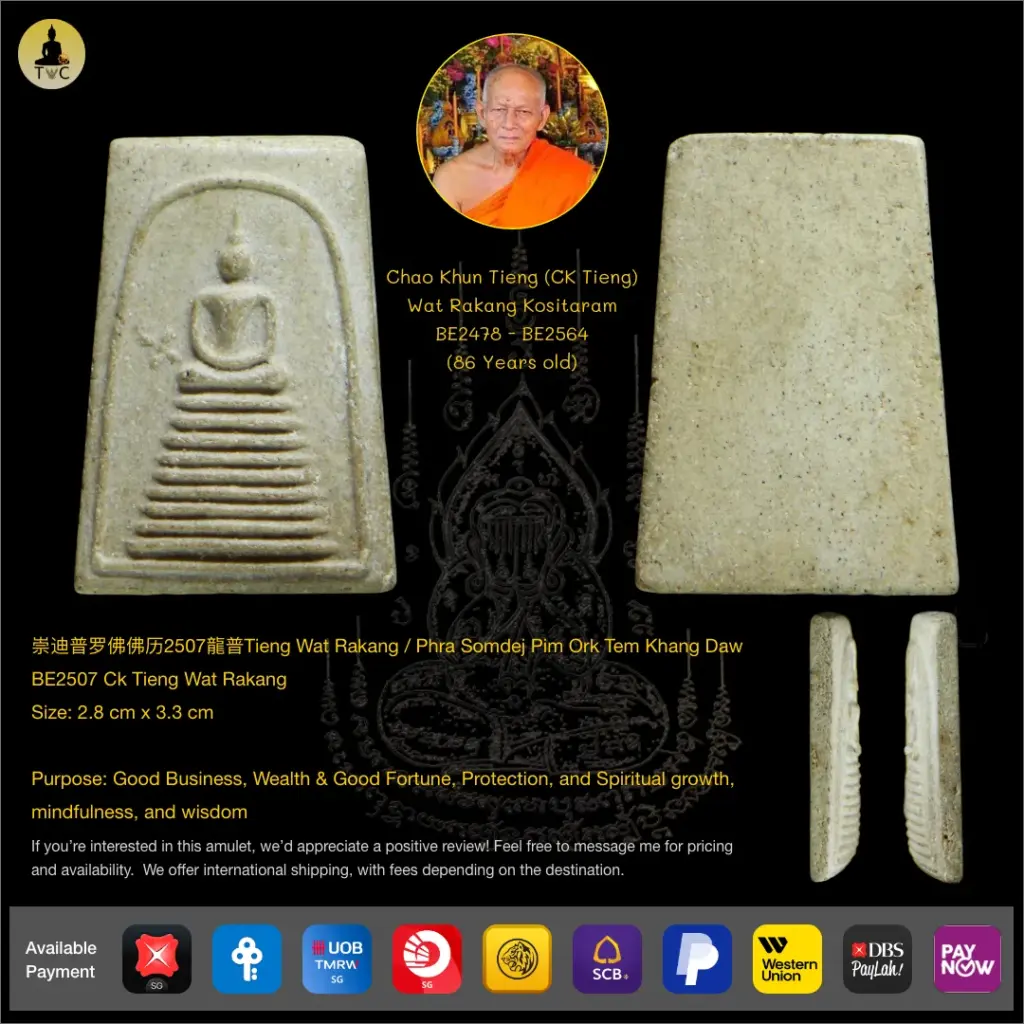
崇迪普罗佛佛历2507龍普Tieng Wat Rakang / Phra Somdej Pim Ork Tem Khang Daw BE2507 Chao Khun Tieng (Ck Tieng) Wat Rakang
| Type | Phra Somdej |
| Monk | Chao Khun Tieng (CK Tieng) (Phra Thammathirat Ratchamuni) Wat Rakang Kositaram |
| Temple | Wat Rakang |
| B.E. Year | 2507 |
| SKU | TAC-0325 |
Authentic Phra Somdej by Chao Khun Tieng (CK Tieng) (Phra Thammathirat Ratchamuni) Wat Rakang Kositaram, BE 2507. Sacred phong blend. Singapore dealer TAC.
What is the Phra Somdej Pim Ork Tem Khang Daw by Chao Khun Tieng (CK Tieng) (Phra Thammathirat Ratchamuni) Wat Rakang Kositaram, BE 2507?
The Phra Somdej Chao Khun Tieng (CK Tieng) (Phra Thammathirat Ratchamuni) Wat Rakang Kositaram in the Pim Ork Tem Khang Daw mould was pressed at Wat Rakang in BE 2507 (1964). The nuea (material/substance) is a sacred phong (powder) blend incorporating old powder amulet remnants, temple incense ash, powder from earlier Wat Rakang Somdej amulets, pollens and sacred flowers used during chanting, and rice grain powder from royal and sacred events.
The Pim Ork Tem Khang Daw — What the Mould Tells You
The name Ork Tem Khang Daw describes the pim (mould collectors authenticate against) precisely. The Buddha image is shown seated beneath the Bodhi tree, surrounded by a full ornamental arch — the “roof and star canopy” design — with an intricately detailed background filling the frame. This is the defining visual the collector learns to read before anything else.
The style draws directly from the classic Somdej Wat Rakang Pim Prok Pho lineage, which depicts the Buddha in the moment of enlightenment. That visual connection to Wat Rakang’s most venerated pim type is part of what gives this BE 2507 piece its standing among collectors of modern-era Somdej from this temple.
The muan sarn (sacred powder blend) pressed into this pim is layered in composition. It includes Phong Wan and Phong Ittijae (two classical sacred powders), ash from the temple’s own incense, powder ground from older Wat Rakang Somdej amulets, pollens and flowers used during the chanting sessions, and rice grain powder from royal and sacred ceremonies. Each component carries a specific function within the Thai Buddhist amulet tradition, as documented across the broader Thai Buddhist amulet tradition.
Chao Khun Tieng and the Consecration at Wat Rakang
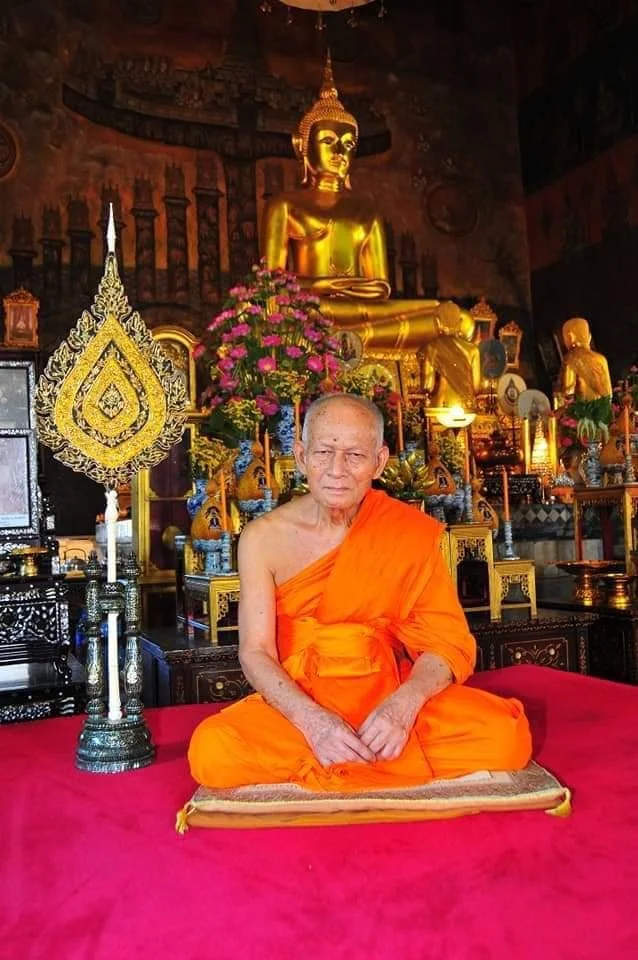
Chao Khun Tieng (CK Tieng) (Phra Thammathirat Ratchamuni) Wat Rakang Kositaram served as a respected senior monk and abbot of Wat Rakang during the mid-20th century. His position within the Somdej lineage temple gave the amulets he oversaw a direct connection to the tradition established by Somdej Phra Phutthachan (Toh) at that same temple a century earlier.
The pluk sek (consecration ceremony) for this batch was conducted at Wat Rakang Kositaram under Chao Khun Tieng as main officiant. The process ran over several months of daily chanting and meditation. Senior monks from Bangkok and surrounding provinces — particularly those from temples within the Somdej lineage — joined the rites.
That extended phutthaphisek (consecration) period is one reason serious collectors regard this batch differently from shorter, more ceremonial-only editions. The months-long chanting is documented and forms part of the piece’s provenance as a BE 2507 Wat Rakang issue.
What Collectors Look For — and the Certificate Situation
For any Phra Somdej Chao Khun Tieng (CK Tieng) (Phra Thammathirat Ratchamuni) Wat Rakang Kositaram piece, authentication starts with the pim. On the Ork Tem Khang Daw, collectors examine the arch structure, the sharpness of the canopy detail, and the way the muan sarn sits in the pressed relief. Surface texture and the specific powder colour consistent with a BE 2507 pressing also factor in.
- Pim profile: full ornamental arch with complete background — no truncated design
- Muan sarn texture: phong-pressed surface consistent with the multi-component blend documented for this batch
- Age indicators: natural patina and powder settling consistent with a 60-year-old pressing
- Provenance: prior ownership documentation or dealer lineage adds weight where available
No certificate accompanies this piece as listed. Collectors sourcing uncertified pieces in this category typically rely on physical authentication by experienced specialists or established dealer evaluation.
We at TAC are offering this Phra Somdej Pim Ork Tem Khang Daw pressed in BE 2507 (1964) at Wat Rakang Kositaram under the direct hand of Chao Khun Tieng, the temple's own abbot — which places it firmly within the authentic Somdej lineage, not at arm's length from it. The muan sarn is documented and includes powder from earlier Wat Rakang Somdej amulets, a provenance detail that serious collectors in this category will immediately recognise as significant.
Attributes reflect Thai Buddhist devotional tradition and are not measurable claims.