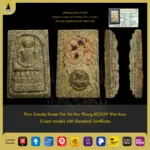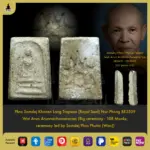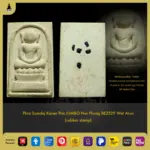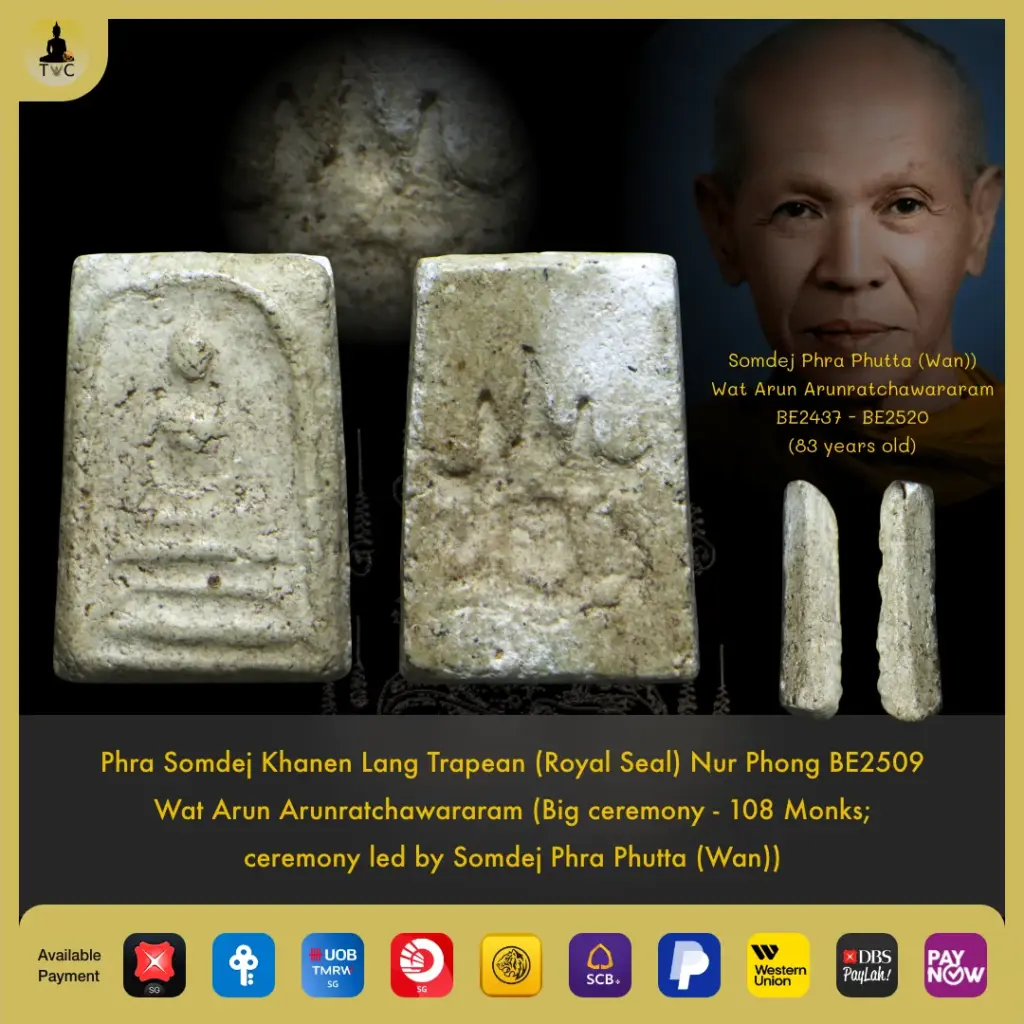
Phra Somdej Khanen Lang Trapean (Royal Seal) Nur Phong BE2509 Wat Arun (Big ceremony – 108 Monks; ceremony led by Somdej Phra Phutta Wan
| Type | Phra Somdej |
| Monk | Somdej Phra Phutta Wan |
| Temple | Wat Arun |
| B.E. Year | 2509 |
| Material | Phong |
| SKU | TAC-0326 |
Authentic Phra Somdej by Somdej Phra Phutta Wan, Wat Arun BE2509. Phong, Khanen Lang Trapean (Royal Seal) subtype, 108-monk consecration.
What is the Phra Somdej Khanen Lang Trapean by Somdej Phra Phutta Wan from Wat Arun?
The Phra Somdej Somdej Phra Phutta Wan — formally the Khanen Lang Trapean (Royal Seal) subtype — was issued by Wat Arun Ratchawararam in BE2509 (CE1966). Pressed in phong (sacred powder blend), it was consecrated in a grand pluk sek led by Somdej Phra Phutta Wan alongside 108 monks drawn from across Thailand.
The BE2509 Ceremony and Why Scale Matters to Collectors
Not every temple release earns a permanent place in collector memory. This one did, partly because of what went into organising it. The BE2509 Wat Arun consecration was structured as a nationally significant phutthaphisek (full Buddhist consecration ceremony) — 108 monks, senior figures from different regions and ritual lineages, all gathered at one of Bangkok’s most prominent royal temples.
The list of participants recorded in connection with this issue includes Luang Pho Ngern (Wat Don Yai Hom, Nakhon Pathom), Luang Pu Nak (Wat Rakhang, Bangkok), Luang Pho Thong (Wat Chakkrawat), Luang Pu Thian (Wat Bot, Pathum Thani), Luang Pho Nuea (Chulamani Temple), Luang Pho Tae Kongthong (Sam Ngam Temple), Luang Pho Tan (Tham Sen Temple), and Luang Pu Thiam (Kasatrathirat Temple). That breadth of participation was not incidental — it was built into the ceremony’s intent.
The ceremony was also tied to a specific commemoration: the 100th anniversary of Somdej Phra Buddhacarya (To) Phromrangsi, the monk most associated with the Phra Somdej tradition. That context matters. It means the BE2509 Wat Arun issue was designed as a deliberate act of lineage preservation, not a routine merit-making release. Somdej Phra Phutta Wan led the ritual as the presiding master, and his standing gave the ceremony the authority collectors still reference today.
What Went Into the Phong Body
The nuea (material substance) here is phong — sacred powder pressed into the compact Khanen format. For this issue, the muan sarn (sacred powder blend) was assembled with deliberate symbolic weight. Broken fragments from three of the most important Somdej sources in Thai amulet history were incorporated directly:
- Phra Somdej Wat Rakhang
- Phra Somdej Wat Bang Khun Phrom
- Phra Somdej Wat Ket Chaiyo
Beyond those fragments, the blend included powders from Wat Plab, Wat Tai Talat, and Wat Amphawa; incense powder from worship rituals; soil from holy sites and from the four principal Buddhist pilgrimage sites; and over 400 herb varieties combined with 108 types of flower pollen. That is not a generic sacred powder formula — it reads as a carefully constructed material statement about lineage and continuity.
For collectors who approach phong Somdej through the Thai Buddhist amulet tradition, this material program is exactly what distinguishes a significant ceremonial issue from an ordinary one. The physical body carries the commemorative intent.
The Pim: Khanen Format and the Lang Trapean Reverse
Khanen refers to a smaller, more compact Somdej format — wearable, personal, and distinct from the larger standard pim (mould type). The front follows the classic enthroned Buddha composition. What sets this subtype apart is the reverse: the Lang Trapean, or royal seal impression. That back mark is the collector’s anchor point for this particular family within the broader BE2509 Wat Arun release.
Identifiable reverse marks matter in real-world authentication because they reduce ambiguity. When two ceremonial Somdej pieces look similar from the front, the reverse is often what separates one subtype from another. The Lang Trapean reverse gives this piece a sharper catalogue identity than a plain-back Somdej from the same ceremony would carry.
The Wat Arun BE2509 issue was intentionally positioned as a bridge between the older, revered Somdej lineages — Wat Rakhang, Wat Bang Khun Phrom, Wat Chaiyo — and the modern ceremonial era. That positioning is reflected in both the muan sarn and the pim choice.
We at TAC sourced this Phra Somdej Somdej Phra Phutta Wan from the BE2509 Wat Arun grand ceremony — a release I regard as one of the more structurally documented ceremonial Somdej issues of the post-BE2500 era, given the 108-monk phutthaphisek, the muan sarn incorporating fragments from Wat Rakhang, Wat Bang Khun Phrom, and Wat Ket Chaiyo, and the clear Lang Trapean reverse that anchors this subtype within the broader Wat Arun family. For collectors building a serious Somdej reference collection, a clearly identified Khanen Lang Trapean from this ceremony is the kind of piece that earns its place on the shelf precisely because it can be catalogued, compared, and explained.
Attributes reflect Thai Buddhist devotional tradition and are not measurable claims.