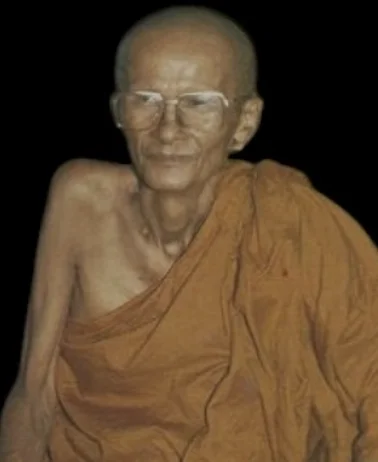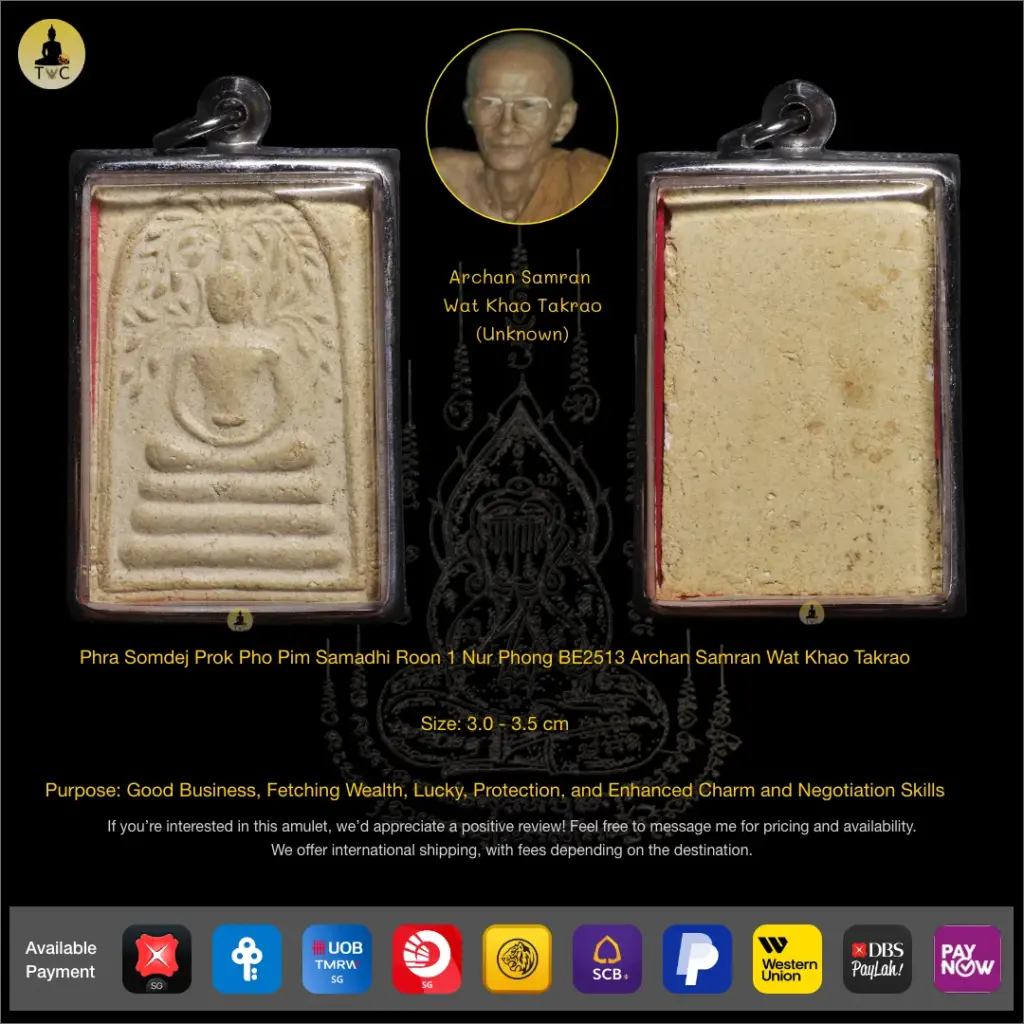
Phra Somdej Prok Pho Pim Samadhi Roon 1 Nur Phong BE2513 Archan Samran Wat Khao Takrao
| Monk | Archan Samran Wat Khao Takrao |
| Temple | Wat Khao Takrao |
| B.E. Year | 2513 |
| Material | Phong |
| SKU | TAC-0392 |
Authentic Phra Somdej Prok Pho Pim Samadhi Roon 1 Nur Phong BE2513 Archan Samran Wat Khao Takrao by Archan Samran Wat Khao Takrao, Phetchaburi. Phong.
What is the Phra Somdej Prok Pho Pim Samadhi Roon 1 Nur Phong BE2513 Archan Samran Wat Khao Takrao by Archan Samran Wat Khao Takrao?
The Phra Somdej Prok Pho Pim Samadhi Roon 1 Nur Phong BE2513 Archan Samran Wat Khao Takrao is a sacred phong (powder) amulet created in BE 2513 (1970) by Archan Samran Wat Khao Takrao at Wat Khao Takrao in Phetchaburi Province. Pressed from a blend of temple-blessed muan sarn, this first-run piece is among the most significant amulets associated with that temple.
Archan Samran and the standing of Wat Khao Takrao
Archan Samran Wat Khao Takrao was trained in the ancient art of making sacred powders under multiple masters before settling at Wat Khao Takrao in Phetchaburi Province. Once there, he committed himself to meditation within the temple grounds and personally oversaw every stage of amulet production — from hand-carving the molds to pressing each piece himself.
Within Thai Buddhist tradition, the principal image at Wat Khao Takrao is counted among three highly venerated monks’ images in Thailand, alongside Luang Por Sothon of Chachoengsao Province and Luang Por Wat Ban Laem of Samut Songkhram Province. Because of the temple’s relatively remote location, it historically drew fewer pilgrims than the other two sites — which is part of why amulets from this temple carry the weight they do among serious collectors. Scarcity of access shaped scarcity of supply.
Archan Samran’s approach was notably selfless. He offered amulets freely to devotees who requested them, and he tied each piece to a sacred thread connected to the principal image at Wat Khao Takrao before releasing it. That practice is part of the documented history behind this run. For collectors interested in the broader context of Thai Buddhist material culture, the Thai Buddhist amulet tradition has a long history of monastic production tied directly to specific abbots and their lineages.
How the phong was prepared and pressed
The muan sarn (sacred powder blend) used for this piece draws from three documented sources: Phra Somdej Wat Rakang powder, Archan Samran’s own ritual powder derived from his meditation practice, and various ancient temple powders ground from old amulets and relics. Wild banana extract was used as the primary binding agent, with soybean oil added later to improve durability. These are not decorative details — they are the material facts collectors use when examining surface texture and aging on the phong.
Archan Samran personally sculpted the pim (mould) for the Samadhi design and pressed each amulet by hand. Throughout production, the amulets received continuous consecration — mantra recitation performed during the pressing process itself, not just at a single closing ceremony. Many esteemed monks of that era participated in the phutthaphisek (grand consecration ceremony), which consolidated the blessings across the batch.
Among the designs produced in BE 2513, the Pim Samadhi form is regarded as the primary mould of this run. Collectors specifically seek the Roon 1 (run raek / first batch) designation, as it represents the earliest pressing from Archan Samran’s personally prepared muan sarn.
What collectors look for and how this piece is certified
Two stories from devotees are widely cited in relation to Wat Khao Takrao amulets from this period. The first involves an amulet that reportedly shattered inside a sealed plastic bag after the wearer visited a place Archan Samran considered spiritually compromising — despite no physical impact. The second is the Typhoon Gay account: fishermen from Ban Laem District were caught in the storm, and the sole survivor was reported to have been wearing a piece from this temple. Following that incident, demand for Wat Khao Takrao amulets increased sharply.
These accounts circulate in collector circles because they shaped market recognition for this specific temple’s output. They are part of why pieces from this run carry collector weight beyond Phetchaburi.
When assessing authenticity, experienced collectors check:
- Surface texture consistent with phong aged from BE 2513 — slight granularity, natural settling of the powder blend
- Pim Samadhi mould definition: clean seated figure lines, consistent with hand-pressed production
- Evidence of the wild banana extract binder in the body of the piece — affects how the phong holds its edges over decades
- Provenance trail or documentation linking the piece to a known Wat Khao Takrao source
No third-party certificate is listed for this piece. Collectors should factor that into their assessment and seek expert opinion from a specialist familiar with Archan Samran’s output if additional verification is needed.
We at TAC are offering this Phra Somdej Prok Pho Pim Samadhi Roon 1 Nur Phong BE2513 Archan Samran Wat Khao Takrao from the first batch pressed by Archan Samran himself at Wat Khao Takrao in Phetchaburi Province — a temple whose amulets saw a significant surge in collector recognition following widely circulated accounts from the Typhoon Gay period. The Roon 1 designation and the documented multi-master muan sarn blend make this a piece serious collectors of central and western Thai provincial output will want to assess in hand.
Attributes reflect Thai Buddhist devotional tradition and are not measurable claims.