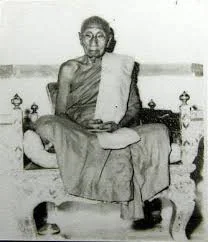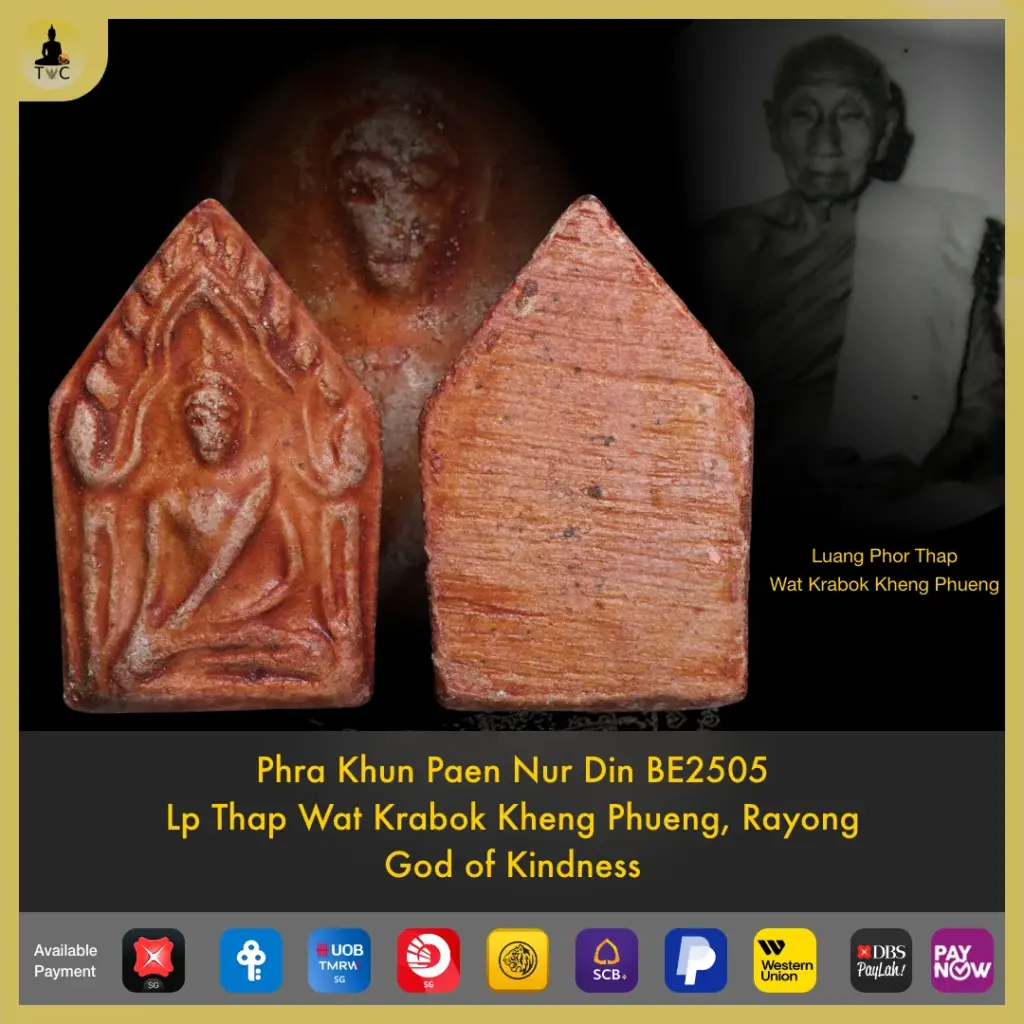
Phra Khun Paen Nur Din BE2505 Lp Thap Wat Krabok Kheng Phueng “God of Kindness”
| Type | Phra Khun Paen |
| Monk | Luang Phor Thap (Lp Thap) Wat Krabok Kuen Phueng |
| Temple | Wat Krabok Kheng Phueng |
| B.E. Year | 2505 |
| Material | Din |
| SKU | TAC-0042 |
Authentic Phra Khun Paen by Luang Phor Thap (Lp Thap) Wat Krabok Kuen Phueng, BE 2505. Sacred clay, Rayong lineage. "God of Kindness" edition.
What is the Phra Khun Paen by Luang Phor Thap (Lp Thap) Wat Krabok Kuen Phueng, BE 2505?
The Phra Khun Paen Luang Phor Thap (Lp Thap) Wat Krabok Kuen Phueng is an early din (sacred clay) amulet issued in BE 2505 (1962 CE) at Wat Krabok Kheng Phueng, Rayong. Known locally as the “God of Kindness,” it was consecrated by Luang Phor Thap (Lp Thap) Wat Krabok Kuen Phueng and is one of his earliest recorded Khun Paen editions.
Luang Phor Thap and the Rayong Lineage Behind This Piece
Also known by his ecclesiastical title Phra Khru Atthakoson, Luang Phor Thap (Lp Thap) Wat Krabok Kuen Phueng was a Rayong master working in the early 1960s at the intersection of rural welfare and contemplative practice. His editions were made to serve the local laity — not for commercial circulation — which kept production modest and consistent in quality. That background matters when you are reading one of his pieces today.
The BE 2505 Khun Paen sits early in his corpus. It reflects a period when LP Thap was building the ritual infrastructure of Wat Krabok Kheng Phueng while simultaneously directing devotional focus toward mettā — loving-kindness — restraint, and what the original temple community described as “right speech.” The “God of Kindness” epithet was not a marketing label; it came from how people in the surrounding community actually described the piece’s influence on their conduct.
Nuea Din: Reading the Material on a Sixty-Year-Old Clay Amulet
This piece is nuea din — pressed from sacred clay blended with ritual earth and phong (sacred powder) during preparation. Within the broader Thai Buddhist amulet tradition, clay editions from this era carry distinctive aging signatures that experienced collectors use as primary authentication references. On genuine LP Thap din pieces, expect a matte bloom across the face, fine micro-pitting in the clay body, and coherent compressed edges where the press has compacted the material cleanly.
The original also notes that subtle beeswax transfer — consistent with see phueng (beeswax ritual compound) application — is sometimes present on LP Thap pieces from this period. Where visible, it tends to settle into recessed areas of the pim (mould impression) rather than sitting on raised surfaces. The consecration sequence for this edition included purificatory invocation, Rayong-lineage protective katha, sustained meditation, and a formal dedication of merit to the laity — completing the pluk sek (consecration ceremony) with the mettā intent sealed into the clay.
The iconography itself carries meaning. Khun Paen in composed meditation — still shoulders, crisp robe lines, serene facial linework — is traditionally read as gentle authority rather than martial force. That posture is what separates this form from more aggressive Khun Paen imagery and aligns directly with the “kindness” framing LP Thap intended.
What Collectors Look For When Authenticating This Edition
There is no certificate noted for this piece. That means authentication rests entirely on material reading, pim consistency, and peer review. It is the standard position for many early Rayong pieces and does not in itself diminish the piece — it simply means you rely on the clay, not the paperwork.
- Clay surface: matte and age-toned. Any glossy overcoat is a red flag — it either masks repairs or indicates a later reproduction.
- Edge compression: natural press lines from hand-compaction. Machine-sharp edges on a piece claiming BE 2505 age are inconsistent with how these were made.
- Face and base: balanced proportions, robe lines present but not melted or excessively worn. Some surface softening from decades of wear is normal; structural collapse is not.
- Macro photography: use close-up images of the clay stratification visible on the flanks and reverse to corroborate against reference pieces before committing.
Peer review from collectors familiar with the Rayong lineage adds another layer. This is a niyom (collector-standard reference) category to aspire to rather than one broadly established in the wider market — part of what makes early LP Thap pieces genuinely interesting to pursue.
This BE 2505 Khun Paen in din is one of LP Thap's earliest recorded editions from Wat Krabok Kheng Phueng — a Rayong piece made for local devotional use, not wider circulation, which keeps genuine examples genuinely scarce. For collectors building a Rayong lineage reference set, an early LP Thap Khun Paen in honest, uncertified din is exactly the kind of piece worth documenting carefully.
Attributes reflect Thai Buddhist devotional tradition and are not measurable claims.