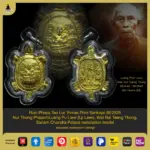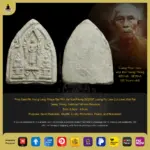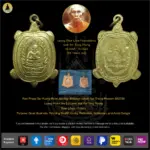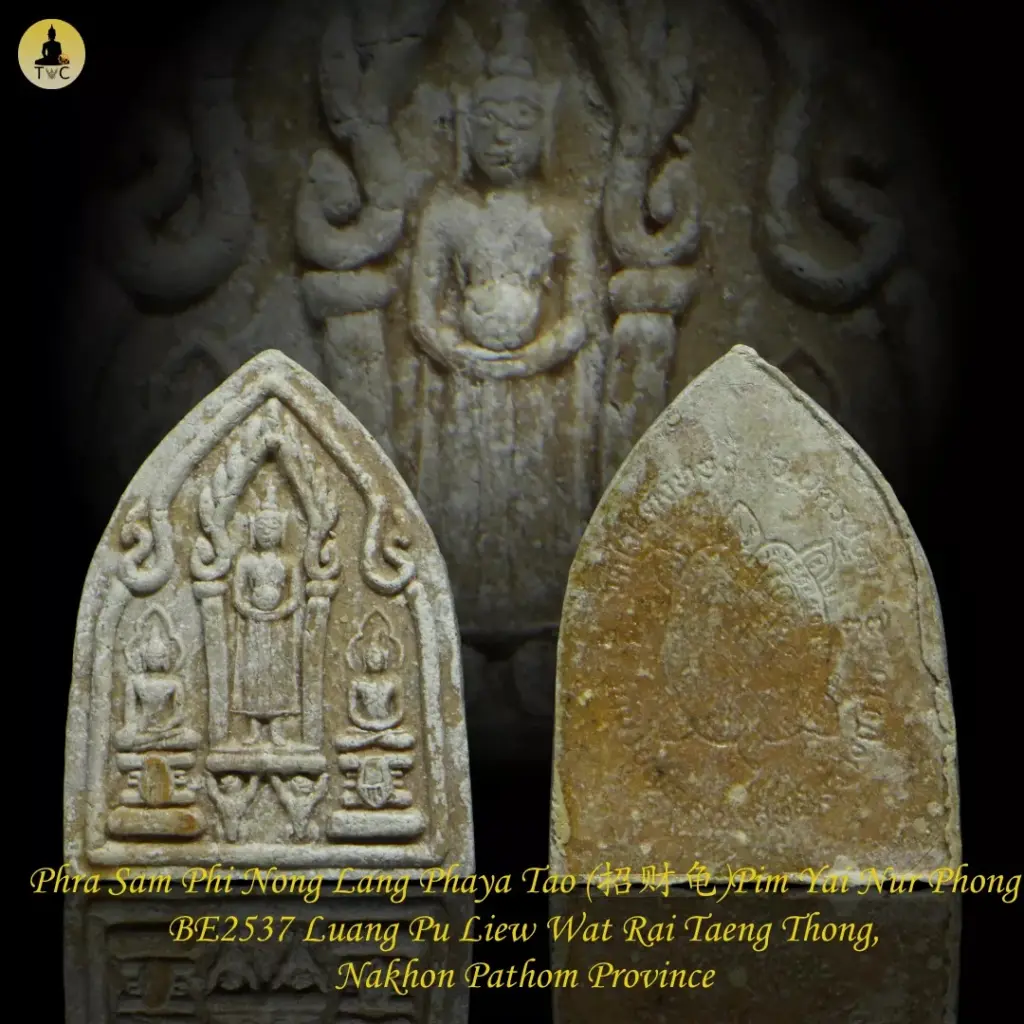
Phra Sam Phi Nong Lang Phaya Tao (招财龟) Pim Yai Nur Phong BE2537 Luang Pu Liew Wat Rai Taeng Thong
| Monk | Luang Phor Liew (Lp Liew) Wat Rai Taeng Thong |
| Temple | Wat Rai Taeng Thong |
| B.E. Year | 2537 |
| Material | Phong |
| SKU | TAC-0446 |
Authentic Phra Sam Phi Nong Lang Phaya Tao (招财龟) Pim Yai Nur Phong BE2537 Luang Pu Liew Wat Rai Taeng Thong by Luang Phor Liew (Lp Liew) Wat Rai Taeng Thong.
What is the Phra Sam Phi Nong Lang Phaya Tao (招财龟) Pim Yai Nur Phong BE2537 Luang Pu Liew Wat Rai Taeng Thong by Luang Phor Liew (Lp Liew) Wat Rai Taeng Thong?
The Phra Sam Phi Nong Lang Phaya Tao (招财龟) Pim Yai Nur Phong BE2537 Luang Pu Liew Wat Rai Taeng Thong is a large-mould powder amulet pressed in BE 2537 under Luang Phor Liew (Lp Liew) Wat Rai Taeng Thong at Wat Rai Taeng Thong, Nakhon Pathom. The front carries the Phra Sam Phi Nong image; the reverse bears the Phaya Tao wealth-turtle motif, widely associated with steady prosperity among Chinese-speaking collectors.
The monk behind this piece and why Wat Rai Taeng Thong matters
Luang Phor Liew (Lp Liew) Wat Rai Taeng Thong is spoken of with consistent respect among devotees who value practical, grounded blessings — protection and prosperity that feel stable rather than showy. He is not a monk who courted celebrity. His amulets move quietly through collector circles, appreciated more for their sincerity than for auction headlines.
Wat Rai Taeng Thong sits in Nakhon Pathom, a province with a long association with Buddhist practice in central Thailand. Pieces from this temple in the BE 2537 period carry the kind of natural ageing that collectors find credible — old enough to show genuine patina in the recess areas, not so old that condition becomes a concern for daily wear. That balance makes the BE 2537 run a practical choice for someone who wants to actually use the piece, not just shelf it.
For collectors newer to this corner of the Thai Buddhist amulet tradition, Luang Phor Liew’s pieces offer a clear entry point: recognisable iconography, a respected name, and a temple with a traceable history.
The pim, the nuea, and what the motif actually says
This piece is pressed in the Pim Yai — the large mould — which means the imprint details are easier to read than on smaller variants. That matters at authentication time, and it makes the amulet more comfortable as daily wear. The nuea (material/substance) is phong, a powder-based composition. The exact muan sarn (sacred powder blend) ingredients are not specified in the original listing, so collectors evaluate on what they can observe directly.
What to look at on a genuine example:
- Surface grain — fine and slightly porous, not glossy or dense like a recast
- Imprint sharpness — the Pim Yai mould should show crisp lines on both the Phra Sam Phi Nong face and the Phaya Tao reverse
- Recess colouring — natural ageing produces gentle tone variation in the deeper channels, distinct from artificial staining
- Edge condition — wear should look gradual and rounded, not freshly trimmed or sharply re-cut
The front image, Phra Sam Phi Nong — literally “three siblings” or “three companions” — carries an association with unity and mutual support. The reverse Phaya Tao (turtle) is where the piece earns its Chinese-community nickname: 招财龟, the wealth-attracting turtle. The turtle reads as zhao cai (招财, attract wealth) and wen (稳, steady) — slow accumulation, fewer financial leaks, better odds in deals that come through relationships and networks. It is not a dramatic luck motif. It suits people who want consistency more than a windfall.
What a collector considers before buying, and the certificate situation
No certificate accompanies this piece as listed. That is not unusual for temple-issued phong amulets of this period, but it does shift more weight onto physical authentication. The Pim Yai format helps — there is more surface to examine, and experienced eyes can cross-reference imprint details against known reference pieces from Wat Rai Taeng Thong’s BE 2537 issues.
In Chinese-speaking collector circles across Singapore, Malaysia, and Taiwan, the 招财龟 motif has its own following independent of grading certificates. Collectors who focus on this theme tend to know the feel and grain of Luang Phor Liew’s phong work and authenticate by comparison rather than paper. If you are buying at a distance, ask for close-up photographs of the reverse turtle relief and the powder grain at the edges — those two angles tell most of the story.
We at TAC are offering this Phra Sam Phi Nong Lang Phaya Tao (招财龟) Pim Yai Nur Phong BE2537 from Luang Phor Liew of Wat Rai Taeng Thong — a quietly respected prosperity piece that appeals equally to Thai devotees and Chinese-speaking collectors drawn to the 招财龟 motif. The Pim Yai format makes the imprint detail easier to authenticate and comfortable for daily wear, and the nearly thirty years of natural ageing on this phong piece is exactly what collectors in this category look for.
Attributes reflect Thai Buddhist devotional tradition and are not measurable claims.