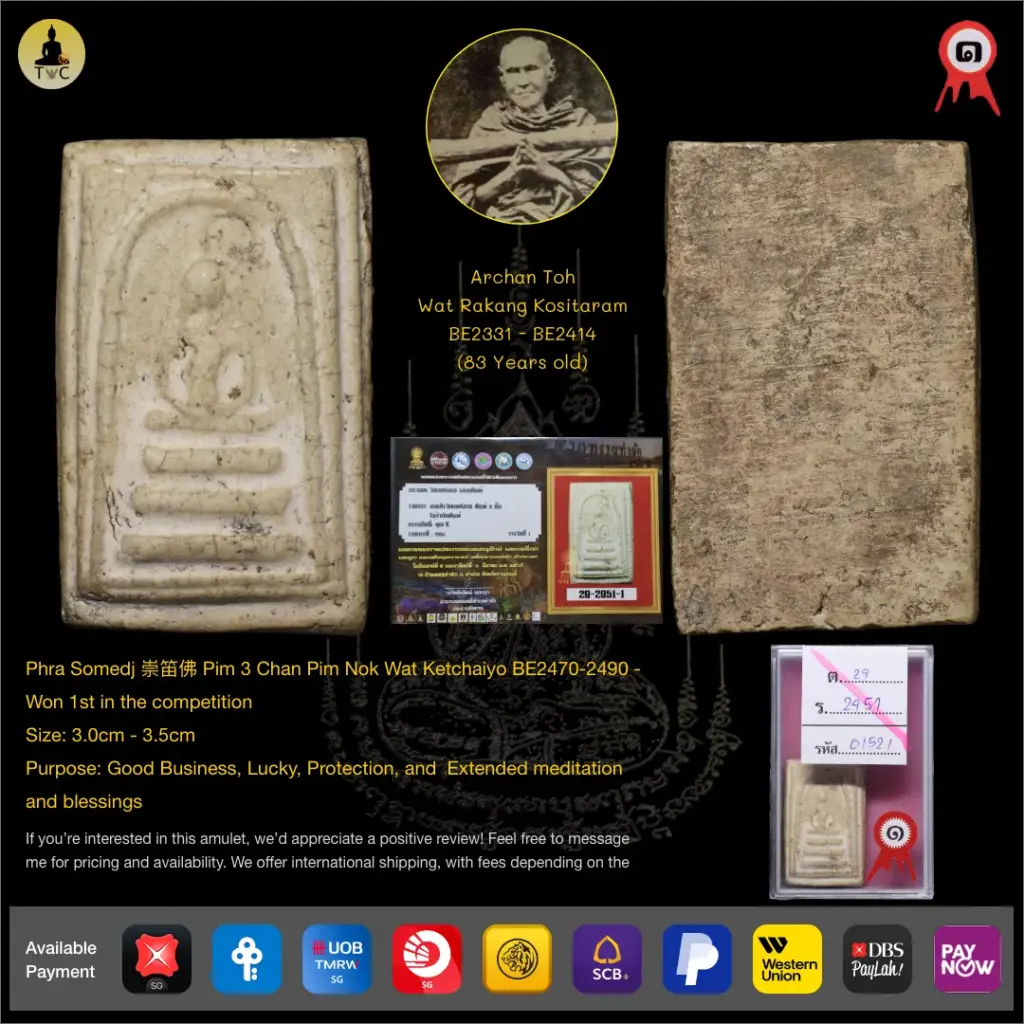
Phra Somedj 崇笛佛 Pim 3 Chan Pim Nok Nur Phong Wat Ketchaiyo BE2470-2490
| Type | Phra Somdej |
| Temple | Wat Ketchaiyo |
| B.E. Year | 2470 |
| Material | Phong |
| SKU | TAC-0454 |
Authentic Phra Somdej Pim 3 Chan Pim Nok, Wat Ketchaiyo BE 2470–2490. Sacred phong nuea, competition-graded.
What is the Phra Somdej Pim 3 Chan Pim Nok from Wat Ketchaiyo BE 2470?
The Phra Somdej Pim 3 Chan Pim Nok from Wat Ketchaiyo is a phong (sacred powder) amulet pressed between BE 2470 and 2490, continuing the Phra Somdej tradition that Somdej Phra Buddhachan Toh Phrommarangsi established at this Ang Thong temple in the mid-19th century. This pim (mould type) features a three-tiered throne and a slightly freer outer mould profile, making it immediately recognisable to experienced collectors.
Wat Ketchaiyo and the lineage behind this piece
Wat Ketchaiyo (วัดเกศไชโยวรวิหาร), in Chaiyo District, Ang Thong Province, is where Somdej Phra Buddhachan Toh Phrommarangsi personally initiated Phra Somdej amulet production in the mid-19th century. After Somdej Toh passed in BE 2415, the temple held that connection in trust. The BE 2470–2490 production run was a deliberate revival — the temple’s way of keeping the lineage alive rather than letting it quietly fade.
The context matters. Early 20th-century Thailand was navigating real economic stress and political upheaval. The temple pressed these amulets partly to fund restoration work and partly to put protective objects within reach of ordinary devotees. That dual purpose — practical and devotional — is built into the piece’s history. For collectors who follow the broader Thai Buddhist amulet tradition, pieces tied to a specific temple revival with documented purpose carry more weight than generic production runs.
The phong, the pim, and how these were made
The nuea (material/substance) here is phong — a muan sarn (sacred powder blend) composed of powder from older amulets, pulverised relics, holy pollen, blessed herbal residues, and natural adhesives including lime. This is the same class of material Somdej Toh used in his original works. Colour varies by piece: cream, pale yellow, greyish white, or faint reddish tones depending on storage conditions and how the phong has aged over the decades.
The pim itself is Pim 3 Chan Pim Nok. “3 Chan” means the Buddha image sits on three distinct tiers, representing the Triple Gem — Buddha, Dhamma, Sangha. “Pim Nok” describes an outer mould variant that sits outside the more rigid standard mould. Proportions, sharpness of the image, and border framing can all differ slightly from piece to piece within the same run. Collectors who know this pim well use those small variations as part of their authentication read, not a reason to doubt a piece.
The phutthaphisek (consecration ceremony) involved senior monks from nearby temples — some holding lineage connections back to Somdej Toh — chanting traditional Pali parittas including Itthipiso and Chinabanchon, alongside special katha dedicated to Somdej Toh. Completed amulets were then left inside the ubosot (main chapel) for extended periods, absorbing the temple’s daily ritual environment.
What collectors look for in this piece
Age on phong pieces shows in ways that take time to learn. Natural crazing, surface patina consistent with the phong composition, and the specific weight and feel of genuine muan sarn from this era are the starting points. Pim Nok variants require knowing which deviations from the standard mould are authentic to this run and which suggest a problem.
- Three-tier throne clearly defined, even with age-related softening of detail
- Phong surface showing natural, uneven patina — not uniform or artificially aged
- Image proportions and border framing consistent with known Pim Nok examples from Wat Ketchaiyo
- Colour tone matching expected phong aging for the BE 2470–2490 period
- Some wear is expected and normal for a piece of this age — it does not reduce authenticity
This piece won first place in a competition, which indicates it has been assessed against known references at a serious collector level. Amulets from this batch are traded among collectors with authenticity certificates; confirm the specific certificate details with TAC before purchase.
This Phra Somdej from Wat Ketchaiyo, in the Pim 3 Chan Pim Nok form and produced during the B.E. 2470–2490 period, holds a meaningful place in Thai amulet history precisely because of its direct connection to the legacy of Somdej Phra Buddhachan Toh Phrommarangsi — one of the most venerated figures in the entire Phra Somdej tradition. Collectors who appreciate lineage will recognise that Wat Ketchaiyo is not a peripheral temple but one of the three principal sites associated with Somdej Toh's original works, which makes period pieces from this location genuinely sought after on the Thai amulet circuit. The fact that this example has earned a standard certificate is an important baseline assurance for new and experienced collectors alike, confirming its place within the recognised canon of this temple's output.
Attributes reflect Thai Buddhist devotional tradition and are not measurable claims.


