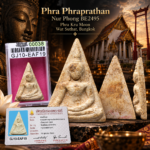
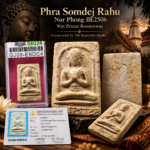
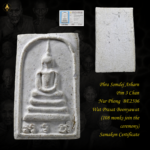
Phra Somdej Than Bua Nur Phong BE2521 Luang Phor Klip Wat Kai Tia, Tailing Chan
| Type | Phra Somdej |
| Monk | Luang Phor Klip |
| Temple | Wat Kai Tia |
| B.E. Year | 2521 |
| Material | Phong |
| SKU | TAC-0469 |
Phra Somdej Luang Phor Klip, Wat Kai Tia BE 2521. Than Bua lotus-base form in phong. No certificate. Authentic piece available from TAC Singapore.
What is the Phra Somdej Than Bua by Luang Phor Klip from Wat Kai Tia?
The Phra Somdej Luang Phor Klip Than Bua is a powder-based (phong) Somdej amulet pressed in BE 2521 at Wat Kai Tia, Taling Chan. It features the classical lotus-base (than bua) structure beneath a seated Buddha, with the listing attributing the blessing to Luang Phor Klip. No certificate accompanies this piece.
Reading the Than Bua Form — What the Lotus Base Tells a Collector
The “than bua” (ฐานบัว) refers specifically to the tiered lotus platform beneath the seated Buddha figure. It is not just decorative. Collectors use it as one of the first reference points when comparing pim (mould) variants — the tier count, depth of the petal cuts, and how cleanly the base transitions into the central figure all contribute to placing a piece within a specific batch or pressing run.
With phong (เนื้อผง, sacred powder blend), what you are really evaluating is the press quality and how the muan sarn has aged. A well-preserved BE 2521 piece in this nuea shows natural micro-grain on the surface, gently toned recesses, and a silhouette that sits firmly in the material without any sign of recarving. The powder body does not lie — age and handling leave marks that are very difficult to replicate convincingly.
The side profile matters too. Edge thickness and how the press seam sits should be consistent with other known examples from the same period at Wat Kai Tia. Where no official documentation accompanies a piece, that kind of comparative reading is the practical authentication route.
Luang Phor Klip and the Wat Kai Tia Connection
Luang Phor Klip is the monk attributed with blessing this batch. The listing does not supply biographical notes or a formal teacher lineage, and there is no certificate with this piece. That is stated plainly here because responsible attribution matters — filling gaps with guesswork does a disservice to serious collectors.
What the listing does confirm: temple, monk, year, and form. For collectors who want to build out the attribution, cross-referencing against trusted Thai amulet archives or older temple publications on the BE 2521 release from Wat Kai Tia is the logical next step. The Thai Buddhist amulet tradition has a long history of temple-specific documentation, and earlier printed collector guides sometimes carry batch details that never made it into digital records.
Without production quantity figures or block documentation in the listing, rarity cannot be stated as a hard claim. What can be said is that Somdej pieces from smaller Taling Chan temples in this era are not commonly encountered in the secondary market, particularly with clear lotus-base silhouettes intact.
What Collectors Check — Authentication Points and Surface Evidence
Because no certificate accompanies this piece, the collector’s eye carries more weight. The following are the practical checkpoints for a phong Somdej in this pim:
- Surface grain: natural micro-texture consistent with aged muan sarn — not overly smooth, not artificially pitted.
- Imprint behaviour: edges and recesses should show press-consistent depth, not evidence of recarving or touching up.
- Age toning: gentle, uneven darkening in the recesses; tiny natural pores visible under magnification.
- Silhouette balance: the Buddha figure and lotus-base proportions should read as a unified, harmonious form — consistent with the Than Bua pim from this period.
- Side profile: edge thickness and press-seam placement should align with comparable BE 2521 examples where available.
Front, back, and side photo comparison against reference examples is part of responsible documentation for any uncertified piece. The back face of phong amulets often reveals surface character — grain pattern, natural toning — that front photos alone cannot show.
Traditional Associations and How Collectors Frame Them
Phra Somdej amulets are traditionally carried with a calm, practice-oriented intention. Collectors associate the form with metta (เมตตา — loving-kindness, social ease), general protection (คุ้มครอง), and klaew klaad (แคล้วคลาด — avoidance of harm, often framed as heightened alertness and steadier judgment). These are cultural framings rooted in Thai Buddhist devotional practice, not guarantees.
The lotus-base form in particular is read as a symbol of purity and stability — the Buddha grounded on an unsullied foundation. For collectors who wear their pieces, that symbolism carries quiet weight independent of any specific attribution claim.
This Phra Somdej Than Bua in phong, attributed to Luang Phor Klip of Wat Kai Tia and dated BE 2521, is a straightforward devotional piece — the lotus-base form is clear and the powder material carries the kind of aged character we look for in pieces of this period. No certificate accompanies this piece, so we recommend collectors review the reference photos carefully and, if needed, cross-check against known BE 2521 examples from Wat Kai Tia before purchase.
Attributes reflect Thai Buddhist devotional tradition and are not measurable claims.