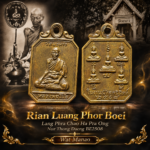
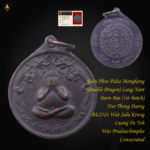
Rian “生意好“ Roon Luang Pu Khambu 89th Birthday Wat Kudchumpoo BE2554 Nur Pluk Lukpun
| Type | Rian |
| Monk | Luang Pu Khambu |
| Temple | Wat Kudchumpoo |
| B.E. Year | 2554 |
| Material | Pluk Lukpun |
| SKU | TAC-0470 |
Authentic Rian Luang Pu Khambu BE2554, Wat Kudchumpoo. Nuea Pluk Lukpun, 生意好 reverse. Limited birthday edition. Available from TAC Singapore.
What is the Rian Luang Pu Khambu 89th Birthday Amulet from Wat Kudchumpoo BE2554?
The Rian Luang Pu Khambu BE2554 is a commemorative coin-medal amulet issued by Wat Kudchumpoo in Ubon Ratchathani to mark the 89th birthday of Luang Pu Khambu Kuttajitto. Pressed in nuea (material/substance) Pluk Lukpun — a sacred mixed-metal alloy — the reverse carries the Chinese inscription 生意好 (Shēng Yì Hǎo), meaning “Good Business.” Funds raised supported temple renovation and Dhamma education at Wat Kudchumpoo.
Why this edition was made, and what makes the design unusual
BE2554 marked Luang Pu Khambu’s 89th year. Wat Kudchumpoo organised the batch specifically to honour that milestone, raise renovation funds for the temple’s structures and monk residences, and produce something useful to lay devotees active in business. The three purposes shaped the amulet’s design directly.
The obverse shows Luang Pu Khambu in a seated meditative posture. The reverse is where this piece stands apart from most Thai coin amulets — the Chinese phrase 生意好 is engraved there, a deliberate choice to reach Chinese-speaking devotee communities across Southeast Asia. This kind of bilingual design is uncommon in Thai amulet production, and it is one reason the piece resonates strongly with collectors in Singapore, Malaysia, and Taiwan.
Nuea Pluk Lukpun is a mixed sacred-metal alloy prepared with temple-blessed components. It is harder and denser than standard bronze, which gives the finished rian a satisfying weight and preserves surface detail well over time. That detail matters when you are authenticating against the original pim (mould collectors reference for authentication).
Luang Pu Khambu and the consecration at Wat Kudchumpoo
Luang Pu Khambu Kuttajitto spent his life at Wat Kudchumpoo in Ubon Ratchathani, dedicating decades to meditation practice, community support, and teaching. His standing among devotees in the Northeast rests on a long, consistent record — not a single event. By BE2554 he was one of the elder monks in the region whose personal consecration carried real weight for collectors.
The phutthaphisek (grand consecration ceremony) was held at Wat Kudchumpoo with Luang Pu Khambu presiding directly. He led the chanting sessions himself, incorporating katha for wealth and metta mahaniyom (loving-kindness and popularity). The amulets were subsequently kept near his kuti (monk’s quarters) for an extended period — a detail that collectors familiar with the Thai Buddhist amulet tradition understand as an additional layer of empowerment.
The batch was distributed primarily to temple supporters and close devotees, keeping production limited from the outset. That restricted circulation is part of why examples in good condition are harder to source today.
What a collector should check on this piece
Authentication for a Pluk Lukpun rian starts with the metal itself. The alloy should show consistent density and a tight, even surface — poorly cast fakes tend to have pitting or blurred relief on the portrait. Examine the Chinese characters on the reverse under magnification; the engraving lines on authentic pieces are clean and deliberate, not scratched or shallow.
- Portrait relief on the obverse: facial detail and robe folds should be sharp and consistent with the original pim
- Reverse inscription 生意好: character strokes even, edges clean, no tooling marks around the lettering
- Metal colour and patina: Pluk Lukpun ages with a characteristic darkening at recessed areas; uniform artificial toning is a warning sign
- Weight and edge finish: authentic pieces have a consistent feel in hand; check the rim for even milling
No third-party certificate is listed for this edition. Provenance documentation from a trusted dealer and comparison against reference images from temple records are the practical authentication routes available to buyers.
We at TAC rate this edition for its rarity and cultural specificity — a temple-run rian personally consecrated by Luang Pu Khambu at his 89th birthday ceremony, with a Chinese-character reverse that was unusual for its time and speaks directly to the collector base across Singapore, Malaysia, and the broader Chinese-speaking market. For collectors focused on Luang Pu Khambu or on cross-cultural amulets with strong commercial blessings, this is a documented, purpose-made edition worth holding.
Attributes reflect Thai Buddhist devotional tradition and are not measurable claims.