Bat Nam Lor Boran (Ancient holy water alms bowl) 4 Tis (Phra Phrom 4 Na) BE2517-22 Chao Khun Tieng (CK Tieng) Wat Rakang
| Type | Bat Nam Lor Boran |
| Monk | Chao Khun Tieng (CK Tieng) (Phra Thammathirat Ratchamuni) Wat Rakang Kositaram |
| Temple | Wat Rakang |
| B.E. Year | 2517 |
| Certificate | Thaprachan #65053050 |
| SKU | TAC-0478 |
Authentic Bat Nam Lor Boran by Chao Khun Tieng (CK Tieng) (Phra Thammathirat Ratchamuni) Wat Rakang Kositaram, BE 2517–2522.
What is the Bat Nam Lor Boran by Chao Khun Tieng (CK Tieng) (Phra Thammathirat Ratchamuni) Wat Rakang Kositaram?
The Bat Nam Lor Boran Chao Khun Tieng (CK Tieng) (Phra Thammathirat Ratchamuni) Wat Rakang Kositaram is an ancient holy water alms bowl produced at Wat Rakang from BE 2517 to BE 2522. Cast in metal using traditional techniques, it features Phra Phrom — the Four-Faced Brahma — on all four sides, and carries sacred yant (sacred inscriptions) throughout. Certified Thaprachan. Production numbers were extremely small.
Chao Khun Tieng and what he brought to this piece
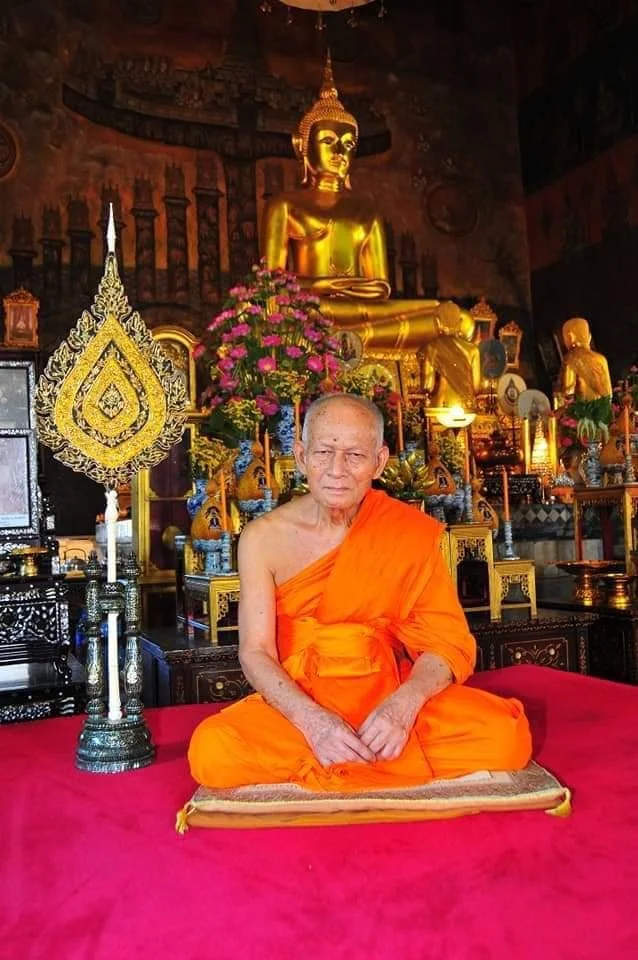
Chao Khun Tieng (CK Tieng) (Phra Thammathirat Ratchamuni) Wat Rakang Kositaram was one of the senior monks of Wat Rakang, respected among collectors for his command of sacred object creation and his grounding in the temple’s long consecration tradition. He personally oversaw the ritual purification and pluk sek (consecration ceremony) for these bowls — not a single-session affair, but a process sustained across five years, from BE 2517 through BE 2522.
That extended consecration is part of what separates this piece from more routine temple items. Mantras were recited by a group of monks throughout that period, and CK Tieng remained central to the process. His involvement is documented, and that documented link to Wat Rakang’s lineage is precisely what collectors at Thaprachan level look for.
The bowl itself — form, nuea, and what the Phra Phrom design means to collectors
The nuea (material/substance) here is cast metal, shaped using ancient metal-crafting methods rather than modern production casting. The form is a functional alms bowl — bat nam lor — designed to hold holy water for blessing and purification rituals. That functional origin matters: this is not a decorative reproduction. It was made to be used in ceremony.
Each of the four sides carries a face of Phra Phrom. In Thai Buddhist iconography, the four faces represent Wisdom, Compassion, Protection, and Fortune — blessings extending in all cardinal directions. The exterior is further inscribed with yant, reinforcing the bowl’s role as a ritual object rather than simply a devotional image. Given how the Thai Buddhist amulet tradition treats consecrated vessels, a piece like this occupies a distinct category — part functional ritual tool, part collectible artifact.
Production was limited. Only a small number of these bowls were ever made across the full BE 2517–2522 run, which is part of why complete, certified examples are difficult to locate today.
Authentication and what Thaprachan certification tells you
Pieces from Wat Rakang attract fakes — the temple’s reputation guarantees that. For the Bat Nam Lor Boran Chao Khun Tieng (CK Tieng) (Phra Thammathirat Ratchamuni) Wat Rakang Kositaram specifically, authentication centres on several points collectors should verify:
- The casting quality and finish consistent with the ancient metal-crafting methods documented for this edition
- The four Phra Phrom faces rendered correctly in proportion and detail against known reference pieces
- The presence and legibility of yant inscriptions on the exterior
- Thaprachan certification — the recognised certification standard for this piece — confirming both origin and period
Thaprachan is the benchmark here. Without it, provenance becomes a matter of trust alone. With a certified example, the collector has a documented chain back to Wat Rakang and to CK Tieng’s oversight of the consecration.
This Bat Nam Lor Boran is one of the more uncommon Wat Rakang objects we handle at TAC — a cast metal holy water alms bowl from the BE 2517–2522 period, produced under CK Tieng's direct oversight and carrying Thaprachan certification. What makes this piece worth serious attention is the combination of documented extended consecration, very limited production numbers, and a certified paper trail back to Wat Rakang — that combination is not easy to find in the current market.
Attributes reflect Thai Buddhist devotional tradition and are not measurable claims.