Phra Pidta Nur Phong BE2643 Luang Phor Kong (Lp Kong) Wat Takhro, Nakhon Ratchasima
| Type | Phra Pidta |
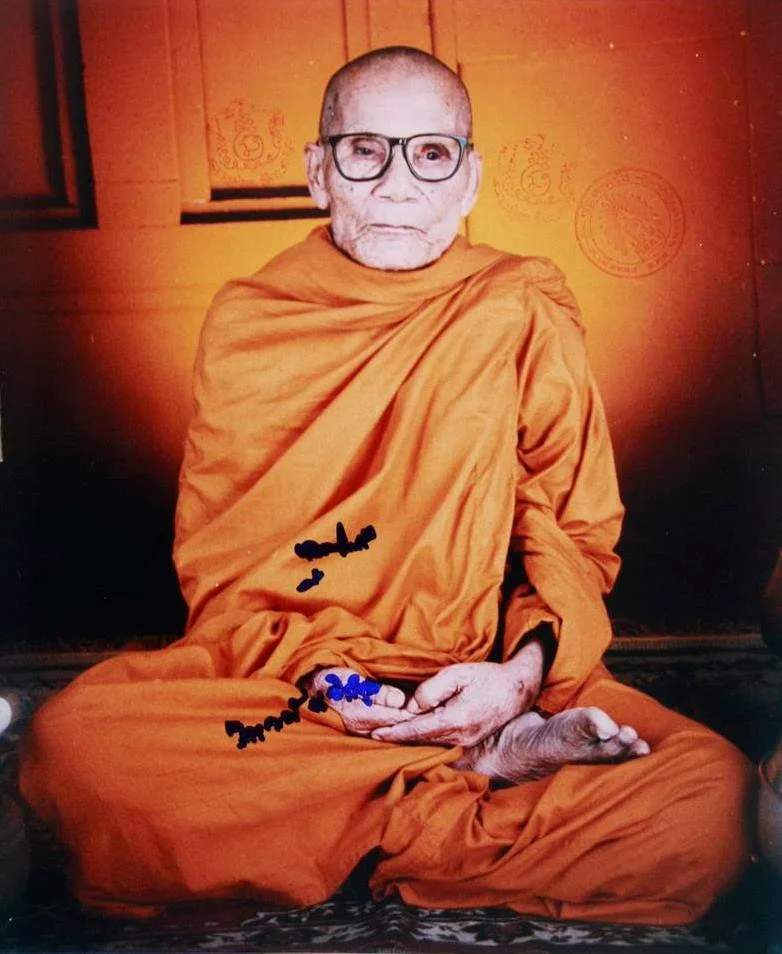
| Monk | Luang Phor Kong (Lp Kong) Wat Takhro, Nakhon Ratchasima |
| Temple | Wat Takhro |
| B.E. Year | 2643 |
| Material | Phong |
| SKU | TAC-0583 |
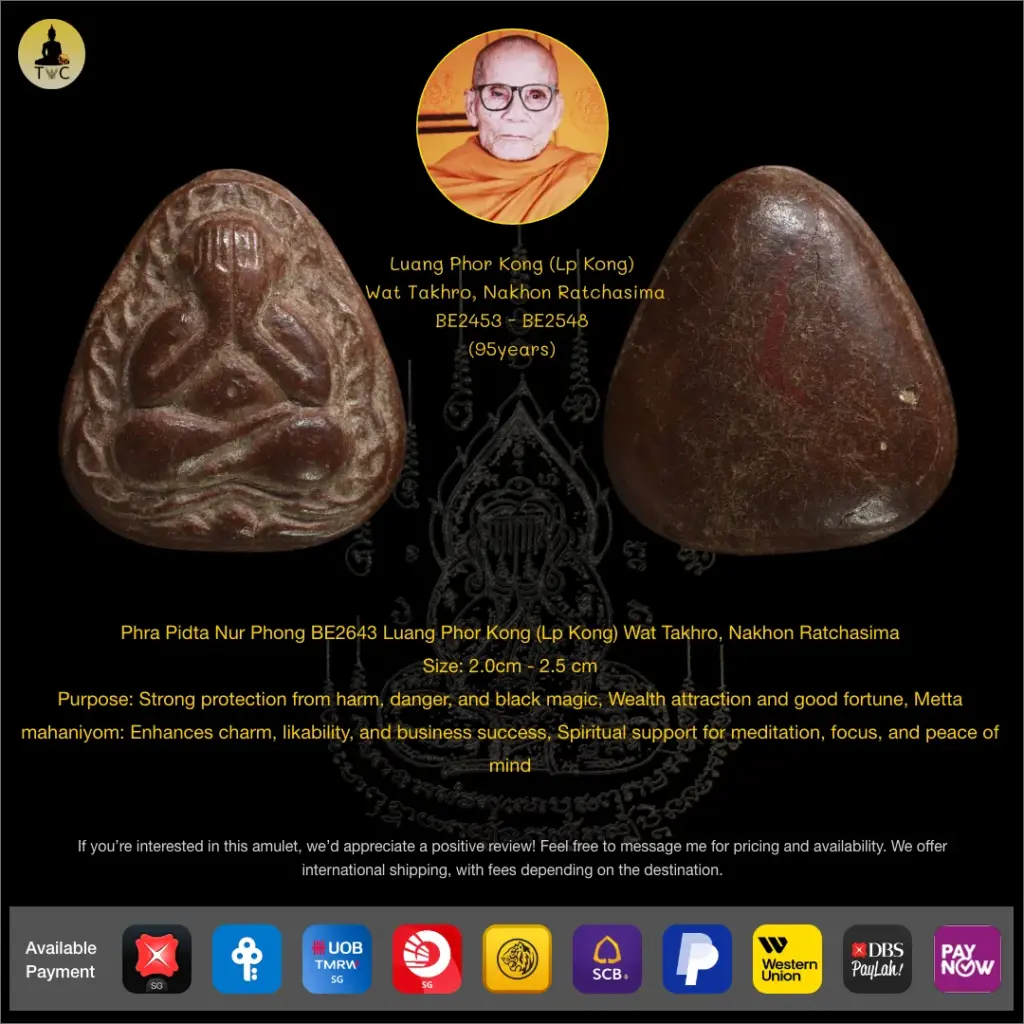
Authentic Phra Pidta by Luang Phor Kong (Lp Kong) Wat Takhro, Nakhon Ratchasima. BE 2643, pressed from sacred phong muan sarn. Available from TAC, Singapore.
What is the Phra Pidta by Luang Phor Kong (Lp Kong) Wat Takhro, Nakhon Ratchasima?
The Phra Pidta Luang Phor Kong (Lp Kong) Wat Takhro, Nakhon Ratchasima is a sacred powder amulet produced in BE 2643 at Wat Takhro in Nakhon Ratchasima province. Pressed from phong (sacred powder blend), the piece carries the Phra Pidta form — the meditating monk with closed eyes — and was consecrated by Luang Phor Kong (Lp Kong) Wat Takhro, Nakhon Ratchasima with senior monks of the region.
Luang Phor Kong and the Wat Takhro lineage
Luang Phor Kong has built a following across Nakhon Ratchasima and the broader Isan collector community through decades of unbroken practice. Collectors drawn to the Wat Takhro lineage point to his consistency — long chanting sessions, strict vinaya observance, and a hands-on approach to consecration that older-school devotees still value.
The BE 2643 edition was produced to continue that lineage in tangible form. It commemorates the spiritual legacy of the temple and gives both long-time devotees and newer collectors a point of access to that tradition. The Thai Buddhist amulet tradition frames pieces like this not as objects of passive display but as active companions in daily life — and that framing fits how Wat Takhro has always positioned its editions.
What goes into the phong and how it was consecrated
The nuea (material/substance) here is phong — a muan sarn (sacred powder blend) pressed into the Pidta form. The blend draws on multiple components: Phong Itthijay and Phong Phutthakhun derived from scriptural chanting, crushed sacred herbs gathered from holy sites, powder from amulets made by past masters, temple soils and relics from Wat Takhro itself, charcoal from long-term incense chanting ash, and pollens and dried flowers carried over from earlier ceremonies. Each component is considered to contribute a distinct quality to the overall muan sarn.
The phutthaphisek (consecration ceremony) was held at Wat Takhro. Luang Phor Kong led multiple rounds of chanting alongside senior monks from the region. Recitations of protective katha were conducted across sessions timed to auspicious astrological periods. The intent was full spiritual activation across the batch before release.
On the physical side, the pim (mould) follows a traditional Phra Pidta posture with detailed hand-pressed definition. Texture is earthy and powdery — characteristic of phong-based pieces — with visible traces of herb particles throughout. Some pieces carry a Na Krop Chakrawat or personal yant (sacred inscription) on the reverse, consistent with Luang Phor Kong’s practice. Size is suited to daily wear, and pieces are typically available in waterproof casing.
What collectors look for in this piece
Phong amulets from this lineage attract collectors who prioritise old-method production — the kind where the muan sarn composition is documented and the consecration is verifiable rather than ceremonial in name only. For this BE 2643 batch, the combination of a detailed muan sarn list and a multi-session phutthaphisek at Wat Takhro is the core of the collector case.
Authentication points worth checking:
- Earthy, powdery texture with visible herb particles consistent with the stated muan sarn
- Presence of Phong Itthijay and Phong Phutthakhun characteristics in the blend
- Pim definition — crisp Phra Pidta posture with hand-pressed detail
- Reverse yant, where present: Na Krop Chakrawat or Luang Phor Kong’s personal inscription
- Temple provenance documentation linking the piece to the BE 2643 Wat Takhro edition
No certificate is listed for this piece. Collectors should factor that into authentication due diligence and seek comparison against known reference examples from the same run.
We acquired this Phra Pidta Luang Phor Kong (Lp Kong) Wat Takhro, Nakhon Ratchasima from the BE 2643 batch — a phong-based piece pressed from a layered muan sarn that includes temple relics and powder from past masters, consecrated over multiple sessions at Wat Takhro. For collectors building a Phra Pidta series or focusing on Nakhon Ratchasima lineage pieces, this is a well-documented batch with a clear consecration record and accessible price point given the absence of a certificate.
Attributes reflect Thai Buddhist devotional tradition and are not measurable claims.