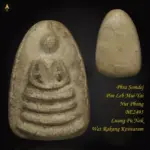
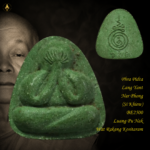
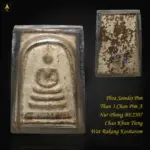
Somdej Toh Wat Rakang, Wat Bangkhunprom Hardcover Amulet Book
| Monk | Archan Toh |
| Temple | Wat Rakang |
| SKU | TAC-0598 |
Authentic Somdej Toh Wat Rakang, Wat Bangkhunprom Hardcover Amulet Book by Archan Toh. 382-page reference covering Bangkhunphrom kru finds, pim ID and ageing.
What is the Somdej Toh Wat Rakang, Wat Bangkhunprom Hardcover Amulet Book by Archan Toh?
The Somdej Toh Wat Rakang, Wat Bangkhunprom Hardcover Amulet Book is a 382-page Thai amulet reference compiled by Teerayut Jongboonyanupap, covering Phra Somdej Bangkhunphrom amulets associated with Wat Rakang Kositaram and Wat Bangkhunphrom (Wat Mai Amataros). It documents moulds, surface textures, and kru finds from three major Bangkhunphrom excavations.
Why this book sits at the centre of Somdej Bangkhunphrom studies
Phra Somdej amulets were pressed by Archan Toh Brahmarangsi between roughly 1866 and 1872, at a period when he held the highest ecclesiastical rank in the kingdom. The pieces he created at Wat Rakang and those later recovered from Wat Bangkhunphrom now belong to Thailand’s celebrated Benja Phakee — the five sacred amulet categories considered the pinnacle of the Thai Buddhist amulet tradition. That lineage is exactly why studying them demands a serious reference, not a general catalogue.
This book concentrates specifically on the Bangkhunphrom lineage, covering three temple sources: Wat Rakang Kositaram, Wat Bangkhunphrom (Wat Mai Amataros), and Wat Chaiyo. The depth of coverage across all three makes it more useful than narrower single-temple titles.
What the 382 pages actually document
The compiler, Teerayut Jongboonyanupap, is a Thai amulet researcher who specialises in Phra Somdej Bangkhunphrom documentation. The book is printed on heavy art paper in a large square format, with high-resolution photography and primarily Thai-language captions. Each section pairs front and back comparison photographs against structural measurement guides, so a collector can hold a piece alongside the page and check proportions directly.
Three kru (temple crypt) finds from Wat Bangkhunphrom are documented in dedicated sections:
- Kru Bangkhunphrom 09 (BE 2509)
- Kru Bangkhunphrom 17 (BE 2517)
- Kru Bangkhunphrom 31 (BE 2531)
For each kru, the book works through pim (mould) identification, back-surface classification, ageing characteristics, and powder surface texture analysis. These four points are the foundation of Somdej Bangkhunphrom authentication, and having them mapped side by side in a single volume saves a collector significant time.
How collectors use it and what to look for when buying the book
Serious collectors of the Somdej Toh Wat Rakang, Wat Bangkhunprom Hardcover Amulet Book treat it as a working desk reference, not display material. The value is in using it repeatedly — checking pim proportion against the measurement guides, reading the back texture photographs under good light, comparing ageing patterns across the kru finds. A copy that has been used is normal; the content is what matters.
When sourcing a copy, check that the binding is intact across all 382 pages and that the photography has not faded or shifted colour — print quality on art paper can vary between printings. Key sections to flip to immediately are the mould family comparison spreads and the back-surface reference plates, which are the most frequently consulted parts of the book.
The four core skills the book builds are:
- Somdej mould identification by pim family
- Powder surface texture and ageing analysis
- Back surface classification across the three kru finds
- Structural proportion comparison using measurement references
This 382-page hardcover by Teerayut Jongboonyanupap is, in our view at TAC, one of the more rigorous reference works available for serious collectors of Phra Somdej Bangkhunphrom — covering the three major Kru finds of BE2509, BE2517, and BE2531 with mould-type breakdowns, high-resolution front and back comparisons, and structural measurement guides that are genuinely useful at the authentication stage. The dual temple lineage coverage — Wat Rakang Kositaram alongside Wat Bangkhunphrom (Wat Mai Amataros) — makes it particularly valuable for understanding how these two closely related traditions are documented and distinguished. We stock this title because a well-referenced library is, in our experience, one of the most honest investments a Somdej collector can make.