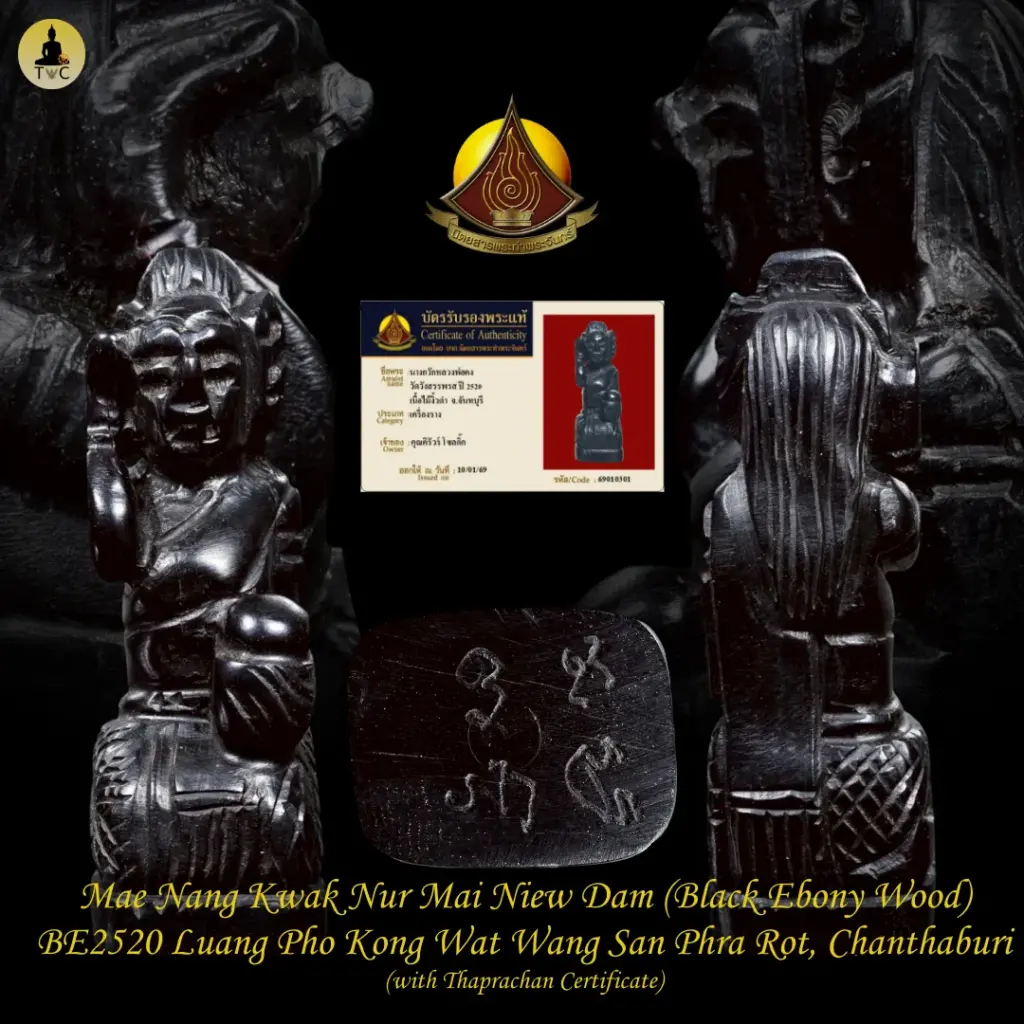
Mae Nang Kwak Nur Mai Niew Dam (Black Ebony Wood) BE2520 Luang Phor Kong Wat Wang San Phra Rot, Chanthaburi
| Monk | Luang Phor Kong (Lp Kong) Wat Sam Pangam |
| Temple | Wat Wang San Phra Rot |
| B.E. Year | 2520 |
| Material | Nur Mai Niew Dam |
| SKU | TAC-0609 |
Authentic Mae Nang Kwak Nur Mai Niew Dam (Black Ebony Wood) BE2520 Luang Phor Kong Wat Wang San Phra Rot, Chanthaburi by Luang Phor Kong (Lp Kong) Wat Sam…
What is the Mae Nang Kwak Nur Mai Niew Dam (Black Ebony Wood) BE2520 Luang Phor Kong Wat Wang San Phra Rot, Chanthaburi by Luang Phor Kong (Lp Kong) Wat Sam Pangam?
The Mae Nang Kwak Nur Mai Niew Dam (Black Ebony Wood) BE2520 Luang Phor Kong Wat Wang San Phra Rot, Chanthaburi by Luang Phor Kong (Lp Kong) Wat Sam Pangam is a hand-carved Mae Nang Kwak figure in nuea (material/substance) Mai Niew Dam — dense black ebony wood — dated BE 2520 and attributed to Luang Phor Kong of Wat Wang San Phra Rot, Chanthaburi. A Thaprachan certificate is included as documentary support.
Luang Phor Kong and the Chanthaburi Connection
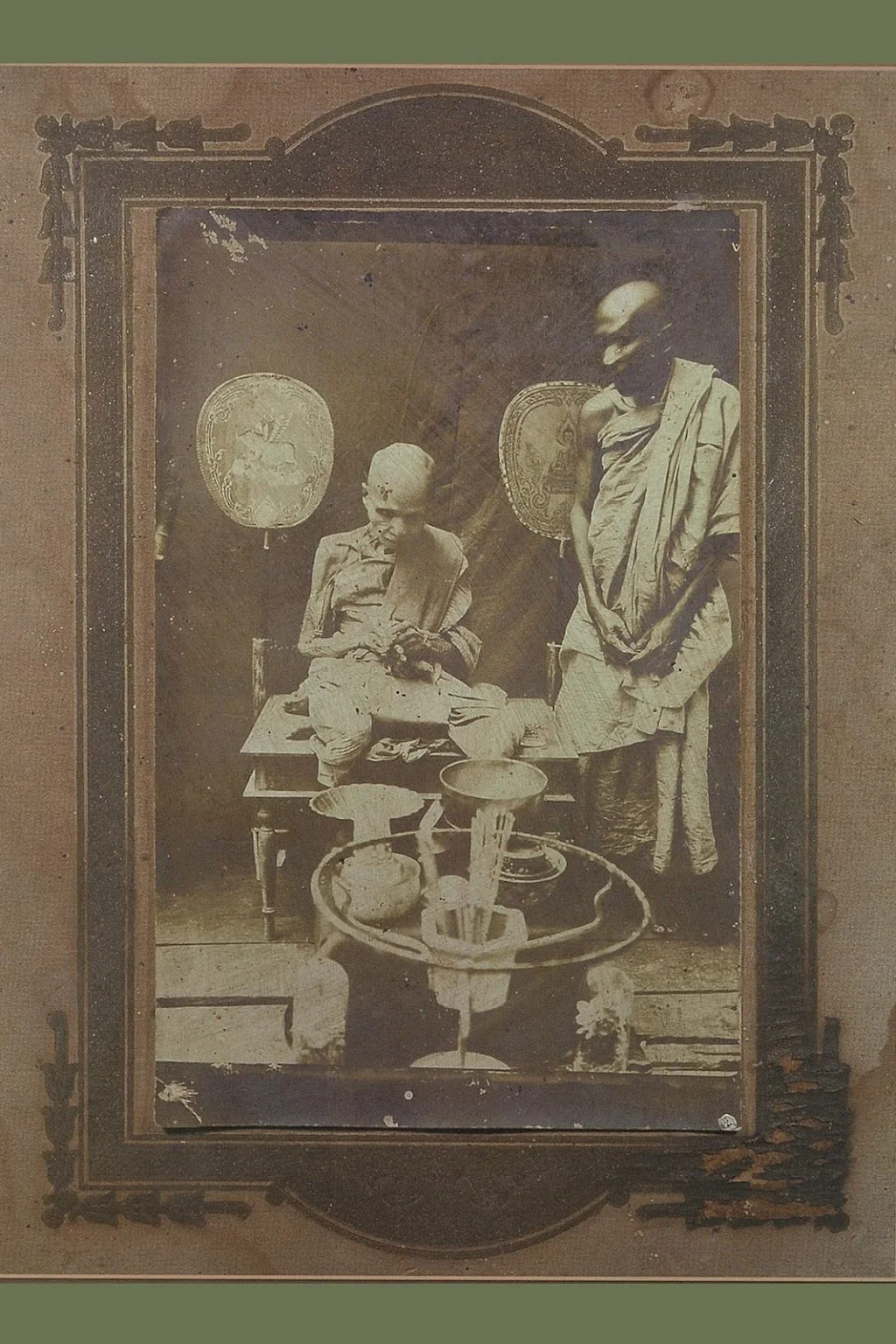
Luang Phor Kong (Lp Kong) Wat Sam Pangam is the monk behind this piece, working out of Wat Wang San Phra Rot in Chanthaburi province. Chanthaburi sits in eastern Thailand and has its own distinct devotional culture — less commercialised than Bangkok temple circuits, which tends to appeal to collectors who prioritise attribution clarity over mass-market names.
The listing attribution places this figure squarely within Luang Phor Kong’s output at BE 2520. Consecration ceremony details and batch naming are not specified in the available records, so the Thaprachan certificate shown in the photo set is the primary documentary anchor for this piece.
The Nuea — What Mai Niew Dam Tells a Collector
Mai Niew Dam (ไม้เนื้อดำ) — black ebony wood — is one of the more durable and visually distinctive nuea used in Thai devotional carving. The material reads differently from pressed powder amulets: collectors assess grain density, carving crispness, and how the surface patina has developed over decades rather than looking for uniform shine. A piece from BE 2520 should show natural edge wear and pore behaviour consistent with dense hardwood aging across roughly fifty years.
The deep, near-black tone of Mai Niew Dam tends to photograph with warm highlights under direct light. That optical behaviour is itself a reference point — pieces with suspiciously uniform colour or filled grain warrant closer scrutiny. The listing does not specify whether the wood has been sealed or oiled, so serious collectors should factor in appropriate storage away from extreme humidity and heat swings.
Mae Nang Kwak (แม่นางกวัก) as an iconographic subject is identified by her welcoming gesture — one hand raised, drawing opportunities and customers inward. For carved wood figures specifically, the areas collectors examine most closely are the resolution of the hands and sleeve lines, the expression on the face, and the base finish, where handling wear and age cues tend to concentrate. This piece is documented across multiple angles — front, back, sides, base, and height — which supports proper visual study before purchase.
For context on how wood-carved figures fit within the broader Thai Buddhist amulet tradition, collector practice generally treats them as a distinct category from pressed muan sarn amulets, with authentication relying more heavily on carving style, aging, and provenance documentation than on pim (mould) comparison.
What Collectors Look For — and the Certificate
This piece comes with a Thaprachan certificate shown in the listing photo set. For lineage-sensitive collectors, standard practice is to verify name spellings, temple identification, and certificate format — numbering and issuer details — against recognised references or a qualified evaluator. The listing does not specify production quantity or a formal batch name, so rarity should be read from collector indicators visible in the piece itself rather than from a confirmed limited-issue record.
- Carving detail: Consistency of line work across the figure, particularly at the hands, sleeves, and facial features.
- Wood aging: Natural edge wear, authentic grain and pore behaviour, no signs of artificially accelerated patina.
- Base examination: The base often concentrates the clearest age and handling cues on carved wood figures.
- Certificate: Thaprachan certificate included — verify format, numbering, and issuer against known references.
I have a particular appreciation for Mae Nang Kwak pieces rendered in Mai Niew Dam, as the density and natural darkening of black ebony wood lend this icon a quiet gravitas that mass-produced versions rarely achieve. At BE2520, this carving is now over four decades old, and . Luang Phor Kong of Wat Wang San Phra Rot is a Chanthaburi lineage name that seasoned collectors of the eastern provinces will recognise, and the Thaprachan certificate included with this piece provides the documentary grounding we at TAC regard as a minimum standard for attributed woodcraft of this period. For a collector building a considered Mae Nang Kwak set by material and temple lineage, this is a purposeful addition rather than a decorative one.
Attributes reflect Thai Buddhist devotional tradition and are not measurable claims.