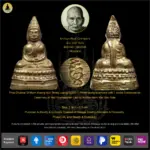
Phra Somdej Leb Mui Lang Yant BE2464 Luang Phor Phong Wat Khuhasawan
| Type | Phra Somdej |
| Monk | Luang Phor Phong Thammachotiko of Wat Khuhasawan |
| Temple | Wat Khuhasawan |
| B.E. Year | 2464 |
| SKU | TAC-0694 |
Authentic Phra Somdej Leb Mui Lang Yant by Luang Phor Phong Thammachotiko of Wat Khuhasawan, BE 2464. Oil-bound sacred powder, hand-incised yant reverse.
What is the Phra Somdej Leb Mui Lang Yant by Luang Phor Phong Thammachotiko of Wat Khuhasawan?
The Phra Somdej Luang Phor Phong Thammachotiko of Wat Khuhasawan — specifically the Leb Mui Lang Yant variant — was consecrated in BE 2464 (1921 CE) at Wat Khuhasawan, Phatthalung. Pressed in nuea phong (oil-bound sacred powder), it carries the compact fingertip silhouette of the Leb Mui pim and a hand-incised yantra grid on the reverse.
Luang Phor Phong and the southern tradition behind this piece
Luang Phor Phong Thammachotiko is identified with the protection-oriented devotional culture of Phatthalung in southern Thailand. His practice centred on disciplined conduct, yant transmission, and community building — qualities that shaped both the ritual content and the physical form of the amulets he consecrated.
BE 2464 places this piece in the early years of the twentieth century, when southern temple communities were consolidating wicha lineages and raising funds for restoration works at Wat Khuhasawan. The edition was created to serve those purposes: portable sanctity for daily carry, and tangible support for the temple community.
The broader Thai Buddhist amulet tradition of this period tied the efficacy of a piece directly to the master’s meditative attainment and the integrity of the consecration ceremony. LP Phong’s phutthaphisek (consecration ceremony) for this run involved staged katha cycles, with emphasis on metta, protection, and right conduct — the same qualities collectors still associate with his pieces today.
Reading the nuea, the pim, and the Lang Yant reverse
The nuea phong here is an oil-bound sacred powder matrix compounded from herbal admixtures, scripture ash, incense residue, and pollen. After more than a century, the surface develops an organic micro-pitting as the powder set fully hardens — a key age marker collectors watch for. The oil binding also produces a calm matte sheen rather than the harder surface you see on later resin-assisted pressings.
The pim itself is the Leb Mui (fingertip) silhouette: compact shoulder line, steady tiered base, proportions designed to sit comfortably in a small casing. Collectors authenticate against the shoulder taper and the tier spacing on the obverse. Deviations in either dimension are the first flag that something is wrong.
The Lang Yant reverse — the hand-incised yantra grid — is what distinguishes this variant within LP Phong’s BE 2464 output. Authentic examples show pressure variance across the strokes and corner wear consistent with age. A too-even line depth, or wear that looks mechanically applied, points to a later copy. The rhythm of the tool marks matters as much as the pattern itself.
Key points collectors examine on this piece:
- Oil patina coherence — even matte sheen with no areas of unusual gloss or fill
- Tier integrity on the obverse — no crack-fills or restored edges
- Powder granularity under magnification — organic micro-pitting, not uniform surface texture
- Lang Yant tool-mark cadence — natural pressure variance, not mechanically reproduced strokes
- Corner wear on the reverse consistent with honest age
Collector standing and what the market looks for
Early LP Phong Somdej variants with Lang Yant reverses are scarce. Most of what surfaces in the market is later, without the yant, or in a different pim entirely. A confirmed BE 2464 Leb Mui Lang Yant in honest condition is the kind of piece serious students of southern Thai powder amulets specifically seek out.
High-grade examples attract both study collectors and those who carry the piece daily. The two purposes are not in conflict — LP Phong’s pieces were made for exactly that dual use.
This BE 2464 Leb Mui Lang Yant is one of the scarcer variants from LP Phong's documented output — the combination of the fingertip pim and the hand-incised yant reverse in nuea phong from this period does not come up often. We at TAC are offering it at SGD 499, which reflects honest market placement for a piece at this age and specificity. Collectors focused on early southern Thai powder amulets will recognise what they are looking at.
Attributes reflect Thai Buddhist devotional tradition and are not measurable claims.