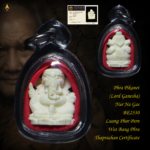
Hanuman Nur Nang Kae (Ivory) BE2530 Luang Phor Pern Wat Bang Phra, Nakhon Pathom
| Monk | Luang Phor Pern Wat Bang Phra |
| Temple | Wat Bang Phra |
| B.E. Year | 2530 |
| Material | Nur Nang Kae |
| SKU | TAC-0709 |
Authentic Hanuman Nur Nang Kae (Ivory) BE2530 Luang Phor Pern Wat Bang Phra, Nakhon Pathom by Luang Phor Pern Wat Bang Phra. Ivory nuea, Thaprachan certified.
What is the Hanuman Nur Nang Kae (Ivory) BE2530 Luang Phor Pern Wat Bang Phra, Nakhon Pathom by Luang Phor Pern Wat Bang Phra?
The Hanuman Nur Nang Kae (Ivory) BE2530 Luang Phor Pern Wat Bang Phra, Nakhon Pathom is a carved ivory Hanuman amulet consecrated by Luang Phor Pern Wat Bang Phra at Wat Bang Phra in BE 2530 (1987). Pressed from nur nang kae — ivory — this piece comes with a Thaprachan certificate confirming authenticity.
Luang Phor Pern and the Wat Bang Phra Hanuman tradition
Among the monks whose amulets still command serious collector interest decades after their passing, Luang Phor Pern Wat Bang Phra stands apart. He built his reputation on protective magic — invulnerability blessings and sak yant (sacred tattoos) — and Wat Bang Phra in Nakhon Pathom became the centre of that lineage. Collectors in Thailand, Singapore, and across Chinese-speaking markets recognise his name immediately.
Hanuman — the warrior monkey of the Ramakien epic — was a natural subject for LP Pern’s work. The figure represents loyalty, fearlessness, and supernatural strength, qualities that map directly onto the klaew klad (invulnerability and accident-avoidance) blessings he was known for. This alignment between monk, deity, and material is part of why pieces from this period remain in demand. For broader context on how such amulets fit into practice, see the Thai Buddhist amulet tradition on Wikipedia.
Nur Nang Kae: what the ivory material means for this batch
Nur nang kae refers to ivory as a nuea (material/substance). It has long been regarded in Thai amulet tradition as a noble material — dense, durable, and associated with purity and auspicious energy. Its use here sets this batch apart from the far more common powder or metal editions of LP Pern’s Hanuman pieces.
The Hanuman is carved in a dynamic warrior posture with yant (sacred inscriptions) worked into the surface to amplify the consecration. The pluk sek (consecration ceremony) at Wat Bang Phra in BE 2530 included traditional Paritta chanting for invincibility and protection, infusion of Kata Hanuman mantras, and extended meditation sessions by LP Pern himself. Senior monks and trusted disciples participated alongside him, reinforcing the collective blessing across the batch.
What collectors look for — and how this piece is certified
Ivory ages in ways that are difficult to replicate. Collectors examine surface patina, the depth and clarity of the carved Hanuman posture, and the consistency of any yant inscriptions against known reference pieces. Pieces that have been worn or housed over decades will show natural discolouration in recessed areas.
- Carved warrior posture consistent with LP Pern’s BE 2530 Hanuman batch
- Yant inscriptions present on the surface
- Natural ivory patina — colour and surface texture consistent with age since 1987
- Thaprachan certificate accompanying the piece
This piece comes with a Thaprachan certificate — one of the recognised certification bodies that collectors in this region treat as a meaningful baseline for authenticity. That paperwork travels with the amulet and is part of what justifies the premium over uncertified examples.
Among LP Pern’s output from the 1980s, the nur nang kae Hanuman is considered one of his more prestigious creations. The combination of ivory material, the Hanuman subject, and BE 2530 timing places it among pieces that serious collectors track down specifically, rather than pick up casually.
Luang Phor Pern of Wat Bang Phra is among the most consequential monk-artisans of the late twentieth century, and his BE2530 period represents a well-documented phase of serious consecration work that collectors continue to seek out decades later. The use of Nur Nang Kae — ivory — as the base material places this Hanuman among the rarer and more distinguished batches from that era, as ivory pieces from reputable temples command attention both for their material integrity and their relative scarcity compared to powder or metal contemporaries. We at TAC present this example with its Thaprachan certificate, which provides the baseline authentication reference serious collectors expect when acquiring material from a monk of LP Pern's standing.
Attributes reflect Thai Buddhist devotional tradition and are not measurable claims.