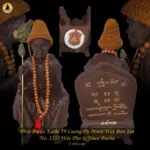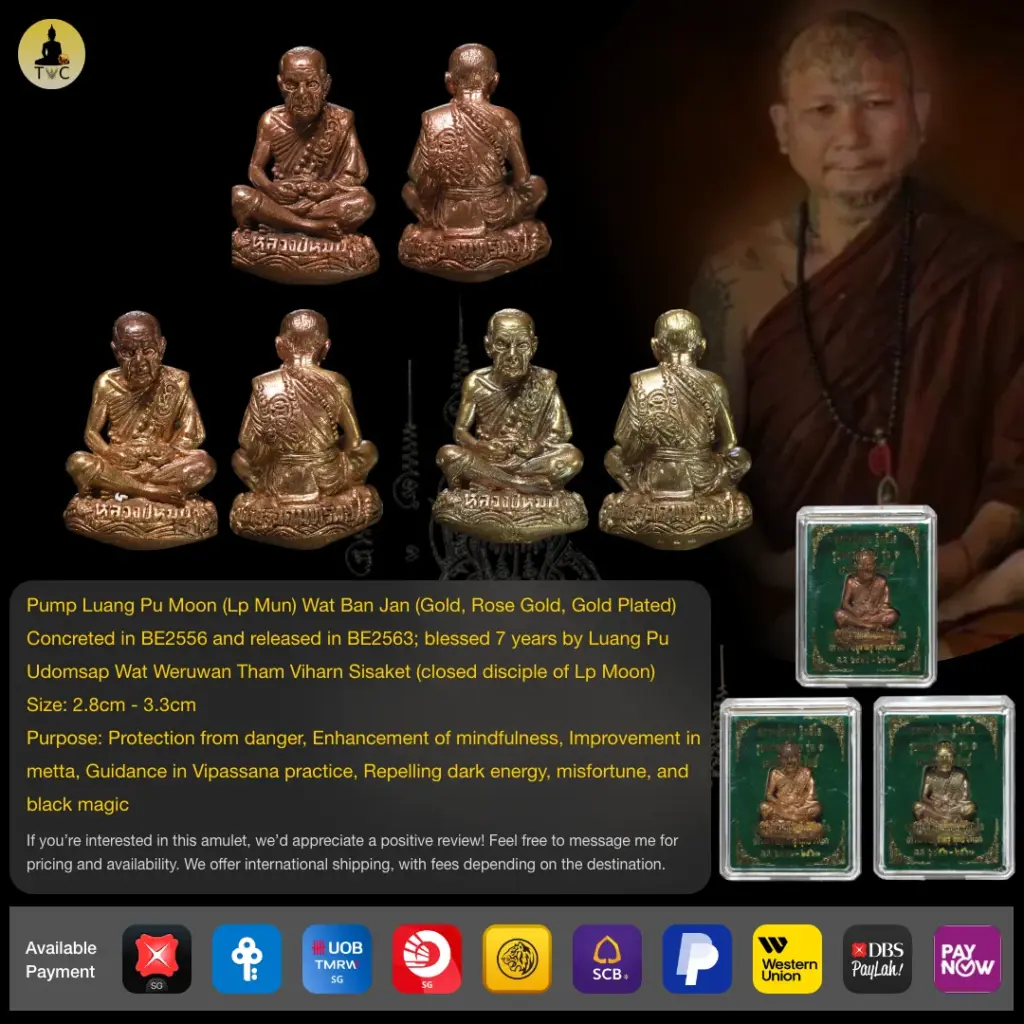
Pump Luang Pu Moon Wat Ban Jan Consecrated in BE2556 and released in BE2563( 7 years) by Luang Pu Udomsap Wat Weruwan Tham Viharn Sisaket
| Monk | Luang Pu Moon Wat Ban Jan |
| Temple | Wat Weruwan Tham Vihar |
| B.E. Year | 2556 |
| SKU | TAC-0761 |
Authentic Pump Luang Pu Moon Wat Ban Jan Consecrated in BE2556 and released in BE2563 by Luang Pu Udomsap Wat Weruwan Tham Viharn Sisaket.
What is the Pump Luang Pu Moon Wat Ban Jan Consecrated in BE2556 and Released in BE2563 by Luang Pu Udomsap of Wat Weruwan Tham Viharn Sisaket?
The Pump Luang Pu Moon Wat Ban Jan Consecrated in BE2556 and released in BE2563 by Luang Pu Udomsap Wat Weruwan Tham Viharn Sisaket is a forest-tradition devotional statue of Luang Pu Moon Wat Ban Jan, produced at Wat Weruwan Tham Vihar. Consecration began in BE2556 and the piece was held for seven continuous years before release in BE2563, available in Bronze, Rose Gold, and Gold variants.
Luang Pu Moon, His Lineage, and Why This Statue Carries Weight
Luang Pu Moon Wat Ban Jan stands as one of the most respected figures in the Thai kammatthana (forest meditation) tradition. His name is tied to strict Vipassana practice, disciplined conduct, and a lineage of monks who trained under him at Wat Ban Jan in Sisaket Province. Collectors drawn to the forest tradition invariably come back to his image.
The monk who oversaw this batch, Luang Pu Udomsap of Wat Weruwan Tham Vihar, is documented as a close disciple within that lineage. His involvement is significant because it keeps the consecration inside the same tradition — not a commercial crossover. For collectors who care about lineage continuity, that matters more than the name of the temple on the box.
Within the broader Thai Buddhist amulet tradition, a pump statue serves a different function from a flat amulet worn at the chest. It is a daily-practice object — kept on an altar or desk, used as a focal point for meditation and intention-setting. The face, posture, and overall serenity of the master are meant to call the owner back to khanti (patience) and sati (mindfulness).
Seven Years of Consecration — What That Actually Means for a Collector
Most batches go through a single pluk sek (consecration ceremony), sometimes over a few days or a single auspicious weekend. This one started in BE2556 and did not leave the temple until BE2563. That is a seven-year accumulation across chanting sessions, meditation retreats, and annual holy-day cycles — all under one presiding master.
In forest-tradition collecting, the preference is for depth over spectacle. A long consecration cycle overseen by a single serious monk carries a different weight from a large festival-style phutthaphisek (mass consecration ceremony) attended by dozens of abbots for a single afternoon. Collectors who understand that distinction actively seek out pieces like this one.
The statue is cast in three metal variants: Bronze (SGD 168), Rose Gold (SGD 188), and Gold (SGD 208). The nuea (material/substance) differs across variants, but the consecration history is identical — all pieces went through the same seven-year blessing cycle under Luang Pu Udomsap. Choice of variant typically comes down to personal preference, display context, or budget rather than any difference in spiritual standing.
What Collectors Look for in This Piece
Because this is a cast statue rather than a pressed amulet, authentication focuses on a different set of markers than pim (mould) analysis. Key points a collector should check:
- Lineage documentation: Look for any temple paperwork or accompanying material linking the piece to Luang Pu Udomsap and Wat Weruwan Tham Viharn, Sisaket.
- Casting quality and finish: Forest-tradition pieces tend toward clean, restrained casting — not over-ornamented. Check that the face retains clarity and that the metal finish matches the stated variant (Bronze, Rose Gold, or Gold).
- Consistency with the BE2556–BE2563 batch: Compare against known reference images from the same release. Variations in proportion or finish outside the documented range are a flag.
- Source provenance: Pieces sourced directly from the temple or through a traceable dealer chain carry stronger collector confidence than those with no documented history.
No independent certificate is listed for this batch. Buyers should factor that into their assessment and rely on the lineage documentation and physical comparison described above.
We at TAC sourced this piece specifically for collectors who follow the kammatthana lineage — the seven-year consecration under Luang Pu Udomsap, a documented disciple of Luang Pu Moon, is the standout factor here and not common in the current market. For a collector who values depth of blessing cycle over edition size or certificate prestige, this batch represents a straightforward and honest choice.
Attributes reflect Thai Buddhist devotional tradition and are not measurable claims.