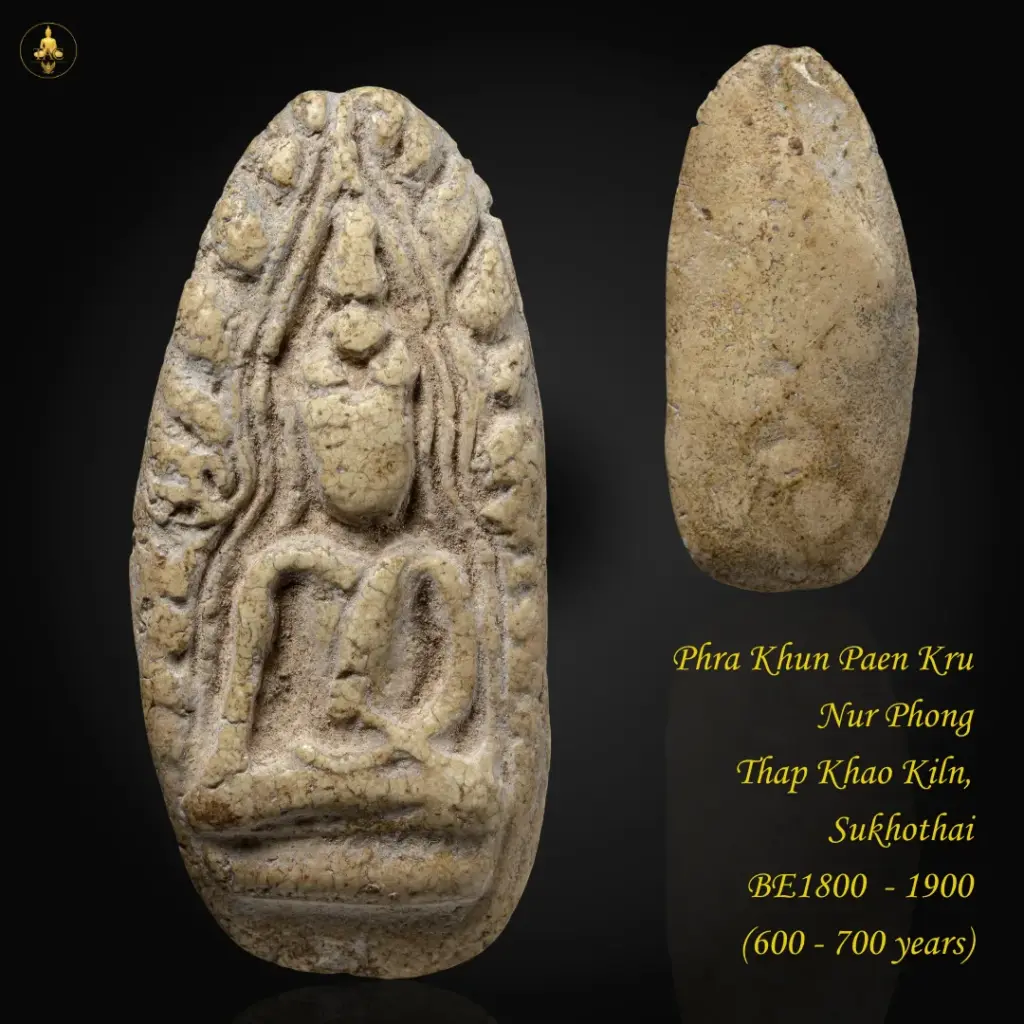
Phra Khun Paen Kru Nur Phong Thap Khao Kiln, Sukhothai BE1800 – 1900 (600 – 700 years)
| Type | Phra Khun Paen |
| B.E. Year | 1800 |
| Material | Nur Phong Thap Khao Kiln |
| Condition | Fair |
| SKU | TAC-0763 |
Authentic Phra Khun Paen Kru, Thap Khao Kiln Sukhothai, BE 1800. Ancient nur phong sacred powder body, approx 600–700 years old. No certificate.
What is the Phra Khun Paen Kru from Thap Khao Kiln, Sukhothai, BE 1800?
This Phra Khun Paen Kru is an ancient sacred powder amulet associated with the Thap Khao kiln tradition of Sukhothai, estimated to date from BE 1800 — approximately 600 to 700 years old. Pressed in Nur Phong Thap Khao Kiln nuea (sacred powder substance), it predates modern temple batch structures entirely. No certificate applies to pieces of this period.
Ancient Sukhothai origin and why the Thap Khao kiln current matters
Sukhothai stands as one of the earliest and most significant centres of Thai Buddhist art and sacred production. The Thap Khao kiln sites are studied not only for ceramics but for the wider devotional world surrounding early temple life — sacred image-making, votive deposit, and the material culture that served monks and lay devotees alike. An amulet traced to that orbit is not a named temple batch. It is a survival from a religious landscape that no longer exists in the same form.
The term phra kru — used in collector language to describe amulets recovered from temple crypts, buried caches, or old devotional deposits — is directly relevant here. Pieces described as kru are assessed through period style, powder body structure, and site tradition rather than through a named consecrating monk or a documented ceremony. That is simply how very old amulets work. To understand the broader Thai Buddhist amulet tradition, it helps to recognise that the modern certificate-and-batch framework emerged centuries after pieces like this were made.
The Khun Paen classification here is a collector-type label based on form — the compact triangular seated figure. It allows comparison and discussion across the field. It does not carry the romanticised market associations of later, named Khun Paen editions. In ancient amulet study, form and material age speak louder than commercial framing.
The nuea: what old Nur Phong actually looks like and how collectors read it
Nuea (material/substance) here is nur phong — a sacred powder body, not cast metal, not straightforward fired clay. Ancient powder amulets preserve something modern pieces cannot replicate: compressed texture built up through hand pressing, mineral and organic inclusions from period sacred materials, and the settled dryness that comes with genuine age. The surface may carry small voids, natural cracking, or tonal variation. These are evidence cues, not flaws.
Compared with contemporary phong (powder) issues, an ancient body like this rarely looks uniform. Edges soften over centuries. Pore structure opens slightly. The overall feel is built rather than struck or poured. Collectors who focus on early Thai Buddhist material culture learn to read these details the way archaeologists read stratigraphy — each layer of the powder body tells part of the dating story.
The front face of this piece carries the compact, direct seated form characteristic of the Khun Paen pim (mould type) in its archaic expression. There is no ornate elaboration of the kind seen in later market-oriented editions. That restraint is a strength. In ancient amulets, proportion, stillness, and devotional compression carry more weight than decorative surface detail. The plain reverse back shows the age-set structure expected of a genuine old powder amulet.
What to look for and how this piece is positioned for collectors
Because no certificate applies to amulets of this period, authentication rests entirely on physical evidence. Collectors working with ancient Sukhothai-lineage pieces typically focus on the following:
- Powder body compression and surface maturity — genuine old pieces feel settled, not artificially distressed
- Mineral and organic inclusions consistent with early sacred powder blends
- Pore structure and edge softening that develop over centuries, not decades
- Visual language — the archaic simplicity of the seated form, proportions that belong to a pre-commercial era
- Overall surface patina that reads as age rather than treatment
Ancient phra kru amulets occupy a different collecting register from named monk issues. They are inherently finite. A piece that retains a readable seated form, an age-consistent powder body, and a visual character that feels genuinely old — not merely worn — is increasingly difficult to find. For collectors focused on early Thai Buddhist material culture, that combination carries real weight.
Devotees approach pieces like this for what the tradition associates with them: old temple current, protective presence, and the sacred calm that comes from a long devotional history. The Sukhothai kiln lineage gives this amulet strong historical grounding for both collector and devotee.
We at TAC are presenting this Phra Khun Paen Kru as a serious early piece — ancient Sukhothai-period, Thap Khao kiln lineage, estimated BE 1800, in nur phong nuea. For collectors focused on early Thai Buddhist material culture rather than modern named-monk issues, the combination of age, kiln association, and archaic pim language makes this a meaningful addition to study.
Attributes reflect Thai Buddhist devotional tradition and are not measurable claims.