Phra Chaiwat Si Mum Muang BE2511 1 stamp code Nur Thong Lueng Wat Khuhasawan Led by Archan Nam Wat Don Sala
| Monk | Archan Nam Chinwaro Wat Don Sala |
| Temple | Wat Khuhasawan |
| B.E. Year | 2511 |
| Material | Thong Lueng |
| SKU | TAC-0775 |
Authentic Phra Chaiwat Si Mum Muang BE2511 1 stamp code Nur Thong Lueng Wat Khuhasawan Led by Archan Nam Wat Don Sala by Archan Nam Chinwaro Wat Don Sala.
What is the Phra Chaiwat Si Mum Muang BE2511 1 stamp code Nur Thong Lueng Wat Khuhasawan Led by Archan Nam Wat Don Sala by Archan Nam Chinwaro Wat Don Sala?
The Phra Chaiwat Si Mum Muang BE2511 1 stamp code Nur Thong Lueng Wat Khuhasawan Led by Archan Nam Wat Don Sala by Archan Nam Chinwaro Wat Don Sala is a cast-metal protective amulet from the Phra Chaiwat Nirorokantrai Chaturathit royal series, consecrated in BE 2511 (1968 CE) at Wat Khuhasawan in Phatthalung. Cast in nuea (material/substance) Thong Lueng — a sacred brass/bronze alloy incorporating chanuan (sacred metal fragments) — and identified by the 1-code “Thaow” stamp under the base, it carries the Southern empowerment of the Khao Or lineage led by Archan Nam Chinwaro Wat Don Sala.
The royal framework behind this edition and why the Southern rite matters
The Phra Chaiwat Nirorokantrai Chaturathit series sits inside a specific historical moment. Commonly described among collectors as a royally associated protective initiative during BE 2510–2511 under King Bhumibol Adulyadej (Rama IX), it was conceived around the concept of “phutthachaiprakarn” — a protective command post of Dhamma — to promote safety and stability in all four directions. The name itself encodes the function: nirorokantrai means free from dangers; chaturathit means the four directions.
What distinguishes this particular piece is the Southern Guardian consecration at Wat Khuhasawan, Phatthalung. While initial royal rites are commonly described as taking place in Bangkok, the phutthaphisek (consecration ceremony) at Wat Khuhasawan gathered respected Southern meditation and wicha masters, particularly those of the Khao Or lineage. That regional empowerment gives this edition a distinct character within the broader series — documented, specific, and traceable to a named master and temple. For collectors who follow the Thai Buddhist amulet tradition, provenance of this kind is not decorative detail; it is the foundation of the piece’s standing.
Archan Nam Chinwaro and what his involvement means for this piece
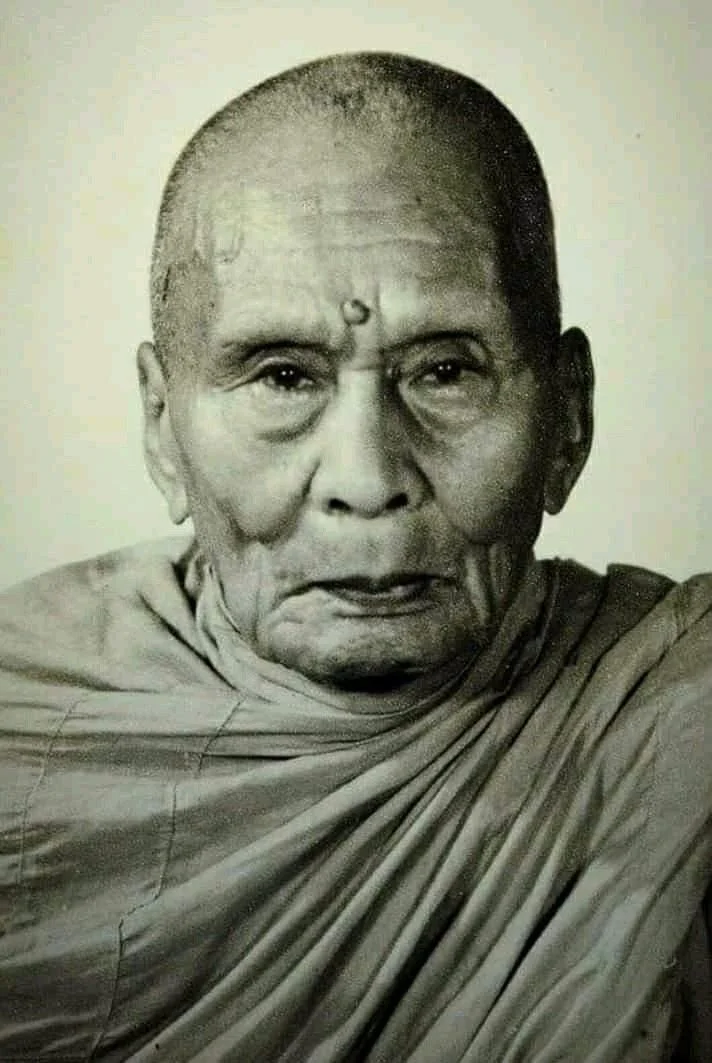
Archan Nam Chinwaro Wat Don Sala is consistently cited as the leading figure in the Southern rite for this edition. Based at Wat Don Sala, he was part of the Khao Or lineage — a Southern Thai tradition known specifically for high-level protective wicha. His role was not ceremonial; he is named as a consecration master, meaning the empowerment at Wat Khuhasawan was conducted under his authority alongside other Khao Or lineage masters.
For collectors, this matters because it anchors the piece to a traceable spiritual lineage rather than a generalised blessing. The Khao Or tradition is strongly associated in collector belief with Klaew Klaad (evasion of danger) and Maha Ut (invulnerability), qualities that define what devotees historically sought in a guardian amulet of this type.
Material, casting, and what to check on the 1-code variant
The nuea here is Thong Lueng — a brass/bronze alloy — with chanuan incorporated during production. Casting follows traditional Thai method, commonly referenced by collectors as Loh Boran or Chao Daeng style. Estimated mintage for the Thong Lueng variant is approximately 9,000 pieces, as commonly cited in collector circles. The pim (mould/form) draws on Sukhothai Buddha iconography, influenced by the Phra Phutthanirorokantrai prototype: composed, measured proportions with robe lines and facial features that experienced collectors check for era consistency and correct casting flow.
The single most important physical identifier on this variant is the “Thaow” code stamp under the base. On genuine examples, collectors check three things:
- Correct placement of the stamp relative to the base edge
- Appropriate depth and character form of the “Thaow” impression
- Age-consistent patina and wear across the surface, including the reverse face and casting vestiges
Clean, clearly readable stamp examples are classified as rare in institutional collecting circles. Limited documented production, sustained interest from collectors tracking the BE 2510–2511 royal protective era, and the specific Khao Or empowerment narrative all contribute to that standing. No certificate is listed for this piece; authentication rests on physical study of the stamp, pim proportions, and patina.
What collectors associate this piece with
Within Thai Buddhist tradition and collector belief, the Phra Chaiwat Si Mum Muang BE2511 1 stamp code Nur Thong Lueng Wat Khuhasawan Led by Archan Nam Wat Don Sala is traditionally carried for comprehensive protection. The four-directions concept embedded in its name suggests safeguarding across all environments and circumstances — historically sought by those in service roles or facing uncertain conditions.
Collectors associate it with five primary qualities: Klaew Klaad (passing safely through danger), Maha Ut (high-level protection, historically linked to invulnerability belief), Metta Mahaniyom (loving-kindness and goodwill in relationships), Maha Amnaj (authority and earned respect), and Choke Lap (fortunate opportunity paired with merit and effort). These reflect traditional belief and collector perspective within Thai Buddhist culture, not claims of proven supernatural effect.
We at TAC are offering this Phra Chaiwat Si Mum Muang BE2511 1 stamp code Nur Thong Lueng Wat Khuhasawan Led by Archan Nam Wat Don Sala — a piece that sits squarely at the intersection of a royally associated national series and a documented Southern empowerment by Archan Nam Chinwaro and the Khao Or lineage at Wat Khuhasawan. For collectors studying the BE 2510–2511 royal protective era or the Khao Or wicha tradition, the 1-code Thong Lueng variant with a clean, readable stamp is genuinely difficult to source in this condition.
Attributes reflect Thai Buddhist devotional tradition and are not measurable claims.