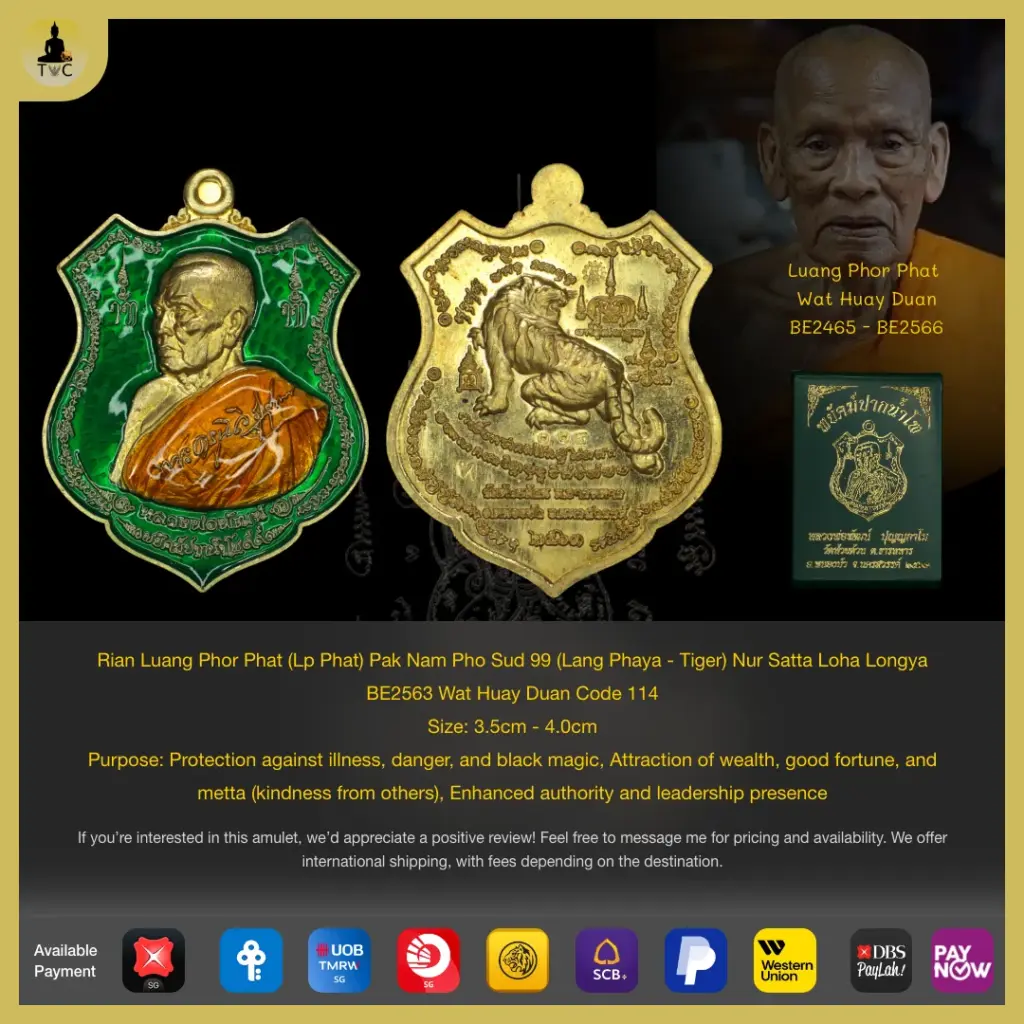
Rian Luang Phor Phat (Lp Phat) Pak Nam Pho Sud 99 (Lang Phaya – Tiger) Nur Satta Loha Longya BE2563 Wat Huay Duan Code 114
| Type | Rian |
| Monk | Luang Phor Phat (Lp Phat) Wat Huay Duan |
| Temple | Wat Huay Duan |
| B.E. Year | 2563 |
| Material | Satta Loha Longya |
| SKU | TAC-0781 |
Authentic Rian Luang Phor Phat (Lp Phat) Wat Huay Duan, Pak Nam Pho Sud 99 Lang Phaya, BE 2563. Cast in Satta Loha Longya. Singapore dealer, Code 114 verified.
What is the Rian Luang Phor Phat (Lp Phat) Wat Huay Duan Pak Nam Pho Sud 99 Lang Phaya?
The Rian Luang Phor Phat (Lp Phat) Wat Huay Duan Pak Nam Pho Sud 99 Lang Phaya is a commemorative coin amulet issued by Wat Huay Duan in Nakhon Sawan Province to mark Luang Phor Phat (Lp Phat) Wat Huay Duan‘s 99th birthday in BE 2563. Cast in Satta Loha Longya, it carries his portrait on the obverse and a roaring tiger — Lang Phaya — on the reverse.
The Pak Nam Pho Sud 99 batch and why it was made
BE 2563 (2020) marked a rare milestone: Luang Phor Phat turned 99. The temple issued this run — named “Pak Nam Pho Sud 99,” a title that directly references his near-centennial journey in the robe — to honour that occasion and raise funds for the restoration and ongoing development of sacred structures at Wat Huay Duan. Limited quantities were pressed for the birthday celebration specifically, which is why the batch sits in a different category from the temple’s regular issues.
The reverse design is deliberate. Lang Phaya — the roaring tiger — is a traditional symbol of authority and fearlessness in the Thai Buddhist amulet tradition. Pairing it with the abbot’s portrait on a birthday commemorative is a strong statement of intent about what the batch was meant to convey.
Each coin carries a unique batch marking, Code 114, which functions as the primary provenance identifier for this piece. That code is what collectors check first when authenticating against known references for this run.
Nuea Satta Loha Longya — what goes into the metal
The nuea (material/substance) here is Satta Loha Longya. Satta Loha is a composition of five primary sacred metals, a blend associated in Thai monastic practice with protective strength and kongkaphan (invulnerability properties). The Longya component — “dragon tail” metal — is a less common addition, used in higher-tier amulets to deepen the alloy’s reputed shielding character. The combination makes the casting materially denser and harder to source than a standard single-metal rian.
The alloy also incorporates fragments of old sacred objects, relic-metal filings, and material drawn from previous revered batches and well-known temples. These additions are what set Satta Loha Longya apart from a straightforward five-metal blend. The casting process was handled to preserve the integrity of those fillings within the struck coin.
Phutthaphisek — the consecration and who was present
The phutthaphisek (consecration ceremony) for the Pak Nam Pho Sud 99 batch was held in early BE 2563, led personally by Luang Phor Phat himself. For a birthday commemorative of this kind, direct blessing by the monk being honoured is significant — it is not always the case with large templated runs. Several other respected masters from the Nakhon Sawan region joined the ceremony:
- Phra Ajahn Udom Chot
- Luang Phor Sawang, Wat Pa Phutthawong
- Luang Phor Samrit, Wat Ban Khok
The assembled monks performed traditional Paritta chanting alongside kata yant (sacred inscription invocations) and sustained samadhi (meditative concentration) to empower the batch with metta (loving-kindness energy), protection, and authority.
We at TAC carry this piece as part of the Pak Nam Pho Sud 99 birthday commemorative run from Wat Huay Duan — a batch issued specifically for Luang Phor Phat's 99th birthday in BE 2563 and not repeated. The Satta Loha Longya nuea and the Lang Phaya tiger reverse make it one of the more materially and symbolically distinct rians from this temple. Collectors looking for a personally-blessed, limited birthday-run piece from a well-regarded Nakhon Sawan master will find this a solid addition to a focused collection.
Attributes reflect Thai Buddhist devotional tradition and are not measurable claims.