Ruesi Borom Kru Pu Yai Yanarit Nur Phong Phasom Phong Prai BE2541 Archan Pleang Bunyuen, Khao Klang Talat Office, Ratchaburi Province
| Monk | Archan Pleang Bunyuen – The Great Magician of Southern Isan |
| B.E. Year | 2541 |
| Material | Phong Phasom Phong Prai |
| SKU | TAC-0605 |
Authentic Ruesi Borom Kru Pu Yai Yanarit Nur Phong Phasom Phong Prai BE2541 Archan Pleang Bunyuen, Khao Klang Talat Office, Ratchaburi Province by Archan…
What is the Ruesi Borom Kru Pu Yai Yanarit Nur Phong Phasom Phong Prai BE2541 Archan Pleang Bunyuen, Khao Klang Talat Office, Ratchaburi Province by Archan Pleang Bunyuen – The Great Magician of Southern Isan?
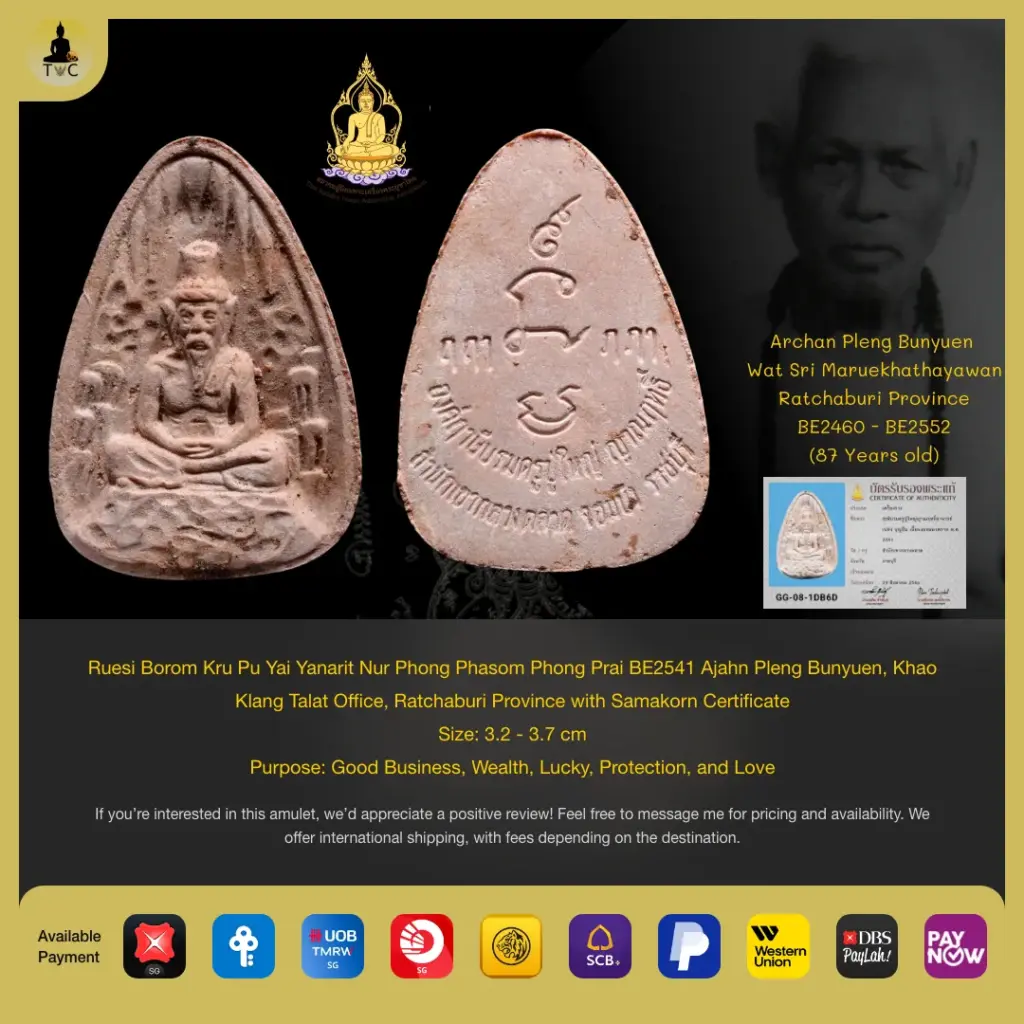
The Ruesi Borom Kru Pu Yai Yanarit Nur Phong Phasom Phong Prai BE2541 Archan Pleang Bunyuen, Khao Klang Talat Office, Ratchaburi Province by Archan Pleang Bunyuen – The Great Magician of Southern Isan is a sacred powder amulet issued in BE 2541 (1998 CE) from Khao Klang Talat Office, Ratchaburi Province. Pressed from Phong Phasom Phong Prai — a mixed sacred powder (phong) formula — and consecrated through formal multi-stage pluk sek, it depicts a seated Ruesi hermit-sage and is documented with Samakom certification.
Archan Pleang Bunyuen and the Ruesi Lineage Behind This Piece
Within the Thai Buddhist amulet tradition, the Ruesi (hermit-sage) icon holds a distinct place. It channels ascetic wisdom — what practitioners call paññā — alongside protective force. The image is not simply devotional decoration; it carries the accumulated meditative discipline of the master who pressed and charged it.
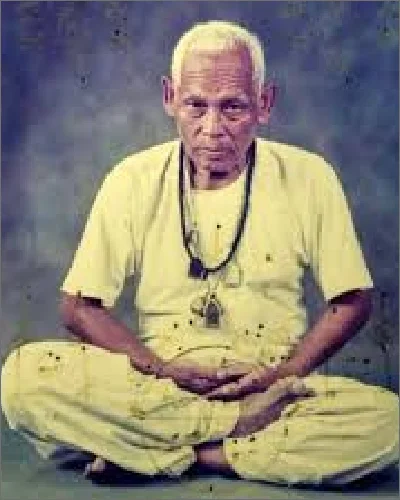
Archan Pleang Bunyuen – The Great Magician of Southern Isan was a laymaster whose wicha (esoteric knowledge lineage) centred on mixed powder formulas and mantra-charged consecration cycles. His approach followed temple-style discipline: measured proportions in the mould, contemplative posture in the iconography, and extended katha (mantric recitation) sessions during the phutthaphisek ceremony. Community works sustained by this edition reflected the practical side of his output — these were not purely ceremonial pieces.
The late twentieth century saw renewed interest in Ruesi devotion across central Thailand, and Archan Pleang’s BE 2541 edition sits squarely within that period. For collectors tracking his output, pieces from this era mark a mature phase of his practice.
Nuea and Pim: What Goes Into the Phong Phasom Phong Prai Body
Phong Phasom Phong Prai — the nuea (material/substance) of this amulet — is a blended sacred powder combining scripture ash, sanctified soils, and herbal and mineral binders. Prai-category ingredients carry particular weight in Thai powder amulet making; their inclusion is deliberate and formula-specific, not generic filler. The whole mass was hand-pressed, giving each piece a slightly individual character in density and surface texture.
The pim (mould) shows a Ruesi seated in calm posture. Facial lines are restrained rather than ornate: calm expression, modest shoulder fall, even field across the face. The rear of the piece shows fine pressed grain — visible stratification from the mixed phong layers. Natural micro-pitting on well-cured examples is expected and consistent with age from 1998.
Consecration followed a multi-stage pluk sek format under Archan Pleang’s direct meditative charge. Mantra cycles were dedicated to Klaew Klaad (evasion of danger) and Metta Mahaniyom (loving-kindness and attraction), with the full phutthaphisek closing the process formally.
What Collectors Look For and How This Piece Is Documented
Pieces from Archan Pleang’s Ruesi line are assessed as collector-grade within his catalogue. The markers collectors check are consistent across documented examples:
- Balanced, calm Ruesi visage with even surface relief across the face and shoulders
- Stable powder matrix — no crumbling, consistent compression throughout the body
- Fine pressed grain on the rear, visible stratification from the Phong Prai blend
- Natural micro-pitting appropriate to age; surface consistent with nearly three decades of cure
- Samakom (SMK) certificate documenting the piece for collector verification
Crisp early casts with intact surfaces carry stronger interest among serious collectors. The Samakom documentation is the standard reference point for this edition — it assists verification without replacing hands-on assessment of the powder body and pim definition.
How can you tell an authentic Ruesi Borom Kru Pu Yai Yanarit Nur Phong Phasom Phong Prai BE2541 Archan Pleang Bunyuen, Khao Klang Talat Office, Ratchaburi Province by Archan Pleang Bunyuen – The Great Magician of Southern Isan?
Authentic examples show a hand-pressed Phong Phasom Phong Prai body with visible stratification from the mixed phong layers and natural micro-pitting consistent with curing since 1998. The pim presents a seated Ruesi with calm, restrained facial lines and an even field — overly sharp or machine-uniform relief is a red flag. The rear grain pattern should be fine and consistent with the pressed powder matrix, not smooth or artificially finished. Samakom (SMK) certification documents the piece and is the standard reference collectors use alongside physical inspection.
We at TAC have handled a number of pieces from Archan Pleang Bunyuen's BE 2541 Ruesi line, and what stands out about this edition is the integrity of the powder body — the Phong Phasom Phong Prai blend holds together cleanly on examples that have been properly stored. The Samakom documentation makes this a more straightforward conversation with collectors who want a verifiable reference point, particularly buyers in Taiwan and Hong Kong where certification carries weight.
Attributes reflect Thai Buddhist devotional tradition and are not measurable claims.