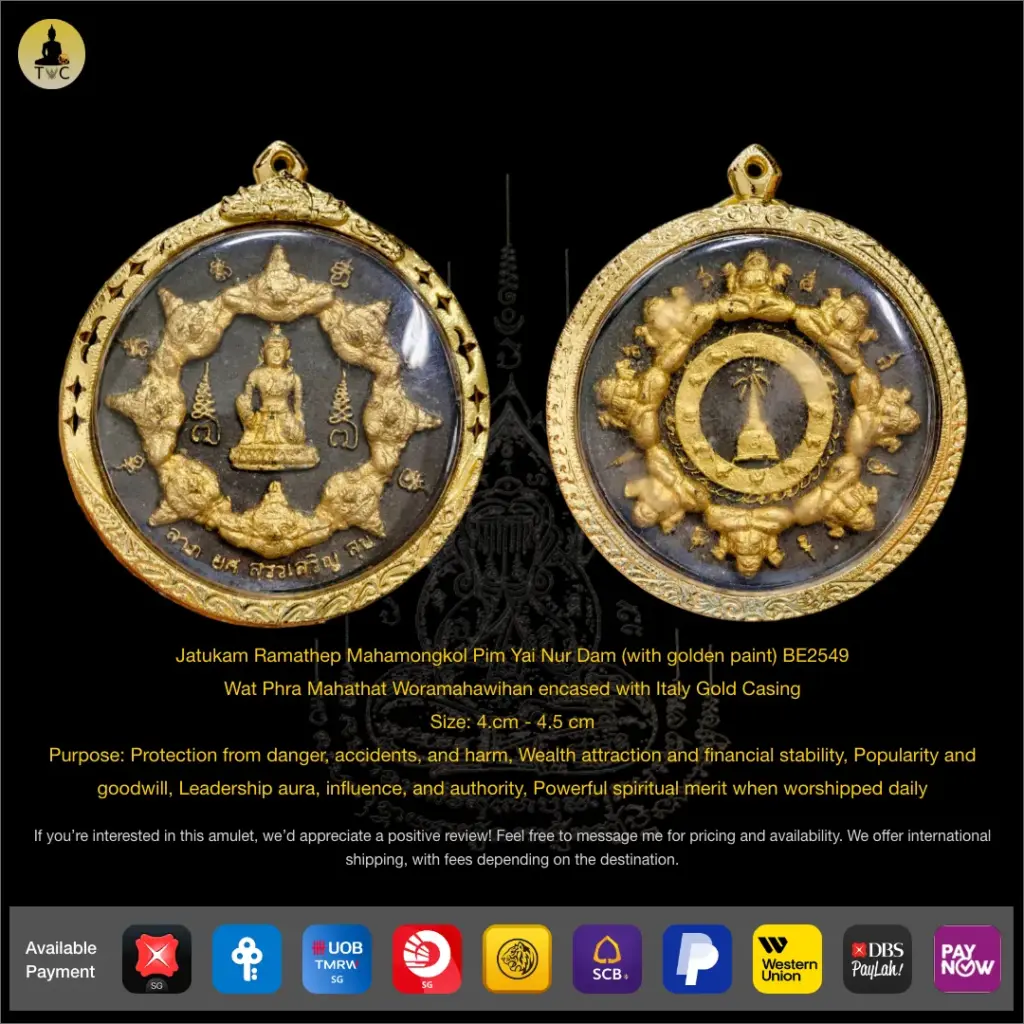
Jatukam Ramathep Mahamongkol Pim Yai Nur Dam (with golden paint) BE2549 Wat Phra Mahathat Woramahawihan encased with Italy Gold Casing
| Temple | Wat Phra Mahathat Woramahawihan |
| B.E. Year | 2549 |
| Material | Nur Dam |
| SKU | TAC-0141 |
Authentic Jatukam Ramathep Mahamongkol Pim Yai Nur Dam (with golden paint) BE2549 Wat Phra Mahathat Woramahawihan encased with Italy Gold Casing.
What is the Jatukam Ramathep Mahamongkol Pim Yai Nur Dam (with golden paint) BE2549 Wat Phra Mahathat Woramahawihan encased with Italy Gold Casing?
The Jatukam Ramathep Mahamongkol Pim Yai Nur Dam (with golden paint) BE2549 Wat Phra Mahathat Woramahawihan encased with Italy Gold Casing is a large-format sacred disc pressed from nur dam (black sacred powder blend) at Wat Phra Mahathat Woramahawihan, Nakhon Si Thammarat, in BE 2549 (2006). The face carries golden paint detailing and the piece sits in a handcrafted high-purity Italy gold casing.
Wat Phra Mahathat Woramahawihan and the Jatukam Tradition
Wat Phra Mahathat Woramahawihan is one of the oldest and most significant Theravada Buddhist temples in southern Thailand. It is the birthplace of the Jatukam Ramathep tradition — the celestial guardian deity associated with protection, prosperity, and justice originates from ceremonies held on these grounds. For collectors, provenance from this temple is not a marketing point; it is the foundational fact that underpins the entire tradition.
BE 2549 fell at the height of the Jatukam revival era, roughly 2005 to 2008, when demand across Thailand, Singapore, Malaysia, and the wider Chinese-speaking collector community peaked. This batch was produced to commemorate and extend the deity’s spiritual influence, to fund restoration works at the temple, and to support charitable community projects initiated by the temple. Within the broader Thai Buddhist amulet tradition, Jatukam pieces from Wat Phra Mahathat during this period set a national benchmark for large-format sacred disc craftsmanship.
Nur Dam, the Pim Yai Mould, and How This Piece Was Made
The nuea (material/substance) here is nur dam — a dense black sacred powder composite pressed under the pim yai (large mould), giving the disc its substantial size and sharply defined relief. The muan sarn (sacred powder blend) draws from southern Thai ritual sources: crushed sacred herbs from the region, ashes and relics from old Jatukam ceremonies, powder from ancient temple structures, incense ash and flowers from prolonged chanting sessions, and soil collected from the Wat Phra Mahathat grounds and old relic stupas. These materials were mixed and blessed according to ancient southern Thai mystical traditions before pressing.
The face of the disc depicts Jatukam Ramathep seated in royal posture, surrounded by yant (sacred inscriptions) and cosmic elements. After pressing, refined golden paint was applied over key features — a finish that distinguishes this variant from plain nur dam examples of the same run. The completed disc was then set into a custom Italy gold casing crafted to high-purity goldsmithing standards, protecting the fine surface detail while making it suitable for daily wear or enshrinement.
The phutthaphisek (consecration ceremony) was held inside Wat Phra Mahathat’s Grand Viharn. Timing was aligned with auspicious planetary and lunar positions. A gathering of highly respected monks and Brahmin masters from across Thailand presided, conducting Pali chanting, Brahmin invocation, homa fire ritual, and multi-day empowerment rites. Jatukam Ramathep, the Devas of the Four Directions, and local protective spirits were invoked across the ceremony.
What Collectors Look For in This Piece
Authenticating a BE 2549 Pim Yai nur dam example starts with the mould definition. The relief on genuine pieces is crisp — the seated figure, surrounding yant, and cosmic border elements read clearly even under a loupe. The golden paint on authentic examples sits in specific recessed areas; uneven flooding or paint that obscures line detail is a flag. The Italy gold casing on genuine pieces is evenly finished with no solder bleed on the inner lip.
- Pim yai disc dimensions consistent with temple records for this batch
- Nur dam body: dense, slightly granular texture with visible herb and powder inclusions
- Golden paint confined to raised or recessed feature areas — not a blanket coat
- Italy gold casing: high-purity finish, clean inner seating, no gap between disc edge and casing wall
- Rear face: yant impression and any batch markings consistent with BE 2549 temple production
No certificate is listed with this piece. Collectors considering this example should rely on physical authentication against reference pieces and, where possible, comparative examination with documented examples from the same batch.
This piece originates from Wat Phra Mahathat Woramahawihan in Nakhon Si Thammarat — the spiritual heartland of the Jatukam Ramathep tradition — and was produced during the peak revival period of BE 2548–2550, when demand for temple-issued examples from this specific source was at its highest and collector scrutiny was correspondingly rigorous. The Pim Yai format in Nur Dam with applied golden paint represents one of the more considered presentations of that era: the sacred powder composition draws on ceremonial ash and relic material from within the temple's own ritual lineage, rather than generic filler, which matters to serious collectors evaluating material authenticity. We at TAC present it in its Italian gold casing with standard certificate, and would recommend it to collectors building a documented record of the Jatukam revival period from its primary temple source.
Attributes reflect Thai Buddhist devotional tradition and are not measurable claims.