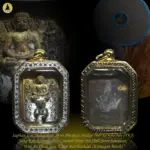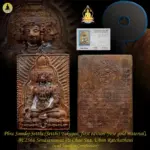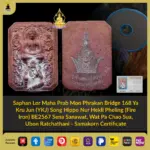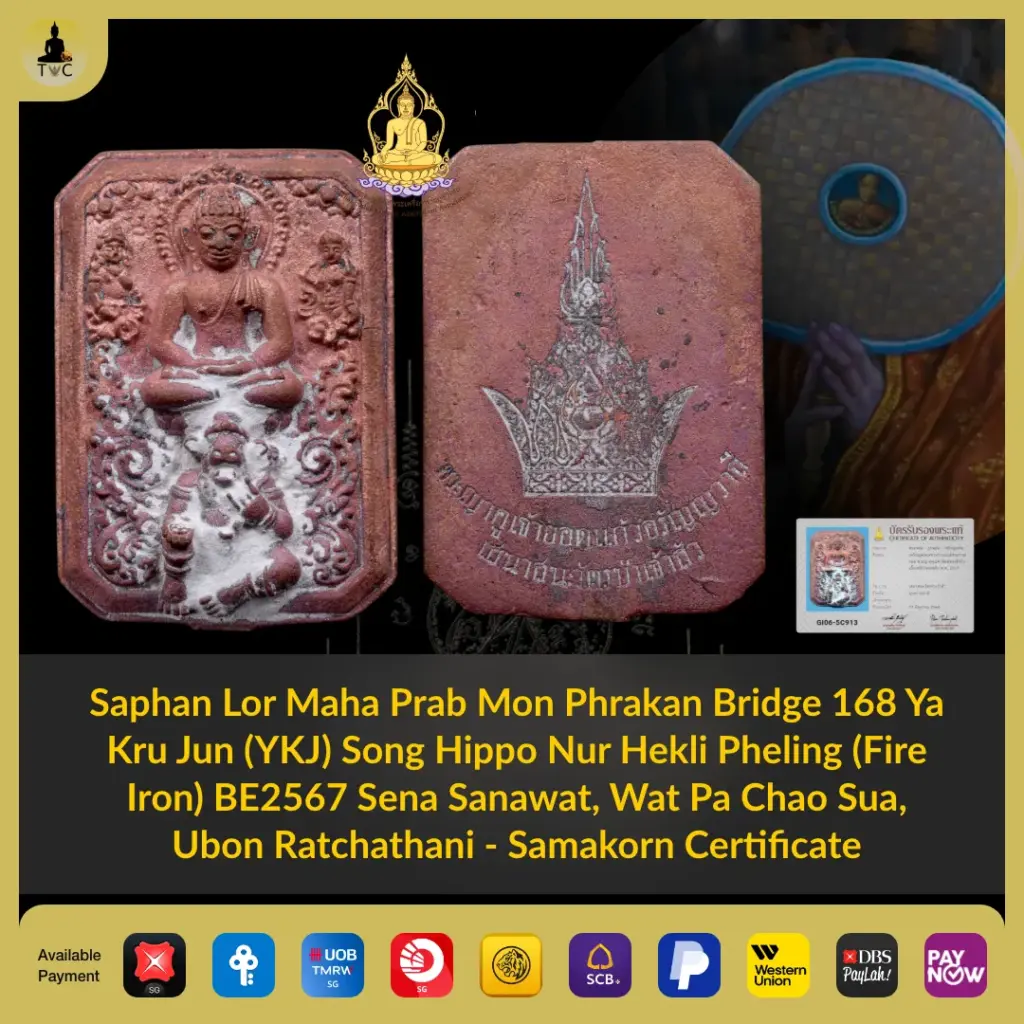
Saphan Lor Maha Prab Mon Phrakan Bridge 168 Ya Kru Jun (YKJ) Song Hippo Nur Hekli Pheling (Fire Iron) BE2567 Sena Sanawat, Wat Pa Chao Sua, Ubon Ratchathani – Samakorn Certificate
| Temple | Wat Pa Chao Sua |
| B.E. Year | 2567 |
| Material | Nur Hekli Pheling |
| SKU | TAC-0319 |
Authentic Saphan Lor Maha Prab Mon Phrakan Bridge 168 Ya Kru Jun (YKJ) Song Hippo Nur Hekli Pheling BE2567, Wat Pa Chao Sua. Samakorn certified.
What is the Saphan Lor Maha Prab Mon Phrakan Bridge 168 Ya Kru Jun (YKJ) Song Hippo Nur Hekli Pheling (Fire Iron) BE2567 Sena Sanawat, Wat Pa Chao Sua, Ubon Ratchathani – Samakorn Certificate?
The Saphan Lor Maha Prab Mon Phrakan Bridge 168 Ya Kru Jun (YKJ) Song Hippo Nur Hekli Pheling (Fire Iron) BE2567 Sena Sanawat, Wat Pa Chao Sua, Ubon Ratchathani – Samakorn Certificate is a limited run of 168 pieces cast in nur hekli pheling (forged iron alloy) at Wat Pa Chao Sua, Ubon Ratchathani, in BE 2567. The hippo-form medal draws on the legend of Phraya Ku Jun and comes with Samakorn certification.
The legend behind the hippo form — and why it matters to this piece
Phraya Ku Jun (also rendered Ya Kru Jun, YKJ) is a figure from Isan oral tradition — a mythical warrior king said to have ruled an ancient city near the Mae Nam Mun, the Moon River. Folklore credits him with the power to suppress the moon itself, a metaphor for dominion over unseen forces. That narrative sits at the core of this medal’s design intent.
The casting takes the form of a hippopotamus — song hippo in the piece’s name — which in ancient regional belief represents protection, steadiness, and an immovable quality that no threat can easily shift. The number 168, strictly limited for this run, carries significance in Chinese cultural belief as a phrase associated with enduring prosperity. These are not decorative choices; collectors who know the Phraya Ku Jun lineage will immediately read the symbolism in the silhouette.
For deeper background on the consecrating monk behind this consecration, TAC’s monk biography page covers the relevant lineage and practice history.
Nur hekli pheling — what the material tells a collector
Nur hekli pheling translates loosely as forged iron alloy, sometimes called fire iron in collector shorthand. In the broader Thai Buddhist amulet tradition, lek fai (meteoritic or specially treated iron) has long been pressed into service for protective objects precisely because iron is understood to repel malevolent forces. This piece sits in that same material lineage.
The phutthaphisek (consecration ceremony) was conducted at Wat Pa Chao Sua following the disciplines of Northeastern forest monk ritual — a tradition anchored in Vipassana practice. Ubon Ratchathani has been a working centre of Theravada forest Buddhism for generations, and objects consecrated there under those protocols carry a specific regional character that experienced collectors recognise. The ceremony was a formal event, not a small private blessing.
When examining the nuea (material/substance) on a genuine piece, collectors should expect the characteristic weight and surface texture of properly forged iron alloy. Key authentication points include:
- Consistent casting quality across the hippo form — no significant flash or fill irregularities on genuine pieces
- The number 168 reflected in the edition count, verifiable against the Samakorn certificate
- Surface patina consistent with nur hekli pheling, not a plated or lacquered finish
- Samakorn certificate matching the piece’s stated details from Wat Pa Chao Sua, Ubon Ratchathani
Collecting this piece — what the Samakorn certificate means in practice
The Samakorn certificate is the primary authentication document for this edition. It ties the specific piece to the consecration event at Wat Pa Chao Sua and to the BE 2567 production run. For collectors in Singapore, Malaysia, or Hong Kong buying through secondary channels, a matching certificate is the first thing to confirm — not an optional add-on.
Wat Pa Chao Sua’s forest monastery setting in Ubon Ratchathani lends these pieces a regional specificity that generic mass-produced amulets do not carry. Sacred objects from the Northeastern forest tradition are assessed differently by knowledgeable collectors: the emphasis falls on the integrity of the ritual, the standing of the officiating monks, and the material used — all three are documented or verifiable here.
We acquired this piece directly for the Samakorn-certified run of 168 from Wat Pa Chao Sua, Ubon Ratchathani, BE 2567. The strict edition count of 168 and the use of nur hekli pheling make this one of the more material-specific pieces from the Phraya Ku Jun lineage to come through TAC.
Attributes reflect Thai Buddhist devotional tradition and are not measurable claims.