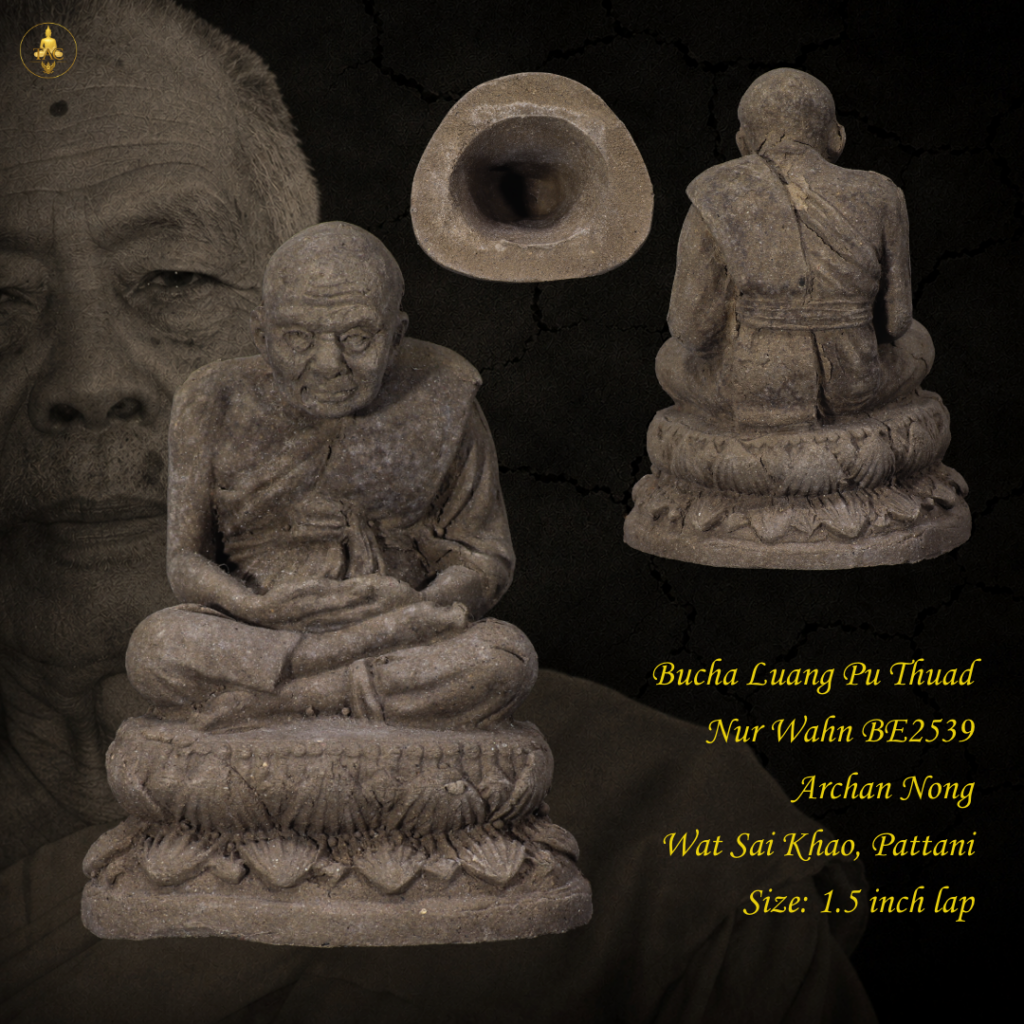
Bucha Luang Pu Thuad Nur Wahn BE2539 Archan Nong Wat Sai Khao, Pattani
| Type | Bucha Luang Pu Thuad |
| Monk | Archan Nong Dhammabhūto Wat Sai Khao |
| Temple | Wat Sai Khao |
| B.E. Year | 2539 |
| Material | Nur Wahn |
| Size | 45 x 60 mm |
| Condition | Good |
| SKU | TAC-BuchaLuangPuThuad-AcNong-001 |
Bucha Luang Pu Thuad by Archan Nong, Wat Sai Khao BE 2539. Pressed in Nur Wahn, 1.5-inch lap size. Singapore dealer TAC.
What is the Bucha Luang Pu Thuad made by Archan Nong at Wat Sai Khao in BE 2539?
This Bucha Luang Pu Thuad Archan Nong is a seated worship image produced at Wat Sai Khao in BE 2539. Pressed from Nur Wahn — a compound of sacred herbal and mineral powders — it measures approximately 1.5 inches in lap width, placing it on the compact end for a bucha piece meant for home or altar use.
Archan Nong and the tradition behind this piece
Archan Nong of Wat Sai Khao is a southern Thai master whose consecrated pieces have drawn consistent attention from collectors across the region. His work sits within a lineage of southern monks who have produced Luang Pu Thuad images following strict ceremonial practice — the phutthaphisek (consecration ritual) being central to any piece worth keeping.
Luang Pu Thuad himself is one of the most significant figures in southern Thai Buddhism, and images made in his likeness carry weight precisely because of that devotional continuity. What matters to a serious collector is who performed the pluk sek and whether the material holds up under scrutiny. With Archan Nong’s output from this period, those are the right questions to ask.
Nur Wahn — what is in this material and why it matters
Nuea (the substance of the amulet) here is Nur Wahn, meaning the muan sarn — the blend pressed into the pim (mould) — is built primarily from wahn, a category of sacred herbs and botanicals prepared and consecrated before pressing. This results in a surface that tends to show a matte, slightly granular texture distinct from chalk-based or lacquered materials.
For collectors, Nur Wahn pieces from this era age in a particular way. The surface picks up handling patina gradually, and the pressed detail of the image, including facial features and robe lines, should remain legible on a well-kept example. That legibility is part of what you check against a reference pim when authenticating.
Reading the piece — what to look for at 1.5 inches
At 1.5 inches in lap width, this bucha sits at a size commonly placed on a personal altar shelf or carried in a vehicle shrine — practical dimensions that made this format popular when the edition was produced. The proportions of the seated Luang Pu Thuad image, the depth of the press, and the base detail are the first things an experienced eye checks.
Collectors familiar with Wat Sai Khao’s output from around BE 2539 will know roughly what the surface tone and compression of a genuine example should look like. If you are comparing against reference pieces, focus on the consistency of the nuea texture across the reverse and base, and check that the seated posture matches the known pim for this batch. No certificate accompanies this piece, so provenance and physical authentication carry more weight here — handle it with that in mind.
For broader context on how Thai Buddhist amulet tradition developed, the Thai Buddhist amulet tradition overview on Wikipedia is a reasonable starting point for newer collectors in the room.
How devotees and collectors use this bucha
A bucha image of Luang Pu Thuad is traditionally placed at an altar rather than worn. Devotees in southern Thailand and across the region associate Luang Pu Thuad with protection from danger and misfortune — particularly in situations involving water or travel, which figures prominently in the folk accounts surrounding him. Collectors in Singapore, Malaysia and the broader Nanyang community have long kept his image for these reasons.
Whether you treat it as a devotional object or a collector’s piece, the same logic applies: a well-made, properly consecrated bucha from a credible monk holds its value because of the integrity of the making process, not just the name on the label.
This is a compact 1.5-inch lap bucha of Luang Pu Thuad, consecrated by Archan Nong at Wat Sai Khao in BE 2539 and pressed in Nur Wahn. We at TAC handle it as an uncertified piece, which means the physical pim and material condition carry the full authentication weight — collectors should inspect accordingly. For a collector who knows southern Thai material from this period, the right example at the right price represents straightforward value.
Attributes reflect Thai Buddhist devotional tradition and are not measurable claims.


