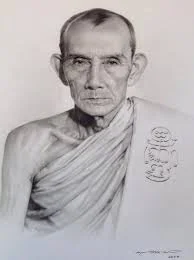
Si Phueng, Luang Por Kuay Wat Khositaram, BE2521, issued to Wat Chan Charoensri
| Monk | Luang Phor Kuay Wat Kositaram |
| Temple | Wat Chan Charoensri |
| B.E. Year | 2521 |
| SKU | TAC-0248 |
Authentic Si Phueng, Luang Por Kuay Wat Khositaram, BE2521, issued to Wat Chan Charoensri by Luang Phor Kuay Wat Kositaram. Samakom certified.
What is the Si Phueng, Luang Por Kuay Wat Khositaram, BE2521, issued to Wat Chan Charoensri by Luang Phor Kuay Wat Kositaram?
The Si Phueng, Luang Por Kuay Wat Khositaram, BE2521, issued to Wat Chan Charoensri by Luang Phor Kuay Wat Kositaram is a sacred wax-based substance item consecrated in BE 2521 and formally distributed to Wat Chan Charoensri. It comes with a Samakom certificate and is traditionally associated with metta and mahaniyom in the Thai Buddhist amulet tradition.
Luang Phor Kuay and why the Wat Chan Charoensri issuance carries weight
Luang Phor Kuay Wat Kositaram holds a firm place among collectors who focus on metta-based pieces. His reputation rests on disciplined practice and a long record of consecrations centred on kindness and social harmony — not protective force or invincibility. Collectors who build a serious Luang Phor Kuay line tend to describe his pieces as quiet and consistent rather than dramatic.
This particular piece carries the notation “issued to Wat Chan Charoensri.” In collector terms, that matters. An issuance to a specific temple — Wat Chan Charoensri — indicates a defined route of distribution, typically tied to a merit activity or dedicated temple purpose, rather than general commercial release. That traceability is part of what gives the piece its standing among experienced collectors.
BE 2521 places this item in a period when Luang Phor Kuay’s reputation was well established. Pieces from named issuances of that era are harder to source now, and the Samakom certificate included with this example provides documentary support that most loose-market pieces simply do not have.
What Si Phueng is and how this one was made
Si Phueng (สีผึ้ง) is a wax-like sacred substance, typically prepared from a blend of natural waxes and consecrated ingredients, housed in a small container. Within the broader Thai Buddhist amulet tradition, it occupies a distinct category — personal, close-contact, and associated with the softer end of sacred properties rather than armour-style protection.
Collectors keep Si Phueng for metta (เมตตา) — warmth and goodwill from others — and mahaniyom (มหานิยม), which describes the quality of being well received: liked, remembered favourably, and helped without asking. These are belief-based cultural associations, not guaranteed outcomes. People in client-facing work — sales, negotiation, customer service — are among those who traditionally carry it.
For a piece attributed to Luang Phor Kuay, collectors pay attention to the nuea (substance/material) and whether the provenance is documented. The wax-based nuea in Si Phueng does not offer the same visible authentication markers as a pressed powder pim, which is precisely why the Samakom certificate matters more here than it might for a harder amulet.
What to check when authenticating this piece
Authentication points collectors examine for this issuance:
- Samakom certificate: Present with this example. Check that the certificate references match the item — year, issuing temple, and monk attribution.
- Container condition: The original container should show age-consistent wear for a BE 2521 piece. Fresh-looking seals on a nearly fifty-year-old item are a flag.
- Issued-to notation: Documentation or provenance linking the piece to Wat Chan Charoensri strengthens the attribution considerably.
- Cross-reference: Compare against known Luang Phor Kuay Si Phueng references in collector catalogues or niyom (collector-standard reference) databases for BE 2521.
Because Si Phueng is a substance item rather than a pressed amulet, physical comparison against a pim reference is not the primary tool here. Lineage documentation and provenance carry more weight than they would for a medallion or tablet.
This Si Phueng, Luang Por Kuay Wat Khositaram, BE2521, issued to Wat Chan Charoensri is one of the more traceable examples of Luang Phor Kuay's metta-focused work that we carry at TAC — the Samakom certificate and the specific Wat Chan Charoensri issuance notation give it a cleaner provenance story than most loose-market pieces from this era. For a collector building a focused Luang Phor Kuay line, a documented BE 2521 issuance piece like this is the kind of reference point that is genuinely difficult to replace.
Attributes reflect Thai Buddhist devotional tradition and are not measurable claims.