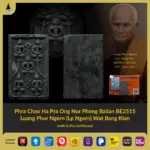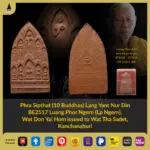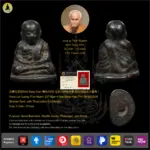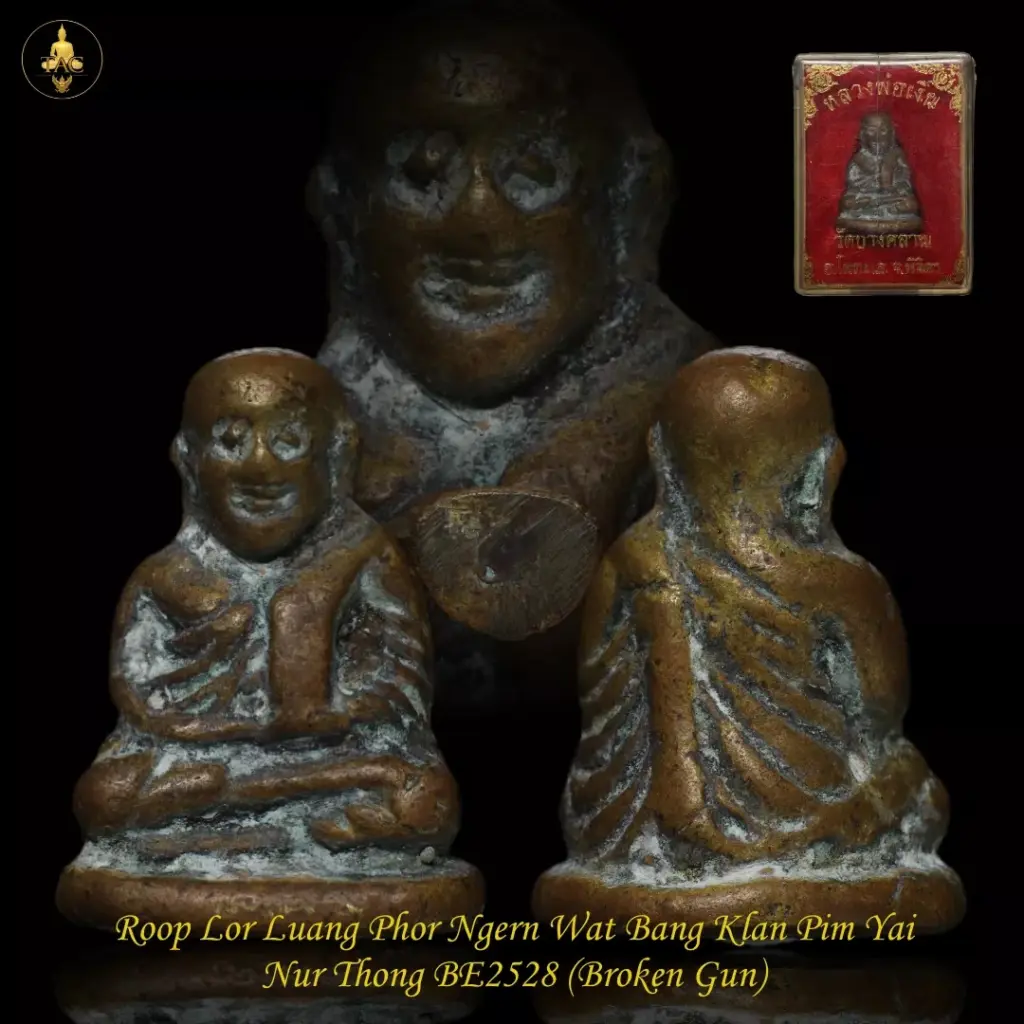
Roop Lor Phra Luang Phor Ngern Pim Yai Nur Thong Wat Bang Klan BE2528 (Broken Gun)
| Monk | Luang Phor Ngern Wat Don Yai Hom |
| Temple | Wat Bang Klan |
| B.E. Year | 2528 |
| Material | Thong |
| SKU | TAC-0791 |
Authentic Roop Lor Phra Luang Phor Ngern Pim Yai Nur Thong Wat Bang Klan BE2528 (Broken Gun) by Luang Phor Ngern Wat Don Yai Hom.
What is the Roop Lor Phra Luang Phor Ngern Pim Yai Nur Thong Wat Bang Klan BE2528 (Broken Gun) by Luang Phor Ngern Wat Don Yai Hom?
The Roop Lor Phra Luang Phor Ngern Pim Yai Nur Thong Wat Bang Klan BE2528 (Broken Gun) by Luang Phor Ngern Wat Don Yai Hom is a cast-metal portrait amulet, produced at Wat Bang Klan in BE 2528. Cast in thong (brass/gold-tone metal), the Pim Yai — the large-proportioned mould — renders the monk’s likeness with visible robe folds and seated posture. The “Broken Gun” name reflects this line’s long-standing protection reputation among collectors.
Why the Roop Lor format matters for this piece
A roop lor (cast portrait) occupies a specific place in the Thai Buddhist amulet tradition. Unlike a flat pressed tablet, a cast portrait carries dimension — depth in the face, shadow in the robe folds, presence in the posture. Collectors describe wearing one as keeping the monk physically close, not just symbolically.
The Pim Yai (large mould) proportion matters here because it gives the caster more surface area to resolve the detail collectors authenticate against: the set of the face, the drape of the robe, the finishing lines on the base. With thong as the nuea (the base material/substance), the piece also develops a handling glow over time that flat amulets in other materials don’t replicate.
The “Broken Gun” designation is a collector nickname, not a temple catalogue term. It attached to certain Bang Klan portrait lines through accumulated word-of-mouth — the kind of repeated field accounts that travel through devotee circles over decades. In Thai devotional culture, these names carry real weight. They are shorthand for a reputation built gradually, not a marketing label.
Luang Phor Ngern and the Bang Klan lineage
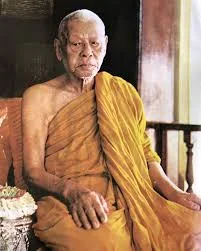
Luang Phor Ngern Wat Don Yai Hom is one of the most consistently referenced monks in the Bang Klan amulet lineage. His portrait amulets have circulated for generations, and the demand for authenticated pieces from Wat Bang Klan remains steady across collector markets in Thailand, Singapore, Malaysia, and among Chinese-speaking collectors in Taiwan and Hong Kong.
What keeps this lineage in circulation is straightforward: the monk’s reputation for kong krapan (protective efficacy) and maha lap (wealth attraction) has not faded with time. If anything, older pieces in good condition attract more attention now than they did at issue. The BE 2528 batch sits at a point where age has become part of the collector’s calculation — nearly four decades of handling history is visible on pieces that have been worn, not stored.
Bang Klan portrait lines in general are discussed as being cast from blends that include older temple metals — residue from restoration work, older bells, and associated sacred objects. The underlying logic collectors follow is continuity: spiritually significant material given a new form for a new generation of devotees.
What to look for when authenticating this piece
The casting character is the first reference point. On genuine pieces from this line, collectors examine the depth of the portrait relief, the consistency of robe-fold detail, and the base finishing — file marks and surface treatment lines that reflect the original workshop process. Thong ages in a specific way; the tone and handling glow on an authentic piece that has been worn for years reads differently from a re-cast or a reproduction finished artificially.
- Portrait relief depth: the face and robe folds should read with clear definition, not flat or blurred at edges.
- Base finishing: file marks and surface treatment lines are part of the original workmanship signature for this line.
- Surface character: natural thong tone and age texture — handling glow develops gradually and is difficult to replicate quickly.
- Mould reference: the Pim Yai proportion has specific dimensional benchmarks that experienced collectors and reference books document.
No certificate is listed for this piece. Collectors working without certification rely on cross-referencing against documented examples in physical reference books and established collector networks. Comparison with certified pieces of the same pim (mould type) is the standard approach.
We at TAC are offering this Roop Lor Phra Luang Phor Ngern Pim Yai Nur Thong Wat Bang Klan BE2528 (Broken Gun) — a cast thong portrait from a lineage that has held collector attention across Singapore, Malaysia, and the broader Chinese-speaking market for decades. The "Broken Gun" reputation and the Pim Yai mould's detail make this a piece serious collectors of the Bang Klan line will want to examine closely.
Attributes reflect Thai Buddhist devotional tradition and are not measurable claims.