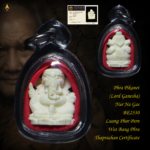
Phra Bucha Lp Pern Wat Bang Phra Song Nang Seu Nur Thong Daeng BE2547 Lp Samang Wat Bang Phra, Nakhon Pathom
| Monk | Luang Phor Pern Wat Bang Phra |
| Temple | Wat Bang Phra |
| B.E. Year | 2547 |
| Material | Thong Daeng |
| SKU | TAC-0563 |
Authentic Phra Bucha Lp Pern Wat Bang Phra Song Nang Seu Nur Thong Daeng BE2547 Lp Samang Wat Bang Phra, Nakhon Pathom by Luang Phor Pern Wat Bang Phra.
What is the Phra Bucha Lp Pern Wat Bang Phra Song Nang Seu Nur Thong Daeng BE2547 Lp Samang Wat Bang Phra, Nakhon Pathom by Luang Phor Pern Wat Bang Phra?
The Phra Bucha Lp Pern Wat Bang Phra Song Nang Seu Nur Thong Daeng BE2547 Lp Samang Wat Bang Phra, Nakhon Pathom by Luang Phor Pern Wat Bang Phra is a commemorative bronze statue cast in mixed alloy (nuea Thong Daeng, a copper-led metal) at Wat Bang Phra in BE2547. Created by Luang Phor Samang to honour Luang Phor Pern, it depicts the master seated in meditation atop a tiger, with three consecrated amulets embedded in the base. It measures 4.5 × 7 × 3 inches.
Luang Phor Pern and the Bang Phra Lineage Behind This Piece
Luang Phor Pern Wat Bang Phra is one of the most recognised masters in the Thai Buddhist amulet tradition — specifically in the Sak Yant (sacred tattoo) and protective-amulet lineage associated with Wat Bang Phra in Nakhon Pathom. His teaching centred on disciplined practice and compassionate conduct, and the temple’s output under his guidance became a reference point for collectors across the region. He passed on before BE2547, which is why this edition is commemorative rather than personally blessed by him.
Luang Phor Samang, his disciple and successor at Wat Bang Phra, presided over the consecration of this edition. Senior monks participated in the phutthaphisek (consecration ceremony) at the temple. That lineage continuity — master honoured, disciple conducting the rite, same temple grounds — is a meaningful part of what collectors in the Bang Phra tradition look for.
The Song Nang Seu Iconography and What Makes This Casting Specific
A phra bucha (devotional focus statue) sits differently in Thai Buddhist practice from a wearable amulet. It is a daily reference point — for gratitude, remembrance, and cultivation. The Song Nang Seu (riding the tiger) posture is not decorative shorthand. The tiger represents untamed force and risk. Luang Phor Pern’s meditative stillness atop it makes the image a direct statement: danger is not conquered by aggression, but by composure. Within the Bang Phra lineage, that framing carries weight.
The nuea (material/substance) here is Thong Daeng — a copper-led mixed alloy the original listing also describes as Nur Thong Phasom. This composition gives the piece a durable, stable surface over time, less prone to the surface changes you see in softer alloys. Collectors should note the casting quality at the face, robe folds, and tiger stance — these are the study points that distinguish a well-struck piece from a later or lesser copy. The three amulets embedded into the base are a specific feature of this edition and are not standard across all phra bucha castings from this temple.
For broader context on how statues and amulets like this sit within Thai devotional culture, the Thai Buddhist amulet tradition article gives a useful overview of the collecting and consecration landscape.
What Collectors Look For and How This Piece Is Positioned
No certificate is listed with this piece — collectors should factor that into how they approach authentication. The primary check points for this edition are:
- Facial definition: clean features, proportionate to the casting scale, without fill loss or blurring at the nose and brow.
- Robe lines and tiger stance: consistent depth across the casting, not flattened or irregular from poor mould release.
- Base structure: the three embedded amulets should be intact and seated correctly — displacement or damage to this zone affects both condition and the specific character of this edition.
- Alloy tone: the Thong Daeng surface should show an even patina consistent with age from BE2547, not a freshly polished or artificially aged appearance.
Condition preference among collectors for pieces like this runs toward clean but naturally aged surfaces — not over-polished. A surface that has been aggressively cleaned loses the patina record that helps date the piece. Intact facial definition and a stable base are the two non-negotiable condition factors.
This edition was produced partly to support Wat Bang Phra’s community and merit-making activities — proceeds from commemorative runs traditionally fund temple upkeep and welfare projects. That context does not change authentication criteria, but it does explain why the edition exists and why it carries the weight it does among Bang Phra devotees.
We at TAC are offering this BE2547 commemorative phra bucha of Luang Phor Pern in the Song Nang Seu posture, created under Luang Phor Samang at Wat Bang Phra — a piece that carries clear lineage identity and a distinctive three-amulet base not found in standard castings. For collectors building a Bang Phra reference set, or those looking for a meaningful phra bucha at an accessible price point, this edition is worth a close look.
Attributes reflect Thai Buddhist devotional tradition and are not measurable claims.