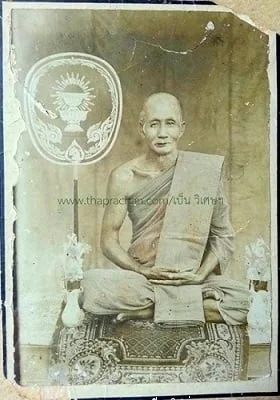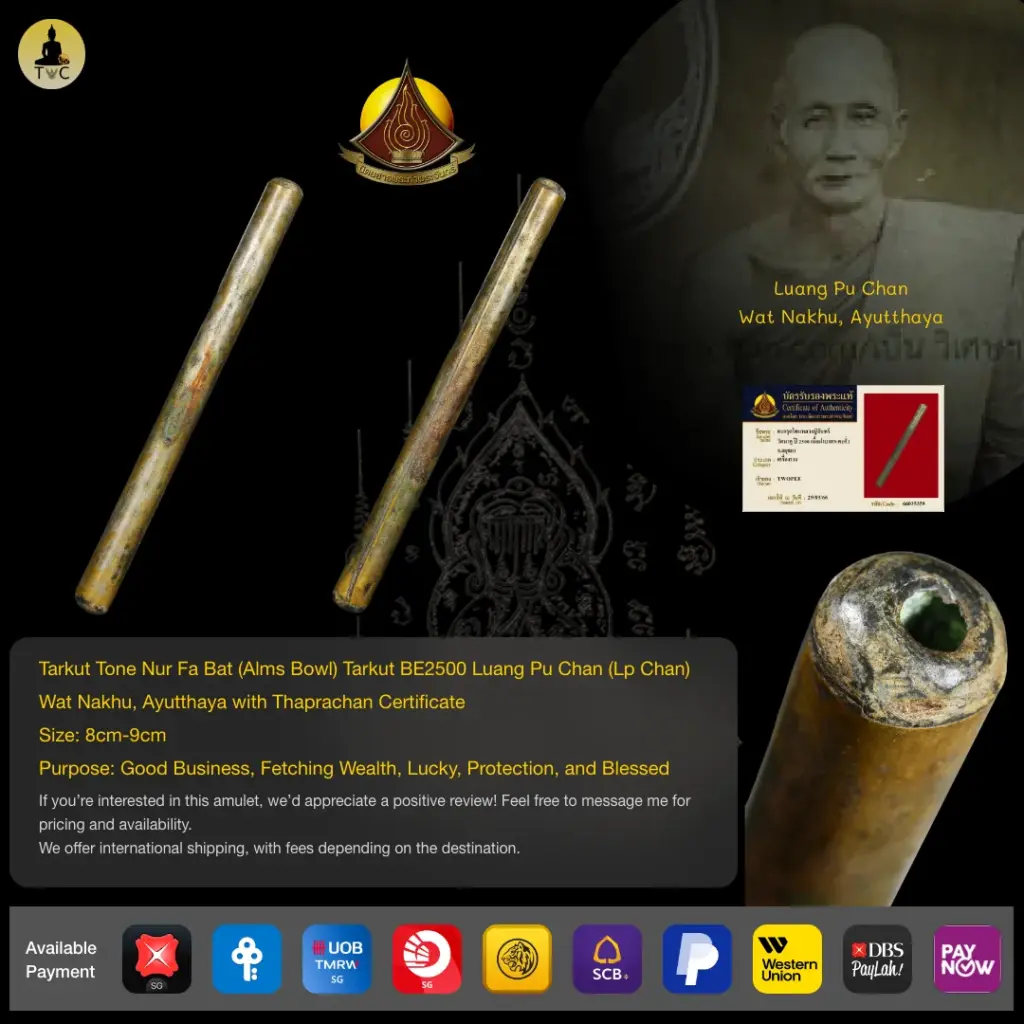
Tarkut Tone Nur Fa Bat (Alms Bowl) Tarkut BE2500 Luang Pu Chan (Lp Chan) Wat Nakhu, Ayutthaya
| Monk | Luang Pu Chan Wat Nakhu, Ayutthaya |
| Temple | Wat Nakhu |
| B.E. Year | 2500 |
| Material | Nur Fa Bat |
| SKU | TAC-0423 |
Authentic Tarkut Tone Nur Fa Bat (Alms Bowl) Tarkut BE2500 Luang Pu Chan (Lp Chan) Wat Nakhu, Ayutthaya by Luang Pu Chan Wat Nakhu, Ayutthaya.
What is the Tarkut Tone Nur Fa Bat (Alms Bowl) Tarkut BE2500 Luang Pu Chan (Lp Chan) Wat Nakhu, Ayutthaya?
The Tarkut Tone Nur Fa Bat (Alms Bowl) Tarkut BE2500 Luang Pu Chan (Lp Chan) Wat Nakhu, Ayutthaya is a rare takrut (rolled metal scroll inscribed with sacred yant) made entirely from nur fa bat — copper sourced from alms bowls — consecrated by Luang Pu Chan Wat Nakhu, Ayutthaya at Wat Nakhu, Ayutthaya Province, in BE 2500. Very few were made, and fewer survive in original condition.
Why this piece stands apart from standard Takrut Tone
Most Takrut Tone produced in Thailand use a lead core with a copper outer casing — that is the standard construction collectors know well. This piece is different. Both the core and the outer casing are copper, specifically nur fa bat (copper from monks’ alms bowls), which makes the material itself a rarity before a single yant is even inscribed.
The Thai Buddhist amulet tradition holds alms-bowl metal in high regard because it carries the accumulated merit of countless dana (offerings) made to the Sangha. Using it for both layers of the scroll is unusual and, among collectors who know the Wat Nakhu line, is considered a significant mark of quality for this run.
Production was deliberately small. According to close disciples, Luang Pu Chan Wat Nakhu, Ayutthaya inscribed these scrolls inside the temple chapel, working from 7 PM to midnight each session. He inscribed the 81-square yant by hand and completed only three takrut per session. Each one was gifted to donors who contributed funds toward the construction of Wat Nakhu School — not sold commercially, not made in bulk.
Luang Pu Chan’s standing and the Wat Nakhu lineage
Luang Pu Chan is counted among what devotees call the “Tripartite of Magic” — three masters whose takrut carry exceptional standing in the Ayutthaya amulet circle: Chan Nakhu, Phu Donrak, and Phak Wat Bot. That grouping tells you where he sits in the regional hierarchy.
A concrete measure of that standing: in 1987, Mr. Phayap Khamfan, then President of the Thai Amulet Association, paid 1,400 baht at Wichian Market to rent a Takrut Tone “Mee Mai Roi Somboon” from this master. For the era, that was a serious sum. Mr. Phayap was a native of Ban Dab in Phak Hai District and knew the Wat Nakhu line personally — this was not a casual purchase by someone unfamiliar with the pieces.
Wat Nakhu, located in Ayutthaya Province, is the temple where Luang Pu Chan spent his monastic career. The school construction fundraising context ties these takrut to a specific, verifiable moment in the temple’s development — which matters for provenance-conscious collectors.
What collectors look for when buying this piece
The core authentication point for the Tarkut Tone Nur Fa Bat (Alms Bowl) Tarkut BE2500 Luang Pu Chan (Lp Chan) Wat Nakhu, Ayutthaya is the material itself. Confirm that both the core and the casing are copper — not the standard lead-core construction. On an authentic example, the scroll should show the hand-inscribed 81-square yant, which is consistent with the documented production method.
- Both core and casing in copper (nur fa bat) — not lead core with copper wrap
- Hand-inscribed 81-square yant visible on the scroll surface
- Overall condition consistent with a BE 2500 piece — surface patina and age appropriate
- Thaprachan certificate accompanies the piece as documented in the original listing
Surviving examples in original condition are scarce. The combination of limited production numbers, the school-donation distribution channel (not open-market), and the all-copper construction means pieces that surface tend to attract serious attention from Ayutthaya specialists.
We at TAC consider this one of the more structurally interesting takrut from the Ayutthaya circle — the all-copper nur fa bat construction, with both core and casing in alms-bowl copper, is something you genuinely do not see often in this category. The documented production method — three pieces per session, hand-inscribed, distributed only to Wat Nakhu School donors — gives this piece a provenance story that resonates with serious collectors, not just devotees.
Attributes reflect Thai Buddhist devotional tradition and are not measurable claims.