Taowesuwan Nur Phong BE2470-2480 Luang Pu Liam (Lp Liam) Wat Sri Ruen Boon
| Monk | Luang Pu Liam (Lp Liam) Wat Sri Rueng Boon |
| Temple | Wat Sri Rueng Boon |
| B.E. Year | 2470 |
| Material | Phong |
| SKU | TAC-0767 |
Authentic Taowesuwan Nur Phong BE2470-2480 Luang Pu Liam (Lp Liam) Wat Sri Ruen Boon by Luang Pu Liam (Lp Liam) Wat Sri Rueng Boon.
What is the Taowesuwan Nur Phong BE2470-2480 Luang Pu Liam (Lp Liam) Wat Sri Ruen Boon by Luang Pu Liam (Lp Liam) Wat Sri Rueng Boon?
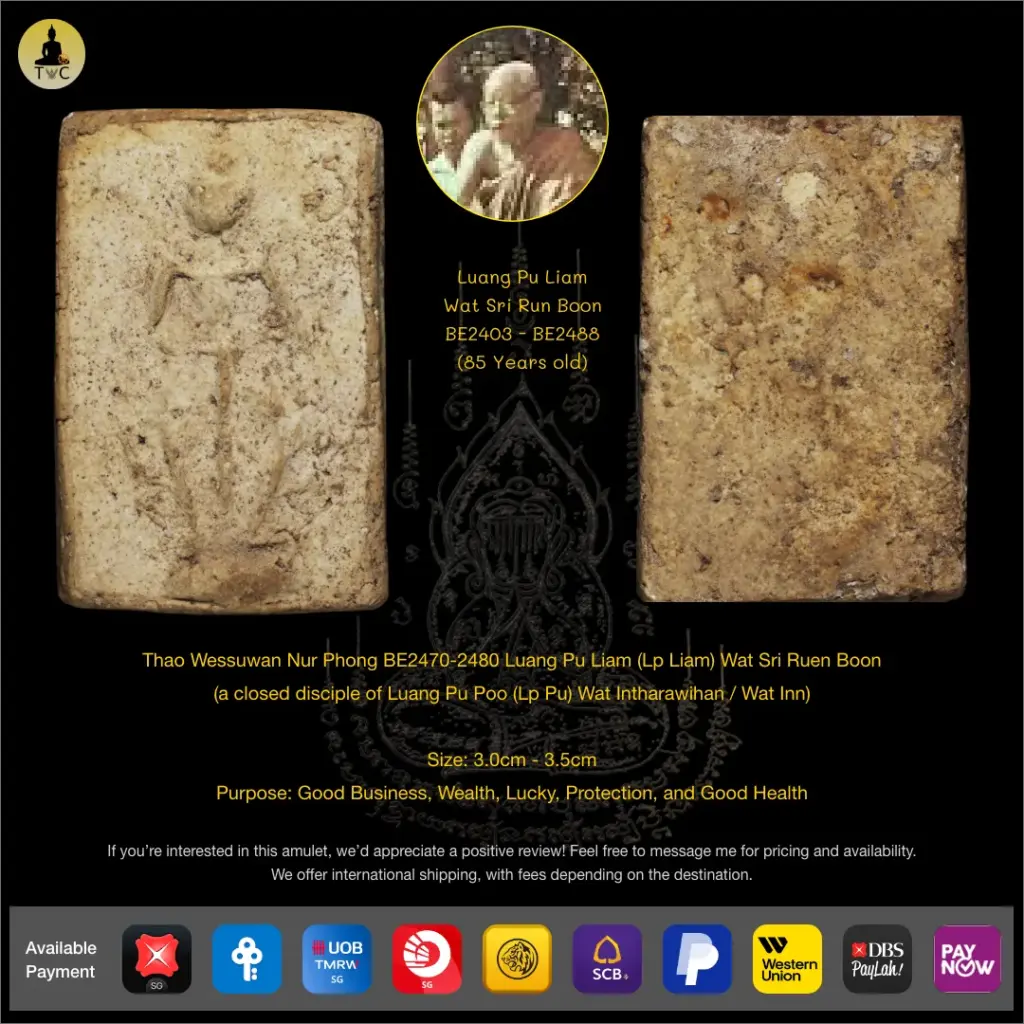
The Taowesuwan Nur Phong BE2470-2480 Luang Pu Liam (Lp Liam) Wat Sri Ruen Boon by Luang Pu Liam (Lp Liam) Wat Sri Rueng Boon is an early-period phong (sacred powder) amulet from Wat Sri Rueng Boon, Nonthaburi, pressed in the Taowesuwan guardian image. Consecrated between BE 2470 and 2480, it carries LP Liam’s wicha (ritual knowledge) transmitted through his teacher Luang Pu Poo of Wat Intharawihan.
LP Liam, his lineage, and why Wat Sri Rueng Boon matters for this piece
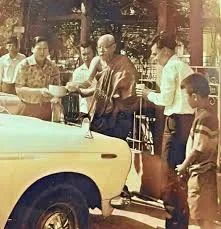
Luang Pu Liam (Lp Liam) Wat Sri Rueng Boon is recognised as a closed disciple of Luang Pu Poo of Wat Intharawihan — a direct transmission that collectors in the Nonthaburi–Bangkok line take seriously. Through that lineage he inherited the wicha Taowesuwan, the ritual discipline specific to consecrating the guardian deity known in Thai Buddhist belief as the Lord of the Asuras, protector of temples, wealth, and the northern direction.
Wat Sri Rueng Boon in Nonthaburi is historically associated with guardian and protection wicha. That context shaped how LP Liam approached this batch: the pluk sek (consecration ceremony) at the temple was presided over by LP Liam himself, with the blessings of his Wat Intharawihan lineage reinforcing the ritual. For a collector of Taowesuwan pieces, a piece tied to both temples in one ceremony is significant. The broader tradition these amulets sit within is well documented in the Thai Buddhist amulet tradition.
The nuea and what the mould tells you about the BE2470–2480 batch
The body is pressed from nuea phong — a muan sarn (sacred powder blend) that LP Liam prepared for this Taowesuwan run. Collector tradition records the blend as including Phong Itthijay (a powder associated with prosperity and invulnerability), Phong Trinisinghae (used in wicha against black magic and curses), Phong Pathamang (linked to authority and commanding presence), and Phong Bai Lan — holy scriptures burnt and ground to carry scriptural blessings into the body of the piece. Sacred temple soils from Wat Intharawihan, Wat Rakang, and Wat Sri Rueng Boon were incorporated, along with gold and silver dust.
The pim (mould) shows Taowesuwan standing in full guardian posture — staff held in both hands, armour details visible on the body. Because these were hand-pressed, the pim leaves soft edges, uneven thickness, and micro-pits across the surface. These are not defects. On early BE2470–2480 powder work, that hand-pressed irregularity is part of what the piece is. A surface that is too uniform, too sharp, or lacks the slightly darkened tonality that comes with age is a concern, not a quality mark.
Rarity, what collectors look for, and certification
Surviving examples from LP Liam’s BE2470–2480 phong batches are genuinely scarce. Decades of use, recasing, and attrition mean that specimens with clear pim features and a stable powder surface are now collector-grade. The combination of Taowesuwan iconography, LP Liam’s direct lineage to LP Poo, and the age of the material makes this series consistently referenced in discussions of classic Nonthaburi protection pieces.
When assessing a piece from this batch, collectors focus on:
- Powder surface colour and texture — aged pieces show a slightly darkened, settled tonality consistent with decades of natural change
- Edge profile — hand-pressed pieces have soft, uneven edges; machined-looking borders are a red flag
- Compression marks and micro-pits — present on period examples, absent or uniform on later reproductions
- Pim clarity — the standing guardian posture, staff, and armour details should read clearly against the powder body
No certificate is recorded for this piece. Authentication relies on physical study of the powder texture, edge wear, and pim characteristics against known reference examples from the BE2470–2480 LP Liam batch.
We at TAC consider LP Liam's BE2470–2480 Taowesuwan phong batch one of the more historically significant early Nonthaburi guardian series — the direct lineage to Luang Pu Poo of Wat Intharawihan gives it standing that goes beyond the temple of origin alone. For a collector focused on Taowesuwan pieces or the Nonthaburi–Bangkok protection lineage, a well-preserved example from this run is genuinely hard to source.
Attributes reflect Thai Buddhist devotional tradition and are not measurable claims.