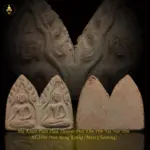
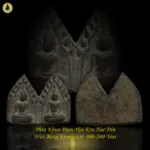
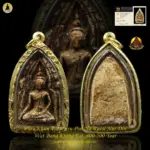
Phra Khun Paen Kru Pim Pim Na Klom (Round Face) 400 – 500 years Wat Bang Krang (Wat Bangkrang)
| Type | Phra Khun Paen |
| Temple | Wat Bang Krang |
| SKU | TAC-0770 |
Authentic Phra Khun Paen Kru Pim Na Klom (Round Face) from Wat Bang Krang, BE 2100–2200. Ancient baked clay, 400–500 years old. Thaprachan certified.
What is the Phra Khun Paen Kru Pim Na Klom (Round Face) from Wat Bang Krang?
The Phra Khun Paen Kru Pim Na Klom (Round Face) is an Ayutthaya-period kru amulet recovered from Wat Bang Krang, Suphanburi. Estimated at 400–500 years old (approximately BE 2100–2200), it is pressed from nuea din — ancient baked clay mixed with relic powders and sacred herbs — and carries a Thaprachan certificate of authenticity.
A kru find from Wat Bang Krang — why this piece is different
Wat Bang Krang is an Ayutthaya-era temple known among serious collectors for its kru (temple crypt or concealed chamber) discoveries. Amulets sealed inside these chambers were not made for the open market — they were buried as part of temple consecration, left undisturbed for generations. What comes out is, by definition, unaltered.
This Phra Khun Paen belongs to the Pim Na Klom pim (mould type) — “Na Klom” meaning round face, a distinct profile that collectors cross-reference against documented reference pieces when authenticating. The rounded, slightly concave face is the immediate visual tell that separates this mould from the Na Yao (long face) variants found at other sites. The figure is seated in the Mara Vichai posture on the front face; the reverse is plain, and on some pieces carries faint fingerprint impressions from the original maker.
Across the broader Thai Buddhist amulet tradition, Ayutthaya-period clay pieces are among the most historically significant a collector can hold. The age range here — four to five centuries — places this firmly in that tier.
Nuea, ageing marks, and what the certificate covers
The nuea (material/substance) is classified as nuea din — ancient baked clay. It was blended with relic powders and sacred herbs before firing, a method consistent with Ayutthaya-era workshop practice. There are no metal inserts, no lacquer finish, no later additions. What you see is the original piece.
After centuries underground, the surface carries natural soil deposits, a settled patina, and hairline fractures. These are not flaws — they are the primary age indicators an experienced eye reads first. Artificially aged fakes rarely get the fracture pattern right, and the clay density tends to be off. The Thaprachan certificate accompanying this piece was issued by one of the recognised Thai amulet certification bodies, providing a formal record that supports the attribution.
Consecration at Wat Bang Krang in the Ayutthaya period involved chanting by resident monks using Pali incantations, with the amulets then sealed within the temple structure itself. That burial process — absorbing the environment of the stupa for centuries — is part of what the kru designation means to collectors who track provenance carefully.
- Nuea: nuea din (ancient baked clay) with relic powders and sacred herbs
- Pim: Na Klom — round face, distinct from Na Yao long-face variants
- Posture: Mara Vichai (earth-touching) on the front face
- Reverse: plain; some pieces carry original fingerprint impressions
- Surface condition: natural soil deposit, settled patina, age fractures
- Certificate: Thaprachan
What collectors associate this piece with
Phra Khun Paen amulets as a category are traditionally carried for metta mahaniyom — the drawing of goodwill and kindness from those around you — and for maha sanaeh, the quality of personal charm that collectors and devotees believe supports relationships and social standing. This piece sits within that tradition.
Beyond those associations, wearers and collectors also link Khun Paen amulets to klaew klaad (protection and accident avoidance), chok lap (luck and wealth attraction), and support from people in positions of influence — what the tradition calls “nobleman support.” These are longstanding beliefs attached to the Khun Paen category broadly, not claims specific to this piece alone.
We at TAC are offering this Phra Khun Paen Kru Pim Na Klom (Round Face) from Wat Bang Krang — a genuine Ayutthaya-period kru piece pressed in nuea din, estimated 400–500 years old and carrying a Thaprachan certificate. For a collector focused on pre-modern Thai amulets, a certified kru find of this age from Wat Bang Krang is not easy to replace — pieces like this do not come back once they move on.
Attributes reflect Thai Buddhist devotional tradition and are not measurable claims.