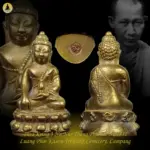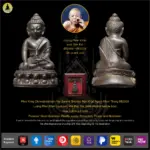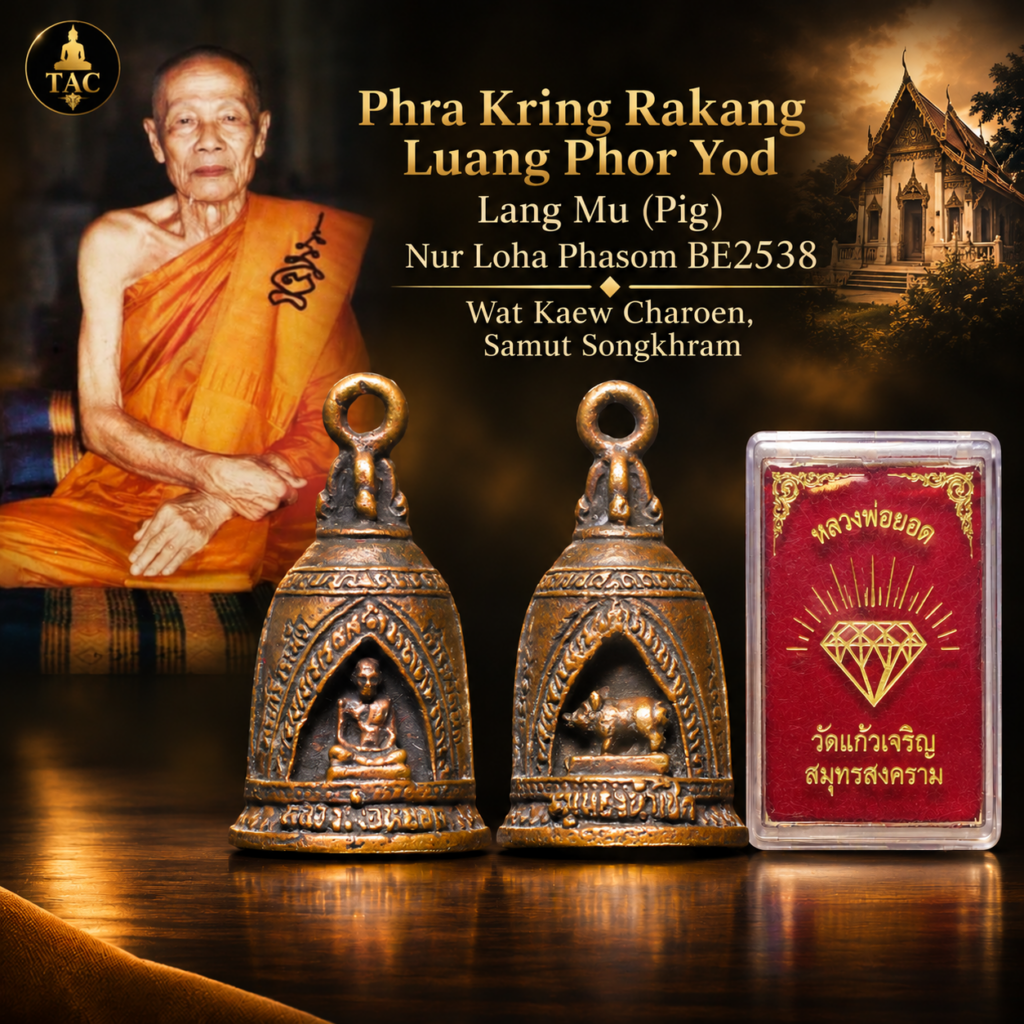
Phra Kring Rakang Luang Phor Yod Lang Mu (Pig) Nur Loha Phasom BE2538 Wat Kaew Charoen
| Type | Phra Kring Rakang Luang Phor Yod Lang Mu (Pig) |
| Monk | Luang Phor Yot (Lp Yot) Wat Kaew Charoe |
| Temple | Wat Kaew Charoen |
| B.E. Year | 2538 |
| Material | Nur Loha Phasom |
| Condition | Good |
| SKU | TAC-PhraKringRakangLuangPhorYodLangMu(Pig)-LpYod-001 |
Authentic Phra Kring Rakang Luang Phor Yod Lang Mu (Pig) by Luang Phor Yod, Wat Kaew Charoen, Samut Songkhram, BE 2538. Nur Loha Phasom. Singapore dealer TAC.
What is the Phra Kring Rakang Luang Phor Yod Lang Mu (Pig) from Wat Kaew Charoen, and is it worth collecting?
Phra Kring Rakang Luang Phor Yod Lang Mu (Pig) Nur Loha Phasom BE2538 Wat Kaew Charoen is a Phra Kring bell-rattle figure consecrated in BE 2538 at Wat Kaew Charoen, Samut Songkhram, under Luang Phor Yod. Cast in Nur Loha Phasom — a blended sacred alloy — it carries the Lang Mu (Pig) base mark and was produced during the final years of LP Yod’s abbotship. For collectors who know the lineage, that context matters.
The monk behind this piece — and why the lineage reads so well
Luang Phor Yod was born on Tuesday, 16 May 1911 in Ratchaburi Province. He ordained as a novice at Wat Kaew Charoen, Samut Songkhram at age 18, then received full bhikkhu ordination at the same temple two years later. From the beginning, he was close to LP Plian, the abbot who shaped him — studying dharma, learning meditation, and eventually caring for LP Plian until the older monk’s passing on 16 August 1941.
After LP Plian died, LP Yod was elected abbot of Wat Kaew Charoen. He held that position for decades, building a reputation for both his wicha (sacred knowledge) and his character. He is a direct disciple of Luang Pu Jai, Wat Sadej, and the grand-nephew of Luang Pu Yim, Wat Nong Bua, Kanchanaburi Province — two names collectors in Thailand place at the top of the old lineage trees. That connection is not window dressing. It tells you who taught him and what tradition shaped his practice.
LP Yod also taught wicha to a younger monk who went on to become a well-known guru in his own right: Maha Surasak, Wat Pradoo. LP Yod passed away on 12 March 1998, aged 86. The BE 2538 pieces, made just a few years before his passing, sit squarely in his late period — when his standing and his accumulated baramee (spiritual gravity built over a lifetime) were at their fullest.
Nur Loha Phasom — what the material tells you
Nur Loha Phasom is a blended metal alloy. In Thai amulet making, loha phasom typically combines multiple sacred metals — the exact formula varies by temple and batch, but the principle is the same: each metal is chosen and prepared with intention before casting. For a Phra Kring figure, the alloy matters because it determines both the resonance of the bell inside and the quality of the detail on the surface.
What you want to check first on any Phra Kring is the pim (mould definition) — the sharpness of the seated figure, the clarity of the base mark, and the condition of the bell chamber underneath. On a piece made in Nur Loha Phasom from this period, you should also look at how the metal has aged. The patina that develops on a genuine loha piece over nearly thirty years cannot be replicated quickly. Hold it and you can feel the weight; look at the surface under light and the ageing tells its own story.
The Lang Mu (Pig) base designation on this piece is part of how the run was organised. It is a collector reference point — useful when you are comparing pieces or placing this one within LP Yod’s output. For more on the broader Thai Buddhist amulet tradition, including how Phra Kring figures are made and consecrated, the Wikipedia overview is a reasonable starting point before you go deeper into temple-specific records.
What is this Phra Kring Rakang Luang Phor Yod Lang Mu (Pig) traditionally carried for?
Devotees and collectors associate this piece with four main qualities:
- Metta — loving-kindness and approachability; traditionally carried by those who need people around them to be cooperative, open, and well-disposed.
- Maha Saneh — charm and likeability; associated with smoother personal interactions, particularly useful in situations where impression and rapport matter.
- Baramee — composure and earned standing; collectors regard this as the quality that comes through in someone who carries quiet authority without forcing it.
- Kaa Khaay — trade and commercial flow; traditionally carried by those in business, sales or any situation where consistent opportunity and goodwill from customers are needed.
How collectors wear this today
This piece suits daily wear well — professionals in client-facing roles, business owners, and anyone whose work depends on building trust with people over time tend to gravitate toward a Phra Kring with this kind of lineage behind it. The Metta and Maha Saneh qualities make it a natural carry for those in sales, negotiations, or positions where relationships are the foundation of everything. The Baramee reading makes it equally appropriate for those who carry responsibility — a manager, a team lead, someone who needs to hold a room without raising their voice. For practitioners who also use amulets as a focus during merit-making or quiet reflection, the Phra Kring’s traditional association with the Buddha’s compassion gives it a secondary layer of meaning beyond everyday wear.
This BE 2538 Phra Kring Rakang Lang Mu (Pig) from Luang Phor Yod is one we at TAC value for the lineage behind it — LP Yod was a direct disciple of Luang Pu Jai, Wat Sadej, and grand-nephew of Luang Pu Yim, Kanchanaburi, so the teacher chain here is legitimate and traceable. The Nur Loha Phasom casting from this period should show close to three decades of natural ageing by now — . If you are looking for a late-period LP Yod piece with a clear reference designation and a lineage that holds up to scrutiny, this is the one to consider.
Attributes reflect Thai Buddhist devotional tradition and are not measurable claims.