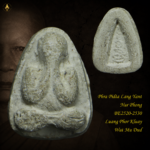
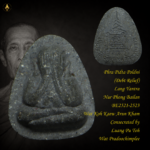
Phra Pidta Na Gae Phra Archan Eid Wat Don Sala (disciple of Phra Archan Thong Dao Wat Khao Orr)
| Type | Phra Pidta |
| Monk | Archan Eid (Archan Yiad) Wat Don Sala |
| Temple | Wat Khao Orr |
| SKU | TAC-0219 |
Authentic Phra Pidta Na Gae by Archan Eid (Archan Yiad) Wat Don Sala, Khao Orr lineage. Ivory with Na yant inscriptions, T-Amulet certified.
What is the Phra Pidta Na Gae by Archan Eid (Archan Yiad) Wat Don Sala?
The Phra Pidta Archan Eid (Archan Yiad) Wat Don Sala is a collector-grade Pidta (closed-eyes Buddha image) carved from Na Gae (ivory), bearing Na yant (sacred inscriptions) and produced within the Southern Thai Khao Orr ritual lineage. Archan Eid was a direct disciple of Phra Archan Thong Dao of Wat Khao Orr, and this piece carries T-Amulet certification.
The Khao Orr Lineage Behind This Piece
Archan Eid (Archan Yiad) Wat Don Sala was a direct disciple of Phra Archan Thong Dao, one of the most respected masters from Wat Khao Orr in Southern Thailand. That master-disciple link is not incidental — it is the backbone of collector confidence in any Wat Don Sala piece. Archan Eid carried forward the Khao Orr school’s disciplined approach: careful selection of materials, formation of Na yant, and stepwise empowerment cycles rather than a single consecration event.
Wat Don Sala functioned as a regional centre for this style of ritual craftsmanship. Pieces traceable to that temple and to this lineage represent a documented chain of wicha (esoteric knowledge) transmission. For collectors of Southern Thai amulets, that continuity matters more than surface finish or size.
The broader Thai Buddhist amulet tradition encompasses hundreds of regional schools, but the Khao Orr lineage holds a distinct place among serious collectors for its measured ritual chronology and the calibre of masters it produced across generations.
Na Gae Material, Yant Inscriptions, and What the Pim Shows
The nuea (material/substance) here is Na Gae — ivory — with Na yant hand-scored onto the surface. In the Khao Orr tradition, these Na inscriptions are not decorative. They are applied through a specific sequence, combined with phong (sacred powder blends) and ritual ink where applicable, all following the method Archan Eid inherited from Phra Archan Thong Dao. The iconography is Pidta — hands covering the eyes — which in Thai Buddhist understanding signifies withdrawal from sensory distraction and cultivation of inner restraint.
Surviving examples in stable, wearable condition are scarce. The mid-20th century dating (BE24XX) places this piece in a period before standardised production runs, which means each example carries individual ritual character rather than batch uniformity. The aged patina and inscription traces visible on this piece are consistent with collector-era documentation for Wat Don Sala works.
This piece comes with a T-Amulet certificate, which provides an independent reference point for authentication. When evaluating any example, collectors cross-check:
- Surface tone and patina consistent with Na Gae of this age
- Na yant depth and scoring style matching documented Khao Orr practice
- Casing fit and proportion relative to known collector-size examples
- T-Amulet certification documentation matching the piece as pictured
We at TAC sourced this Phra Pidta Archan Eid (Archan Yiad) Wat Don Sala as part of our focus on documented Southern Thai lineage pieces — specifically works traceable to the Khao Orr school through the master-disciple chain from Phra Archan Thong Dao. The Na Gae material and Na yant inscriptions are consistent with what collector records describe for Wat Don Sala works of this period, and the T-Amulet certificate travels with the piece.
Attributes reflect Thai Buddhist devotional tradition and are not measurable claims.