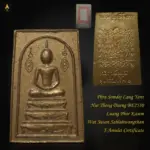
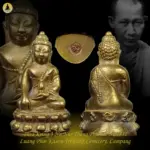
Phra Pidta Lang Yant Nur Phong BE2517 Wat Phlapla Blessed by Luang Phor Kasem
| Type | Phra Pidta |
| Monk | Luang Phor Kasem Trailak Cemetery, Lampang |
| Temple | Wat Phlapphla |
| B.E. Year | 2517 |
| Material | Phong |
| Condition | Very Good |
| SKU | TAC-0220 |
Authentic Phra Pidta by Luang Phor Kasem Trailak Cemetery, Lampang. Wat Phlapphla, BE 2517, phong nuea, lang yant reverse, original temple box. No certificate.
What is the Phra Pidta Luang Phor Kasem Trailak Cemetery, Lampang from Wat Phlapphla, BE 2517?
The Phra Pidta Luang Phor Kasem Trailak Cemetery, Lampang is a phong (sacred powder) amulet issued through Wat Phlapphla in BE 2517, blessed by Luang Phor Kasem Trailak Cemetery, Lampang. The reverse carries a lang yant (sacred yantra inscription). No certificate accompanies this piece. It comes with its original temple box.
The monk behind this piece and why it matters
Luang Phor Kasem Trailak Cemetery, Lampang is a monk whose name collectors in Thailand and across the region associate with disciplined meditative practice rooted in the Lampang forest tradition. Pieces bearing his blessing attribution carry weight precisely because they are not common in Singapore and Malaysian markets. When one surfaces with an original temple box intact, that matters to a serious collector.
The BE 2517 date places this amulet in the mid-1970s — a period when northern Thai temples were producing devotional issues in phong nuea (sacred powder substance) for community distribution rather than large-scale commercial runs. That context shapes how collectors read the piece: less about spectacle, more about quiet devotional purpose and period integrity.
Phong body, lang yant reverse — what the collector reads
Phong, or muan sarn in powder form, is one of the oldest nuea categories in the Thai Buddhist amulet tradition. Unlike cast metal, powder amulets age visibly — surface tone, compression within the pim (mould), and the condition of recessed areas all tell you something about how the piece was stored and worn. On an authentic example from this period, the powder should sit firmly in the mould with natural settling, not crumbling edges or artificially worked surfaces.
The lang yant (หลังยันต์) reverse is not decorative padding. It is part of the amulet’s ritual identity. Collectors examine the clarity and placement of the yant inscription alongside the front silhouette — the enclosed, eyes-covered Pidta posture — to build a complete picture of the pim. Both faces need to read as consistent with each other in terms of age expression and material character.
- Front: assess the Pidta silhouette, seated posture, body mass, and how the powder surface has aged uniformly.
- Reverse: check the lang yant for sharpness of impression, balance of the inscription, and consistency with the front surface tone.
- Edges: on phong pieces, edge condition is a key authentication reference — look for natural compression, not fresh breaks or filled repairs.
- Temple box: the original box adds presentation context and is part of the complete set as listed.
No certificate — how collectors approach this
This piece carries no grading certificate. That is not unusual for mid-period northern Thai temple issues, and it is not automatically a drawback for a collector who can read the piece directly. The authentication relies on the physical evidence: pim consistency, phong surface behaviour, and the coherence of the lang yant with the overall body.
For collectors less confident reading phong amulets independently, the practical approach is comparison — studying confirmed period examples from the same monk and temple before committing. The original temple box is a supporting element, not a substitute for reading the amulet itself.
We at TAC are listing this Phra Pidta as a mid-period northern Thai temple piece — phong body with lang yant reverse, issued through Wat Phlapphla in BE 2517 and attributed to the blessing of Luang Phor Kasem Trailak Cemetery, Lampang. The original temple box is retained with the piece, which adds useful presentation context for a collector assessing the set as a whole. At this price point, it sits well as an entry piece for collectors interested in northern Thai devotional issues from the 1970s who want a coherent, complete example rather than a heavily certificated mainstream item.
Attributes reflect Thai Buddhist devotional tradition and are not measurable claims.