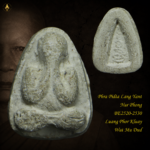
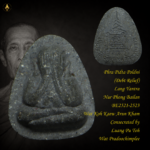
Phra Pidta Prachao Nai Khan Phra Somboon Prakwam Badi Phra Archan Maha Uthai, Wat Don Sala BE2557 made 814 pieces
| Type | Phra Pidta |
| Monk | Luang Phor Maha Uthai, Wat Don Sala |
| Temple | Wat Don Sala |
| B.E. Year | 2557 |
| SKU | TAC-0074 |
Authentic Phra Pidta by Luang Phor Maha Uthai, Wat Don Sala, BE 2557. Cast in Thong Samrek sacred bronze alloy, only 814 pieces made.
What is the Phra Pidta Luang Phor Maha Uthai, Wat Don Sala BE 2557?
The Phra Pidta Luang Phor Maha Uthai, Wat Don Sala is a limited sacred metal amulet consecrated in BE 2557 (2014) by Phra Archan Maha Uthai Wimolo, abbot of Wat Don Sala in Khuan Khanun, Phatthalung. Cast in nuea Thong Samrek — a mixed sacred bronze alloy — only 814 pieces were produced in this material.
Luang Phor Maha Uthai and the Khao Or Lineage Behind This Piece
Luang Phor Maha Uthai, formally known as Phra Archan Maha Uthai Wimolo, is the abbot of Wat Don Sala and a practitioner of the Khao Or wicha — the Southern Thai school of Buddhist sacred knowledge centred in Phatthalung. The Khao Or lineage is specific, traceable, and well-documented among serious collectors. Monks trained within it follow strict disciplines for casting, inscription, and consecration that differ markedly from Central Thai practice.
His standing in the collector community comes from consistent adherence to those disciplines. He personally led the phutthaphisek (consecration ceremony) for this batch in the main hall of Wat Don Sala, supported by other senior Khao Or monks. Chanting ran across multiple days and nights, timed to auspicious lunar dates — standard for a Khao Or pluk sek of this scale.
The Nuea, the Pim, and What Was Cast
Nuea Thong Samrek — the material here — is a sacred bronze alloy with a specific composition rooted in Southern Thai Buddhist metallurgy. The blend draws on bronze and copper recovered from previous holy images, melted fragments of broken sacred objects and temple bells, and alchemical components following Khao Or lineage practice. The resulting metal carries a deep bronze tone with a dark, naturally uneven luster. Casting marks and surface texture from this process are part of what collectors authenticate against.
The pim depicts Phra Pidta — the “Eyes-Covering Buddha” — seated in full meditation, both hands covering the face. This posture, within the Thai Buddhist amulet tradition, represents the closing off of the senses to worldly distraction and the shutting out of misfortune. The reverse bears yant (sacred inscriptions) consistent with Khao Or empowerment practice. The full name of this batch — Phra Chao Nai Khan Phra Somboon Prakwam Badi — encodes intent: “Phra Chao Nai Khan” points to complete mastery over harmful forces; “Phra Somboon Prakwam Badi” signals spiritual completeness and protective blessing.
Production was deliberately restricted. Only 814 pieces were cast in Thong Samrek for this run. That figure is documented, not estimated.
What Collectors Look For in This Batch
Collectors placing this piece authenticate on several points:
- Surface texture consistent with Thong Samrek casting — deep bronze with natural dark luster, not uniform plating
- Pim detail matching documented Khao Or Pidta forms from Wat Don Sala BE 2557
- Yant on the reverse legible and consistent with Luang Phor Maha Uthai’s known inscriptions
- Weight and proportion within expected range for this nuea
No certificate is listed for this batch. Buyers relying on certification should verify the current documentation status directly with the seller. Provenance through a traceable dealer — with acquisition records — carries more weight here than a generic card.
The combination of a strict 814-piece limit, a single documented consecrating monk from a specific and respected lineage, and a named material with a verifiable composition makes this batch trackable. That traceability is a significant part of its collector appeal.
We acquired this piece from the BE 2557 Wat Don Sala batch — one of 814 cast in Thong Samrek under Luang Phor Maha Uthai's direct consecration. For collectors focused on the Khao Or lineage, the hard production limit and single presiding monk make this one of the more traceable pieces from Phatthalung in that year.
Attributes reflect Thai Buddhist devotional tradition and are not measurable claims.