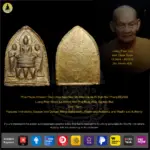
Phra Somdej Hubaysri 9 Chan Nur Phong Namon BE2505 Luang Phor Khom (Lp Khom) Wat Phai Rong Hua
| Type | Phra Somdej |
| Monk | Luang Phor Khom (Lp Khom) Wat Phai Rong Hua |
| Temple | Wat Phai Rong Hua |
| B.E. Year | 2505 |
| Material | Phong Namon |
| SKU | TAC-0093 |
Authentic Phra Somdej Luang Phor Khom (Lp Khom) Wat Phai Rong Hua, BE 2505. Hubaysri 9 Chan pim, Phong Namon nuea. DD-Pra certified.
What is the Phra Somdej Luang Phor Khom (Lp Khom) Wat Phai Rong Hua BE 2505?
The Phra Somdej Luang Phor Khom (Lp Khom) Wat Phai Rong Hua is a BE 2505 (1962) sacred powder amulet pressed in the Hubaysri 9 Chan pim (mould) from Phong Namon — a blend of sacred powders including Phong Itthijay, Maharaj, and Trinisinghe. Created at Wat Phai Rong Hua in Suphan Buri, it was produced to fund the construction of what was then the world’s largest cement Buddha image.
Why Luang Phor Khom made this amulet — and what it was built for
In BE 2505, Luang Phor Khom (Lp Khom) Wat Phai Rong Hua was in the middle of an ambitious development phase at the temple. He initiated this batch of Phra Somdej specifically to raise funds for constructing the world’s largest cement Buddha image — a project that became a landmark of Suphan Buri province. The amulet was purpose-built, tied directly to a concrete mission.
Proceeds from the same run also supported land reclamation, communal pond construction, monk residences, and Dhamma educational buildings. Collectors who understand this context know the piece carries more than spiritual weight — it was part of a genuine social and religious undertaking at a specific moment in the temple’s history.
The Phong Namon nuea and the Hubaysri 9 Chan pim
The nuea (material/substance) here is Phong Namon — phong (sacred powder) bound with Nam Mon (holy water) and oils. The powder blend draws on Phong Itthijay, Maharaj, and Trinisinghe, all derived from sacred chanted texts. Added into the mix: flower pollen from temple ceremonies, ashes of sacred texts and incense, and powdered fragments of old amulets. The combination follows a long line within the Thai Buddhist amulet tradition.
The pim itself is called Hubaysri 9 Chan — “Hubaysri” pointing to a heavenly domain, “9 Chan” meaning nine ascending tiers. The Buddha sits in meditative posture atop that nine-layered base. Each tier corresponds to a specific Buddhist concept: the nine levels of Jhana, the nine celestial realms, the nine Parami (perfections toward enlightenment), and the step-by-step path toward Nirvana. The design is not decorative — it is doctrinal.
The phutthaphisek (consecration ceremony) was overseen directly by Luang Phor Khom himself. Senior monks chanted protective Parittas, including the Itthipiso and Katha Chinabanchon. Luang Phor Khom added silent meditative empowerment — abhiseka — and some accounts record the amulets being blessed across multiple sessions to compound the consecration.
What collectors look for in this piece
Because the original batch was distributed mainly to temple patrons and local devotees in Suphan Buri, pieces rarely surface through commercial channels. Most have stayed in family collections or private shrines. When one does come to market, condition matters — specifically, how clearly the nine-tier structure reads on the front face.
- Clarity of the nine-tier base detailing on the pim face
- Surface texture consistent with aged Phong Namon — fine, slightly powdery, not heavily lacquered or repaired
- Known consecration lineage traceable to the BE 2505 batch at Wat Phai Rong Hua
- Certificate: this piece comes with a DD-Pra certificate
Pieces with intact features and a clean certification record are the ones collectors prioritise. The combination of documented purpose (the Buddha image construction fund), a specific and verifiable pim, and a clearly identified monk makes this a straightforward piece to research — which in itself adds to its standing among serious collectors.
We at TAC sourced this Phra Somdej Luang Phor Khom (Lp Khom) Wat Phai Rong Hua from BE 2505 because pieces tied to a specific, documentable temple project — in this case the construction of the world's largest cement Buddha image at Wat Phai Rong Hua — give collectors a traceable context that most amulets simply do not have. The DD-Pra certificate is included, and we recommend any prospective buyer cross-reference it against the physical amulet before purchase.
Attributes reflect Thai Buddhist devotional tradition and are not measurable claims.